What Is Carbon Sequestration? Nature and Tech Solutions
Cutting emissions is the core of climate action, but it may not be enough on its own. Some industries are brutally hard to decarbonize, and the atmosphere already holds a large surplus of carbon dioxide. That is where carbon sequestration enters the picture: the capture and long-term storage of CO2, whether by ecosystems that have done it for eons or by technologies invented in the last few decades. Understanding it matters because nearly every credible plan for stabilizing the climate now includes it.
This guide explains what carbon sequestration is, how nature and technology each do it, and whether it can scale fast enough to matter.
Carbon sequestration in one paragraph
Carbon sequestration is the capture of carbon dioxide and its storage in a form and place where it cannot easily return to the atmosphere. It happens in two broad ways. Biologic sequestration stores carbon in living systems and soils: forests, grasslands, wetlands, and the ocean. Geologic and technological sequestration captures CO2 from industrial sources or directly from the air and locks it into underground rock formations, mineral products, or long-lived materials. Both aim at the same goal: pulling carbon out of the fast-moving atmospheric cycle and parking it somewhere stable for decades to millennia, buying the climate system time to stabilize.
The carbon cycle: Earth's original sequestration system
To appreciate sequestration, it helps to see the machine it plugs into. The carbon cycle moves roughly 200 billion tonnes of carbon each year between the atmosphere, oceans, land, and living things, a flux vastly larger than human emissions. The problem is not the size of the cycle but its balance.
Before industry, the system sat near equilibrium. Photosynthesis and ocean uptake roughly matched respiration, decay, and outgassing, keeping atmospheric CO2 between about 180 and 300 parts per million across ice ages and warm periods. Humanity added a new one-way flow: extracting fossil carbon and burning it. About 45 percent of our CO2 stays in the atmosphere each year; the rest is absorbed by land and ocean sinks.
Those sinks are the planet's sequestration service, and they are showing strain. Warmer water holds less dissolved CO2. Droughts and fires weaken land uptake. Scientists watch anxiously for the moment when sinks absorb a shrinking share, which would accelerate atmospheric buildup even if emissions stayed flat. Sequestration efforts, natural and engineered, are essentially attempts to reinforce and expand the removal side of this ledger.
How nature already does it
Long before humans thought about managing carbon, the planet ran a vast sequestration system called the carbon cycle. Carbon moves continuously between the atmosphere, oceans, soils, plants, and rocks.
Photosynthesis is the entry point. Plants pull CO2 from the air and turn it into leaves, wood, and roots. When plants die, some of that carbon enters the soil as organic matter. Most decomposes and returns to the air within years, but a fraction becomes stable soil organic carbon that can persist for centuries, especially in cool or waterlogged conditions.
The ocean is the largest active carbon store. It holds dissolved CO2, and marine organisms convert some of it into carbonate shells that rain down to the seafloor as sediments. Over geological timescales, these sediments become limestone, locking carbon away for millions of years.
The scale is staggering. Soils hold more carbon than the atmosphere and vegetation combined. The ocean holds far more still. Nature's sequestration is why atmospheric CO2 stayed roughly stable for millennia before industry. It is also why disrupting these systems, by deforesting, draining wetlands, or thawing permafrost, releases such large quantities. Every hectare of intact ecosystem is, in effect, a carbon vault that took centuries to fill and can be emptied in a season.
Forests, soils and grasslands
Terrestrial ecosystems are the most accessible lever for boosting natural sequestration.
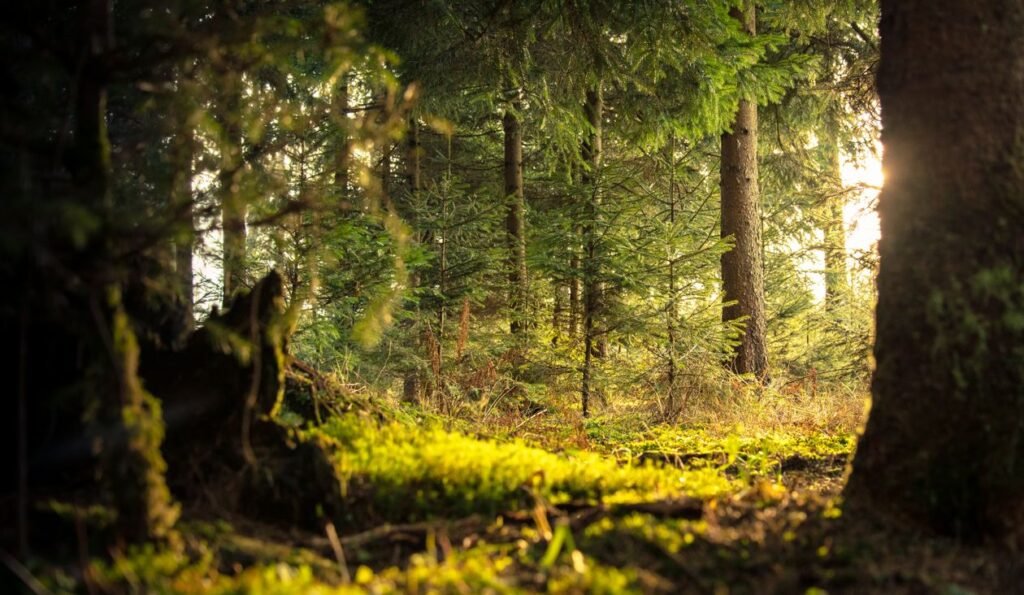
Forests. Growing forests absorb CO2 rapidly, with trees capturing carbon fastest roughly between 50 and 100 years of age, though old-growth forests store the largest total stocks in their massive trunks and rich soils. Reforestation and avoided deforestation are among the cheapest climate actions available. But forest carbon is vulnerable: wildfires, droughts, and logging can return it to the air quickly, which is why permanence is the central challenge. The best forest strategies combine protection of existing old growth, which holds irreplaceable stocks, with restoration of degraded lands, which offers rapid uptake.
Soils. Agricultural soils can store more carbon through practices like reduced tillage, cover cropping, crop residue management, and adding compost or biochar. The potential is large in aggregate because farmland covers so much of the planet, but measurement is tricky: soil carbon varies hugely across fields, and gains can reverse if practices change. Satellite monitoring and soil sampling protocols are improving verification, which matters for carbon markets that pay farmers for sequestration.
Grasslands and rangelands. These ecosystems store most of their carbon underground in roots and soil, making it less vulnerable to fire than forest carbon. Well-managed grazing can maintain or increase these stocks.
Peatlands and wetlands. Though they cover a small fraction of land, peatlands store enormous carbon densities because waterlogging slows decomposition. Draining them for agriculture releases centuries of stored carbon rapidly. Protecting intact peatlands is among the highest-value conservation actions per hectare, rivaling the protection of old-growth forest.
According to the US Environmental Protection Agency, natural sequestration offset about 12 percent of US greenhouse gas emissions in 2021. For comparison, engineered removal offset less than 1 percent. Nature remains, by far, the dominant carbon remover on the planet.
Blue carbon: oceans and mangroves
Coastal ecosystems punch far above their weight in carbon storage. Mangroves, seagrass meadows, and salt marshes, collectively called blue carbon ecosystems, bury carbon in waterlogged sediments where decomposition is slow. Per unit area, they can store several times more carbon than tropical forests. Seagrass meadows, though less famous than mangroves, cover vast shallow areas and accumulate carbon-rich sediments for millennia.
Mangroves are the standouts. Their tangled roots trap sediment and organic matter, building carbon-rich soils over centuries. They also shield coasts from storms, nurture fisheries, and support biodiversity. Pakistan's Indus Delta mangroves, which have expanded significantly through restoration in recent decades, demonstrate the triple win: carbon storage, coastal protection, and livelihoods. The Delta Blue Carbon project in Sindh has become one of the world's largest mangrove restoration efforts, showing how blue carbon can attract climate finance to developing coastlines.
The ocean's broader biological pump also sequesters carbon. Phytoplankton absorb CO2 at the surface; when they die or are eaten, some carbon sinks to the deep ocean, where it can remain for centuries. Proposals to enhance this pump, such as ocean fertilization, remain controversial and experimental, with uncertain ecological side effects.
Geologic storage: burying CO2
Geologic sequestration takes CO2 captured from power plants, cement factories, or other industrial sources and injects it deep underground as a supercritical fluid, where natural rock traps and seals hold it in place. The idea borrows from the oil industry, which has injected CO2 underground for decades to push out more crude, but repurposes the technique for permanent storage rather than extraction.
The concept is proven at commercial scale. Norway's Sleipner project has injected CO2 into a sandstone formation beneath the North Sea since 1996. Canada's Weyburn-Midale project stores CO2 while using it for enhanced oil recovery. Each stores more than a million tonnes per year, and more than 300 storage projects have been carried out worldwide.
Suitable geology is widespread: depleted oil and gas fields, deep saline aquifers, and basalt formations that can mineralize CO2 into solid rock within years, as demonstrated by Iceland's CarbFix project. The main constraints are cost, the energy needed for capture, and the need for careful site selection and long-term monitoring to ensure the CO2 stays put. Public acceptance and clear liability rules for stored carbon over centuries also matter.
Direct air capture and new tech
Instead of catching CO2 at smokestacks, direct air capture (DAC) pulls it straight from the ambient air using chemical filters or sorbents, then stores it underground or converts it into products. The appeal is location flexibility: a DAC plant can sit atop ideal geology anywhere.
The drawback is thermodynamics. CO2 is dilute in air, about 0.04 percent, so filtering it takes substantial energy. Current costs are high, though supporters argue they will fall with scale, as solar costs did. A handful of commercial plants operate today, removing thousands of tonnes per year, a tiny fraction of global emissions but a proving ground for the technology. The key question for DAC is energy source: run on clean electricity, it is genuinely negative emissions; run on fossil power, the benefit shrinks or vanishes.
Other approaches are emerging. Enhanced rock weathering spreads crushed silicate rock on fields, where it reacts with CO2 and washes to the sea as stable bicarbonate, simultaneously improving soils in some trials. Bioenergy with carbon capture (BECCS) grows biomass for energy and captures the resulting CO2, though it raises land-use questions at scale. Mineralization turns CO2 into concrete and building materials, storing carbon in the built environment for the lifetime of structures.
Can it scale in time
Here is the honest accounting. Natural sequestration already offsets a meaningful share of emissions and can be expanded substantially through restoration and better land management, delivering biodiversity and resilience benefits along the way. But ecosystems have limits, and stored carbon can be re-released by the very climate change it is meant to fight.
Engineered sequestration is proven technically but tiny in scale today. Scaling it a thousandfold in two decades would require enormous investment, energy, and infrastructure, comparable to building a second oil industry in reverse. Most climate pathways that limit warming to 1.5 or 2°C assume large-scale carbon removal alongside deep emissions cuts, not instead of them.
The hierarchy is clear: cut emissions first and fastest, protect and expand natural sinks, and develop engineered removal for the hardest sectors and legacy emissions. Sequestration is a necessary complement to decarbonization, not a substitute. The countries and companies that treat it as one tool among many, rather than a silver bullet, are the ones using it wisely.
| Method | Type | Storage duration | Scale today | Key challenge |
|---|---|---|---|---|
| Reforestation | Biologic | Decades to centuries | Large | Fire, permanence |
| Soil carbon farming | Biologic | Decades | Growing | Measurement, reversal risk |
| Blue carbon (mangroves) | Biologic | Centuries | Moderate | Coastal development pressure |
| Geologic CCS | Geologic | Millennia | Small but proven | Cost, capture energy |
| Direct air capture | Technological | Millennia (if stored) | Tiny | High cost, energy demand |
| Enhanced weathering | Technological | Millennia | Experimental | Logistics, scale |
Sequestration and net zero: why models depend on it
Net zero means balancing emissions with removals so no net CO2 accumulates in the atmosphere. Almost every modeled pathway that limits warming to 1.5 or 2°C includes substantial carbon removal alongside deep emissions cuts. The reason is arithmetic: some sectors, like aviation, shipping, steel, and cement, are extremely difficult to fully decarbonize, and their residual emissions must be offset by removals.
There is also the question of overshoot. If the world temporarily exceeds temperature targets, bringing temperatures back down requires net negative emissions, removing more than we emit. That makes sequestration not just a complement but a potential corrective.
Critics warn against treating modeled removals as a promise. Many pathways assume removal scales that have never been demonstrated, which risks becoming an excuse to delay cuts today. The responsible reading is that sequestration is necessary but not sufficient, and that betting the climate on future removals while slowing decarbonization would be reckless.
Criticisms and controversies
Sequestration attracts sharp debate, and the criticisms deserve airing.
The moral hazard argument holds that promising future removals lets polluters keep polluting today. When oil companies advertise carbon capture while expanding production, skepticism is warranted. Capture attached to fossil expansion can extend the fossil era rather than end it.
Permanence is another concern. Forest carbon can burn. Soil carbon can be tilled away. Even geologic storage requires monitoring over timescales longer than human institutions have ever managed. Who guarantees a storage site in the year 2500?
Equity questions arise too. Large-scale land-based removal could compete with food production and displace communities if done carelessly. Ocean interventions could disrupt marine ecosystems we barely understand.
None of these invalidate sequestration, but they set conditions: prioritize emissions cuts, demand rigorous monitoring, protect communities and ecosystems, and treat removal as a public good rather than a private license to pollute.
Frequently asked questions
What is carbon sequestration in simple words? It is the capture and long-term storage of carbon dioxide so it cannot warm the atmosphere. Nature does it through forests, soils, and oceans; technology does it by capturing CO2 and burying it underground.
What is the difference between carbon sequestration and carbon capture? Capture is the act of separating CO2 from a gas stream or the air. Sequestration is the full process of capture plus durable storage. You can capture without sequestering, but sequestration implies the carbon stays locked away.
How much CO2 can trees sequester? It varies hugely by species, climate, and age. A useful rule of thumb is that an acre of growing forest can absorb several tonnes of CO2 per year, with fastest uptake in young to middle-aged stands. Old forests store the most total carbon.
Is carbon sequestration enough to stop climate change? No, not on its own. It is a complement to cutting emissions, not a replacement. Natural sinks are already overwhelmed by the scale of emissions, and engineered removal is far too small today to close the gap alone.
What is blue carbon? Carbon stored by coastal ecosystems: mangroves, seagrass meadows, and salt marshes. These systems bury carbon in sediments at high rates per area while also protecting coasts and supporting fisheries.
How long does sequestered carbon stay stored? It depends on the method. Forest and soil carbon lasts decades to centuries but can be reversed. Geologic storage and mineralization can last millennia. Durability is a key criterion when comparing approaches.
Does planting trees really help the climate? Yes, when done well. Reforestation absorbs CO2 as trees grow, and avoiding deforestation keeps existing stocks locked up. But trees alone cannot offset continued fossil fuel burning, and planted forests need protection from fire and clearing to deliver lasting benefits. The right trees in the right places, with local community involvement, deliver far more than monoculture plantations.
Carbon sequestration will not save us by itself, but a climate strategy without it is incomplete. The forests, soils, and oceans have been managing carbon far longer than we have. Our task is to stop overwhelming them, help them recover, and build the technologies that finish the job. Done right, sequestration turns the climate story from one of only cutting back into one of active repair, and gives future generations a cleaner atmosphere to inherit.