Climate Change Effects on Wildlife: Animals at Risk
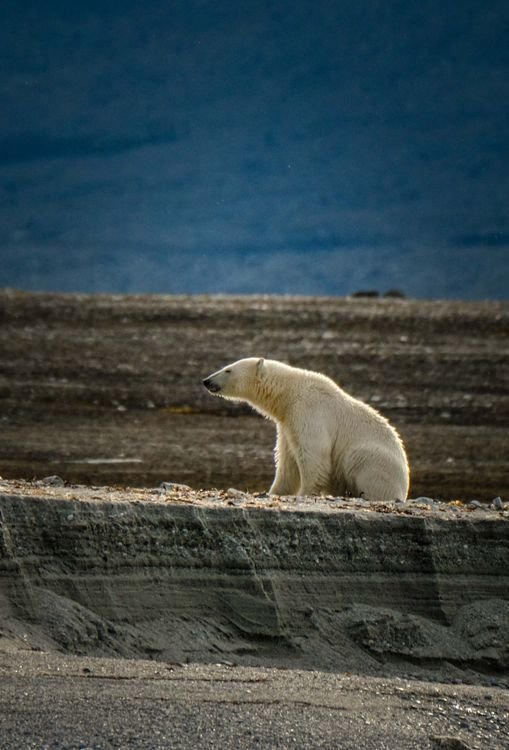
A polar bear pads across thinning sea ice, searching for seals on a platform that melts earlier each spring. A coral reef, bleached white by a marine heatwave, no longer shelters the fish that fed a village. A bird arrives from migration to find the insects it feeds its chicks hatched weeks ago. These are not isolated tragedies. They are the local faces of a planetary pattern: climate change is rewriting the conditions every wild creature evolved to survive in, from the deepest ocean to the highest peaks.
This guide explains how climate change affects wildlife, which animals are most at risk, and where hope remains.
Why wildlife is on the front line
Wild species live or die by climate. Temperature, rainfall, seasonality, and ocean chemistry set the terms of existence: when to breed, where to feed, how to find shelter. Human societies can air-condition buildings and irrigate fields. Wild animals cannot. They must adapt, move, or perish, and the current pace of change is testing those options severely.
The backdrop is already sobering. Wildlife populations have declined by an average of 69 percent since 1970, according to the WWF Living Planet Report, driven by habitat destruction, overexploitation, pollution, and increasingly by climate change. Species are disappearing at rates estimated at 1,000 to 10,000 times the natural background rate. Climate change acts as both a direct killer and a threat multiplier, worsening every other pressure.
What makes climate change uniquely dangerous for wildlife is its speed and its reach. Past natural climate shifts unfolded over millennia, allowing gradual adaptation. Today's warming is happening within the lifetimes of individual long-lived animals, from tortoises to whales, leaving evolution no time to respond. Genetic adaptation typically requires many generations; a bristlecone pine or a bowhead whale experiences the new climate as a single lifetime event.
Habitat loss and shifting ranges
The most visible effect is habitat transformation. Ecosystems are places where species spent millions of years adapting, and they are changing fast.
Polar regions show it starkly. Arctic sea ice, the hunting platform for polar bears and the breeding ground for seals, is shrinking and breaking up earlier. Polar bears must swim farther, fast longer, and increasingly come ashore where they encounter human settlements.
Tropical forests are warming and drying. Some scientists warn the Amazon could transition toward savannah within a century under severe warming, which would make it uninhabitable for most of its current species. Coral reefs, among the most biodiverse ecosystems on Earth, face the double assault of bleaching and acidification.
Many species respond by moving. Birds shift ranges poleward or uphill. Marine species track cooler water toward the poles. Butterflies and dragonflies are colonizing new regions at measurable rates. Mountain species climb to higher elevations. But movement has limits. Cities, farms, and roads fragment the landscape, blocking escape routes. And at the tops of mountains and the ends of peninsulas, there is nowhere left to go. Ecologists call these populations the "escalator to extinction."
Protected areas face a cruel paradox. A reserve drawn on a map to shelter a species can become a trap when the climate inside its boundaries no longer suits that species. In 2022, extreme heat fueled fires that burned more than 20,000 hectares of protected woodland in Gironde, France, killing wildlife from boar to birds across reserves meant to protect them.
Phenological mismatch: timing is everything
Beyond where animals live, climate change disrupts when they do things. The study of seasonal timing is called phenology, and it is unraveling.
Many species time breeding and migration to seasonal cues. Birds may depart on migration by day length, which does not change, while the insects and plants they depend on respond to temperature, which does. The result is phenological mismatch: chicks hatch after the peak of caterpillar abundance, or flowers bloom before their pollinators arrive. Each missed connection ripples through the food web.
Hibernation is shifting too. Some hibernating mammals, from marmots to bears, are emerging earlier each spring as temperatures warm, potentially before food is available. Amphibians breeding in temporary ponds face ponds that dry before tadpoles mature.
Perhaps most troubling, research shows species within the same ecosystem respond differently to warming rather than shifting as a unit. Ecological communities assembled over millennia are being pulled apart, with predators, prey, pollinators, and plants each following their own altered schedule. A famous long-term study of great tits in the Netherlands showed the birds advancing their laying dates but not fast enough to track the earlier caterpillar peak, reducing chick survival in warm years.
Oceans: warming, acidifying, deoxygenating
Marine wildlife faces a triple threat. Warming waters drive species poleward and trigger mass bleaching of coral reefs. Acidification weakens shell-builders from corals to pteropods, the tiny sea snails that feed salmon and whales. And warming reduces oxygen solubility while speeding metabolism, expanding low-oxygen dead zones.
Migration patterns are shifting dangerously. Whales are entering unfamiliar waters and traveling closer to busy shipping lanes, raising the risk of ship strikes and entanglement. Sea turtles face skewed sex ratios, since nest temperature determines sex in many species: hotter beaches produce overwhelmingly female hatchlings. Penguin colonies struggle as krill and fish shift with changing currents and ice.
The base of marine food webs is moving too. Phytoplankton blooms are shifting in timing and location, and the animals that depend on them, from tiny copepods to great whales, must follow or decline. In the North Atlantic, the northward march of plankton communities has already rearranged feeding grounds for commercially vital fish, previewing the larger reshuffling underway across the world's oceans.
Freshwater and mountain species
Rivers, lakes, and mountain streams host disproportionate biodiversity in fragile, isolated systems. Warming water holds less oxygen and favors invasive species over natives. Changing rainfall alters river flows that fish need for spawning migrations. In the Himalaya, Hindu Kush, and Karakoram, warming threatens the cold-water species of high mountain streams, while glacial lake outburst floods can scour entire valleys.
Mountain species worldwide face the escalator problem in its purest form. The snow leopard's alpine prey, the pika's cool talus slopes, the mountain gorilla's shrinking forest islands: each is being pushed upward toward summits that end. Pakistan's own high-mountain wildlife, from markhor to Himalayan brown bears, lives in exactly these shrinking zones.
Amphibians deserve special mention. Already the most threatened vertebrate group from disease and habitat loss, they are exquisitely sensitive to temperature and moisture. Warming dries breeding ponds, shifts disease dynamics, and pushes cloud-forest species off mountaintops. The chytrid fungus, implicated in amphibian declines worldwide, interacts with climate stress in complex ways that researchers are still unraveling.
Disease, fire and extreme weather
Climate change also kills indirectly. Warmer temperatures let mosquitoes and ticks expand into regions they never reached, exposing naive wildlife populations to new diseases. Avian malaria is climbing into Hawaii's high forests, threatening honeycreepers that evolved without it. Tick-borne diseases are spreading among moose and other northern mammals.
Fire regimes are intensifying. Longer, hotter fire seasons turn forests that burned gently for millennia into infernos that sterilize soils and kill slow-moving animals outright. Australia's 2019-2020 bushfires killed or displaced an estimated 3 billion animals, a scale of loss that stunned even seasoned ecologists. In the Amazon, the combination of drought, logging fragmentation, and escaped agricultural fires is pushing fire-sensitive rainforest toward a tipping point it never evolved to survive.
Extreme weather delivers the shocks: hurricanes flattening forests, floods drowning burrows, droughts emptying waterholes. Elephants travel farther for water, coming into conflict with farming communities. One bad season can erase decades of conservation gains for a small population. As extremes intensify, wildlife management increasingly becomes disaster management.
There is even a bodily effect. Warming tends to shrink body size in many species, since smaller bodies shed heat more efficiently. But smaller animals dehydrate faster and may produce fewer offspring, a subtle erosion of fitness.
Case studies: five species on the edge
Statistics describe the crisis. Individual species make it real.
Polar bears are the iconic victims, and the science backs the symbol. As sea ice breaks up earlier, bears face longer fasting periods. Studies in Hudson Bay show declining body condition and cub survival in poor ice years. Some populations are stable for now, but the long-term trajectory follows the ice.
Staghorn corals built the Caribbean's reefs and have lost the majority of their cover since the 1970s to bleaching, disease, and hurricanes. They are now listed as threatened, and their decline has restructured entire reef ecosystems.
American pikas live on cool mountaintops across western North America and cannot survive prolonged heat. As temperatures rise, they have vanished from lower elevations, retreating upward. They are among the fastest-documented mammalian responses to warming.
Green sea turtles face a demographic time bomb. Warmer sand produces more females, and some major rookeries now produce over 90 percent female hatchlings. A population of only females has no future.
Adelie penguins in parts of Antarctica are declining as sea ice and krill shift, while gentoo penguins expand southward into their former range. The changing of the guard is visible within a human lifetime.
Each case shows a different mechanism: lost platform, lost symbiosis, thermal limits, skewed reproduction, shifting food. Together they map the many roads by which warming harms wildlife.
Who is most at risk
Risk concentrates where exposure meets vulnerability: species with narrow climate tolerances, small ranges, specialized diets, or nowhere to move. Conservation biologists use these traits to triage limited resources, focusing protection on the species and places where intervention can still change outcomes.
| Risk factor | Example species | Why it matters |
|---|---|---|
| Ice-dependent | Polar bears, ringed seals | Platform literally melting |
| Reef-dependent | Coral reef fish, sea turtles | Habitat bleaching and eroding |
| Mountaintop | Pikas, snow leopards, golden toads | Nowhere higher to go |
| Phenology-sensitive | Migratory songbirds, caribou | Timing mismatches with food |
| Disease-naive | Hawaiian honeycreepers | New pathogens arriving |
| Small isolated populations | Galapagos tortoises, vaquita | No genetic or geographic buffer |
At 2°C of warming, an estimated 8 percent of mammals would lose half their habitat, and 99 percent of coral reefs would vanish. Those are not distant abstractions. They describe the world today's children will inherit under current trajectories, and they underline why every tenth of a degree matters.
The extinction question: how many species are at risk
How many species will climate change push to extinction? The honest answer is that no one knows precisely, but the estimates are sobering. A large meta-analysis projected that climate change threatens roughly 7.6 percent of species with extinction, averaged across emissions scenarios. Other studies warn that up to half the species in the richest areas, like the Amazon and Galapagos, could face extinction by century's end under high warming.
These numbers come with wide uncertainty because extinction is hard to predict. Species surprise us with resilience, and models cannot capture every adaptation. But the direction is consistent across methods: the faster and further warming goes, the more species cross thresholds they cannot survive.
It is also worth remembering that documented climate-driven extinctions have already occurred. The Bramble Cay melomys, a small Australian rodent, was declared extinct in 2016 after sea level rise and storm surges destroyed its only island habitat, the first mammal extinction attributed primarily to climate change. The golden toad of Costa Rica vanished as its cloud forest warmed and dried. These are not projections. They are obituaries.
What gives hope
The picture is grim, but it is not hopeless, and the hope is evidence-based.
First, species are resilient when given room. Wildlife corridors that connect fragmented habitats let animals shift ranges naturally. Expanding and connecting protected areas is among the most effective climate adaptations for biodiversity.
Second, reducing other pressures buys time. A reef spared from overfishing and pollution survives bleaching better. A forest spared from logging weathers drought better. Conservation that addresses the full threat stack multiplies its impact. This is why marine protected areas, anti-poaching enforcement, and pollution control are climate strategies too, not distractions from them.
Third, restoration works. Rewilding projects, from wolves in Yellowstone to beavers across Europe to mangroves in the Indus Delta, show ecosystems can rebound when key species return and pressures lift. Assisted migration, moving species to newly suitable habitats, is being tested carefully.
Fourth, climate action is wildlife action. Every fraction of a degree of warming avoided is habitat preserved, migrations kept intact, and extinctions prevented. The same emissions cuts that protect human communities protect wild ones.
Finally, people care, and that matters. The growth of community conservancies, citizen science, and Indigenous-led stewardship shows conservation's human base widening. In Pakistan, community-managed conservancies have helped markhor populations recover, proving that local stewardship works even under climate pressure. Wildlife survived past planetary upheavals. With space, time, and a stable climate, it can survive this one too, if we give it the chance.
Frequently asked questions
How does climate change affect animals? Through habitat loss and shifting ranges, disrupted breeding and migration timing, ocean warming and acidification, new diseases, more intense fires and storms, and direct physiological stress. These effects combine and amplify each other.
Which animals are most affected by climate change? Polar species like polar bears, coral reef species, mountaintop animals like pikas and snow leopards, migratory birds facing timing mismatches, amphibians, and species with small isolated populations face the greatest risk.
What is phenological mismatch? It is the disruption of seasonal timing between interdependent species, such as birds arriving after their insect food has peaked, caused by different species responding to warming at different rates.
Can animals adapt to climate change? Some can, by shifting ranges or adjusting behavior, but the current rate of change outpaces most species' adaptive capacity. Adaptation works best when combined with connected habitats and reduced pressures.
How does climate change cause extinction? By destroying or shifting habitats faster than species can follow, breaking ecological timing, spreading disease, and shrinking populations until they cannot recover. At high warming levels, these pressures drive vulnerable species over the edge.
Has climate change already caused extinctions? Yes. The Bramble Cay melomys, an Australian island rodent, went extinct after sea level rise destroyed its habitat, and the golden toad of Costa Rica vanished as its cloud forest warmed. Both are attributed primarily to climate change.
What can I do to help wildlife and climate? Support habitat protection and wildlife corridors, reduce your carbon footprint, back conservation organizations, participate in citizen science, and vote for climate action. Individual and collective action both matter.
Wildlife did not cause climate change, but wildlife is paying for it first. The moral of this story is also its strategy: protecting the climate and protecting wild creatures are the same task, pursued on the same timeline, with the same urgency. Every tonne of emissions avoided is habitat kept, every corridor connected is a migration saved, and every fraction of a degree matters to the wild lives hanging in the balance.