Lal Suhanra National Park: Wildlife, History & Visitor Guide
Thirty-five kilometres east of Bahawalpur, where the irrigated plains of Punjab give way to the Cholistan Desert, lies one of Pakistan's most unusual protected areas. Lal Suhanra National Park packs desert dunes, planted forest and a freshwater wetland into a single landscape, and it carries a distinction no other Pakistani park had for decades: in 1977 it became the country's first UNESCO biosphere reserve.
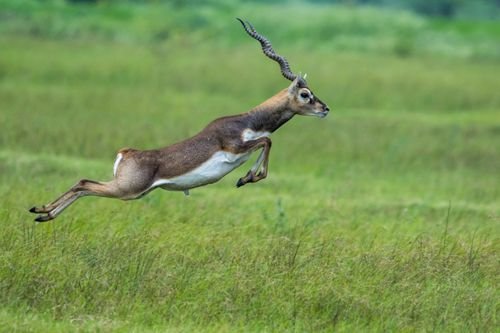
For wildlife lovers, the park is best known for one animal above all others. The blackbuck, a graceful antelope that vanished from Pakistan's wild, was brought back here through a captive breeding program. Today its herds are the living centerpiece of a park that also shelters chinkara gazelles, nilgai, Indian wolves and more than 160 bird species. This guide covers the park's landscape, its wildlife, the remarkable story of the blackbuck's return, the pressures the park faces, and how to plan a visit.
Where desert, forest and wetland meet
Lal Suhanra sits on the northwestern edge of the Cholistan Desert in Bahawalpur district, Punjab. According to the Punjab Wildlife Department, the park now covers 162,568 acres, making it one of the largest national parks in South Asia. It did not start out that large: it was notified on 77,480 acres in 1972, gained another 50,000 acres in 1984, and 35,088 acres more in 2000.
What makes the park genuinely unusual is not its size but its three-part geography. The land is divided into roughly 20,974 acres of green land (irrigated plantations), 101,726 acres of dry desert, and 4,780 acres of wetland (ponds and lakes). The terrain is mostly flat, broken by sand dunes one to six metres high, some of them sprawling across thousands of acres. The Desert Branch Canal runs through the park, and the dried bed of the ancient Ghaggar-Hakra River crosses it too, a reminder that this desert was once fed by a living river.
The desert section belongs to the Cholistan system: open sand, scrub and hardy grasses. The forest is mostly man-made, planted in the British colonial era (like Changa Manga) and expanded since, dominated by sheesham (Indian rosewood), kikar and other irrigated plantation species. The wetland centres on Patisar Lake, a large body of water at the park's heart. This combination, three ecosystems side by side, is exactly what earned the park its international recognition.
From the Nawab's hunting ground to a biosphere reserve
Long before it was a park, this land was the private hunting ground of the Nawab of Bahawalpur, the princely state that ruled the region until it merged with Pakistan. The Nawabs built enormous ponds here to store water when the Sutlej River ran low, and the Forest Department later turned parts of the area into irrigated plantations.
The modern park's history moved in clear steps. It was declared a game reserve in 1968, then notified as a national park on 26 October 1972, following the recommendations of the 1971 Wildlife Inquiry Committee. In 1977, UNESCO designated it a biosphere reserve under the Man and the Biosphere (MAB) Programme, Pakistan's first. For decades it shared that honour with only one other Pakistani site, the Ziarat juniper forest, which was added in 2013. Two more reserves joined the list in 2023, bringing the national total to four.
The park is also an archaeological site. Remains of an ancient civilization have been found along the dry Hakra River bed, part of the wider Indus Valley story written across Cholistan.
The blackbuck comeback
The blackbuck (Antilope cervicapra) is the park's signature conservation story. This elegant antelope, with its spiralled horns and striking black-and-tan colouring in males, once roamed the plains and deserts of the subcontinent. In Pakistan it was hunted to extinction in the wild. Lal Suhanra became the place where it was brought back.
The reintroduction began in the early 1980s, when a small number of blackbuck were imported from Texas in the United States to stock breeding programs at Kirthar in Sindh and Lal Suhanra in Punjab. A peer-reviewed survey of the park's vertebrate fauna records that the animals were held in two enclosures, RD25 and RD65, one semi-natural and one completely natural, with no artificial food or medication in the latter. A herd of 413 animals was later recorded in the park, one of the largest blackbuck populations in the country.
The Punjab government formalised the effort with a dedicated Blackbuck Breeding Center scheme at Lal Suhanra, implemented from July 2013 to June 2016 at a cost of about Rs. 196.8 million. Its stated aims were to propagate the animals and then release them into their original range in the Cholistan Desert, sell surplus animals to wildlife enthusiasts, and even arrange trophy hunting of blackbuck to fund the program. A Punjab government evaluation report, however, painted a sobering picture of the enclosures: high mortality, widespread illegal hunting and fawn-lifting, dilapidated cages, staff shortages and poor security.
Concern for the species reached the courts. In 2019, on a writ petition warning that the blackbuck was disappearing from Punjab's plains and deserts, the Lahore High Court ordered a commission on blackbuck breeding and preservation, which met at Lal Suhanra. Park officials told the commission that the park and the Houbara Foundation held about 500 blackbuck. The blackbuck is still classed as endangered in Pakistan, but without the Lal Suhanra program it might have vanished from the country entirely.
The park has also hosted reintroduced Indian rhinoceros, and its official management objectives name the chinkara, blackbuck and nilgai (blue bull) as priority species for conservation and for restoring their native gene pools.
Wildlife you can see
Beyond the blackbuck, Lal Suhanra protects a genuine cross-section of Cholistan's fauna. Native mammals include the Indian hog deer, chinkara, blackbuck, nilgai, Indian wolf, wild boar, white-footed fox, Asiatic wildcat and Indian hare. The chital (spotted deer) has been introduced. Jackals, red foxes and the smooth-coated otter have been recorded on evening surveys.
Birds are the park's other great draw. More than 160 species have been recorded, a remarkable list for a desert-edge site. It includes the houbara bustard, marsh harrier, hen harrier, laggar falcon, peregrine falcon, kestrel, Indian sparrowhawk, crested honey buzzard, black kite, shikra, griffon vulture and Egyptian vulture, along with barn owls, pied cuckoos, parakeets, the Sind woodpecker, common quail, bulbuls, larks, shrikes and wheatears. Patisar Lake and the smaller ponds pull in migratory waterfowl: flamingos and herons visit seasonally, and in midwinter the lake regularly holds between 10,000 and 30,000 ducks and common coot.
Reptiles are well represented too: the monitor lizard, Russell's viper, Indian cobra, saw-scaled viper, wolf snake, John's sand boa and the spiny-tailed lizard all occur here. Visitors should treat the venomous snakes with proper respect and stick to paths and guided tours.
Lal Suhanra wildlife at a glance
| Group | Notable species |
|---|---|
| Antelope and deer | Blackbuck (reintroduced), chinkara, nilgai, Indian hog deer, chital (introduced) |
| Carnivores | Indian wolf, Asiatic wildcat, white-footed fox, red fox, jackal |
| Other mammals | Wild boar, Indian hare, smooth-coated otter |
| Raptors | Houbara bustard, laggar falcon, peregrine falcon, marsh and hen harriers, griffon and Egyptian vultures, kestrel, shikra |
| Waterbirds | Ducks (10,000-30,000 in midwinter), common coot, flamingos, herons, kingfishers |
| Reptiles | Monitor lizard, Russell's viper, Indian cobra, saw-scaled viper, wolf snake, John's sand boa, spiny-tailed lizard |
Patisar Lake: the park's beating heart
If the desert is the park's body and the forest its lungs, Patisar Lake is its heart. The lake began life as a reservoir, one of the great ponds built by the Nawab of Bahawalpur to store canal water, and it remains the largest single wetland in the park. Its calm water and fringing reeds make it the premier birdwatching spot in the region, and boating is available for visitors.
The lake has changed over the decades. The UNESCO-linked site description notes that it was once an important wintering habitat for waterfowl but is now largely covered with reed beds and aquatic vegetation, a natural process of silting and plant succession that park managers watch closely. Its health depends on the Desert Branch Canal, and the park's management plan stresses that a sufficient supply of canal water is essential for both fauna and flora. When water flows, the lake fills with ducks, coots, herons and kingfishers; when it shrinks, the whole food web feels it.
Threats the park still faces
Lal Suhanra's protected status has not shielded it from pressure. The vertebrate diversity study and government evaluations list a consistent set of problems. Illegal hunting and the lifting of newborn fawns continue, helped by staff shortages, inadequate security and damaged fencing around enclosures. The enclosures themselves have suffered from years of deferred maintenance.
Water is the second great vulnerability. The park's wetlands and plantations depend on canal supply, and any disruption ripples through the ecosystem. Encroachment, wood cutting and pollution add to the strain, while tourism itself needs careful management: the park is one of the most visited in the region, and its own success draws crowds that must be kept from disturbing sensitive areas.
There is also a longer-term ecological question. Reintroductions and breeding programs can only succeed if the habitat holds. Conservationists argue that the park needs sustained funding, repaired infrastructure, stronger anti-poaching enforcement and, crucially, the involvement of surrounding communities, who share the landscape with the wildlife.
On the positive side, the park has real assets to build on: an active management plan, the participation of organisations like WWF-Pakistan in blackbuck discussions, a tourism development corporation (TDCP) that runs awareness programs and a motel near the park, and the simple fact that three ecosystems in one place give managers room to protect a wide range of species at once.
Planning a visit
Lal Suhanra is one of the most accessible national parks in Pakistan. It lies about 35 km east of Bahawalpur city and is reachable by road; there is even a railway station at Lal Suhanra. By road, Multan is roughly 130 km away (about two and a half hours), Lahore about 460 km (around six hours via the M3), and Islamabad about 660 km.
The park offers watchtowers, tourist huts, rest houses, camping grounds and trekking routes. TDCP operates a motel with air-conditioned double rooms near the park. Visitors can explore on guided jeep tours, walk hiking trails, and use dedicated birdwatching spots around the wetlands. A lion safari operates within the park, letting visitors see lions in a large enclosed setting, and there is a small zoo and visitor education area. Photography and educational visits are popular, and the park is a frequent destination for university field trips in biology and environmental science.
The best season for a visit is October to March. Winter brings the migratory ducks and coots to Patisar Lake in their tens of thousands, the desert heat eases, and the light is superb for photography. Summers are intensely hot, as you would expect on the edge of Cholistan. Bring water, sun protection and binoculars, and consider hiring a local guide: the park is large, and a guide will find you the blackbuck herds and the best birding spots far faster than you would alone.
A perfect winter's day at Lal Suhanra
If you have one day, winter is the season to spend it here. Arrive early, just after sunrise, when the desert air is still cool and the blackbuck herds are grazing in the open. A guide from the park office can take you by jeep to the enclosures and grassland areas where the herds gather, and the low morning light is ideal for photography.
By mid-morning, head for the irrigated forest. The sheesham and kikar plantations are the park's green core, and this is where you are most likely to see wild boar, jackals and the smaller birds: parakeets, bulbuls, shrikes and the Sind woodpecker. The watchtowers give a good vantage over the surrounding scrub, where chinkara and nilgai sometimes appear at a distance.
Reserve the middle of the day for Patisar Lake. The light on the water is at its best before the afternoon haze, and the winter flocks of ducks and coots are usually settled and easy to watch. Bring a spotting scope if you have one: with patience you can pick out marsh harriers quartering the reed beds and, with luck, a laggar falcon or peregrine stooping over the water. Boating is available, and a slow circuit of the lake is the most relaxing hour you will spend in the park.
Late afternoon belongs to the desert. Drive out toward the dunes as the sun drops, and watch the light turn the sand gold. This is also when the park's carnivores stir: foxes, jackals and, if you are very fortunate, an Indian wolf moving along a dune crest. End the day at one of the rest houses or the TDCP motel, and you will have seen all three of the park's worlds in a single day.
Frequently asked questions
Where is Lal Suhanra National Park? It is in Bahawalpur district, Punjab, about 35 km east of Bahawalpur city, on the northwestern edge of the Cholistan Desert. It occupies land on both sides of the Desert Branch Canal.
Why is Lal Suhanra famous? It is Pakistan's first UNESCO biosphere reserve (designated 1977), one of the largest national parks in South Asia, and the home of the country's flagship blackbuck reintroduction program. Its rare combination of desert, forest and wetland in one protected area sets it apart.
What animals can I see at Lal Suhanra? Reintroduced blackbuck herds are the highlight, along with chinkara, nilgai, Indian hog deer, Indian wolf, wild boar, jackals and foxes. Birdwatchers can expect more than 160 species, including houbara bustards, falcons, vultures and huge winter flocks of ducks and coots on Patisar Lake.
Is the blackbuck extinct in Pakistan? It is extinct in the wild in Pakistan but survives in captivity and in managed populations, above all at Lal Suhanra and Kirthar, thanks to reintroduction programs that began in the 1980s with animals imported from Texas. It remains endangered in the country and its long-term future depends on continued breeding, protection and habitat management.
When is the best time to visit? October to March. Winter is the season for migratory waterfowl on Patisar Lake, temperatures are comfortable, and wildlife viewing is at its best. Avoid the peak summer heat of May to August.
How big is the park? The Punjab Wildlife Department gives the current area as 162,568 acres (about 658 square kilometres), divided into irrigated plantations, desert and wetlands.
Can you stay overnight at Lal Suhanra? Yes. The park has rest houses, tourist huts and camping grounds, and the Tourism Development Corporation of Punjab operates a motel with air-conditioned rooms near the park.
A park worth the detour
Lal Suhanra will never compete with the high Himalaya for drama, and that is precisely its value. It protects a quieter, drier, more fragile Pakistan: the Cholistan fringe where an antelope extinct in the wild learned to live again, where a Nawab's reservoir became a winter refuge for 30,000 ducks, and where three ecosystems share one boundary. For students of conservation it is a living case study in reintroduction, with all the messy realities that textbooks skip. For everyone else, it is simply a beautiful, accessible day out from Bahawalpur, and a reminder that Pakistan's wild heritage is not only in its mountains.