Kirthar National Park: Sindh’s Ancient Mountain Refuge
The Kirthar Mountains rise out of the Sindh plains like a wall, a jagged north-south ridge of rock separating Sindh from Balochistan. Hidden in those mountains is one of Pakistan's most historically important protected areas: Kirthar National Park. Established in 1974, it was the second national park ever declared in Pakistan and the first Pakistani park to be included on the United Nations list of National Parks and Equivalent Reserves in 1975.
At 3,087 square kilometers, Kirthar is the country's third-largest national park, a vast sweep of stony hills, dry riverbeds, and rocky valleys in Dadu and Jamshoro districts. It is a park of survivors: the Sindh ibex, the provincial animal of Sindh, clings to its cliffs; the Blandford's urial grazes its rocky slopes; and the blackbuck, extinct in the wild in Pakistan, is being bred in enclosures here for an eventual return. Add one of the largest forts in the world inside the park boundary, and Kirthar becomes a place where natural and human history are impossible to separate.
Pakistan's pioneering national park
Kirthar's conservation history runs deeper than its 1974 notification. Before partition, the area served as a hunting reserve of the Talpurs, the rulers of Sindh. After 1947, the head of the Burfat tribe held the same privilege. Unregulated hunting with modern firearms took a heavy toll on wildlife through the mid-20th century.
The turnaround began in the 1960s. A Range Management Project was started by the Forest Department in 1965 to check habitat degradation. The same year, the park area lying in Karachi District was reclassified as Protected Forest. Most of the tract became a Game Reserve in 1970. In 1972 it was declared a wildlife sanctuary under the Sindh Wildlife Protection Ordinance, and on 31 January 1974 the sanctuary was converted into Kirthar National Park.
That 1974 declaration made Kirthar the second national park in Pakistan, after Lal Suhanra. The following year it became the first Pakistani national park included in the UN's 1975 list of National Parks and Equivalent Reserves, a recognition of its international significance. Along with the nearby Hub Dam area, it was designated an Important Bird and Biodiversity Area (IBA) in 2004.
This layered history matters because it shows how conservation in Pakistan evolved: from royal hunting grounds to game reserves to sanctuaries to national parks, each step adding protection. Kirthar was the testing ground.
Where Kirthar is: the mountains between two provinces
The park lies in the Kirthar Range in Dadu and Jamshoro districts of Sindh, north and west of Karachi. The nearest city is Jamshoro. The range forms a natural boundary between Sindh and Balochistan provinces, and the park's ridges run like a spine through arid country.
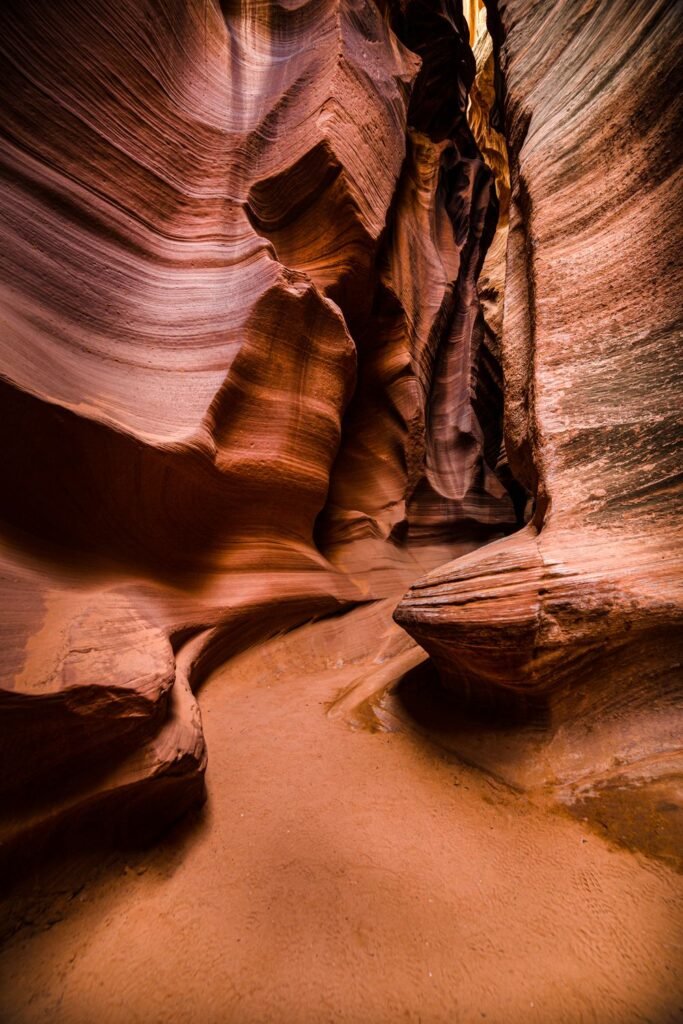
The landscape is classic desert mountain: stony hills, dry riverbeds that flash with water only after rain, and rocky valleys between low, jagged ridges. Elevations rise from the Sindh plains toward upland plateaus, with Zardak Peak reaching about 2,260 meters, the highest point in the range. The transition from lowland desert to upland plateau creates varied microhabitats in a small vertical span.
The climate is harsh. Mean annual rainfall is only 150 to 200 millimeters, most of it falling in July and August during the monsoon. There are two main seasons: winter from October to February, and a long summer from March to September when temperatures routinely exceed 38°C. Drought is a recurring crisis; the park endured years with almost no rain between 1996 and 2001, putting extreme stress on wildlife. Water is the limiting factor for everything that lives here.
Vegetation is sparse but specialized. Xerophytic plants dominate: acacia trees (including Acacia arabica), wild olives, Commiphora shrubs, and thorny scrub. After the monsoon, seasonal grasses and herbs flush green across the rocky ground, a brief abundance that the park's herbivores depend on. This is a landscape that looks empty to the casual eye and reveals its richness slowly. Patient visitors who stop, scan the ridgelines with binoculars, and wait are the ones who see Kirthar properly.
The ungulates: ibex, urial, and chinkara
Kirthar's fame rests on its wild goats, sheep, and gazelles, animals superbly engineered for rock and heat. Three species define the park's herbivore community.
| Species | Status and notes | Reported population |
|---|---|---|
| Sindh ibex (Capra aegagrus blythi) | Provincial animal of Sindh; cliff specialist | Recovered strongly under protection; reported around 20,000 in recent estimates |
| Blandford's urial (Ovis vignei blanfordi) | Vulnerable wild sheep of rocky slopes | Estimated 10,425 in park management documents |
| Chinkara / Indian gazelle (Gazella bennettii) | Desert gazelle of the lowlands | Estimated 1,060 in park management documents |
The Sindh ibex is the park's signature animal and one of Sindh's most iconic wild mammals. A muscular wild goat with massive ridged horns curving back over its shoulders, it is perfectly adapted to the steepest terrain in one of Pakistan's driest landscapes. It has become a genuine conservation success story: from an estimated 1,200 animals in the 1970s, protection from poaching allowed the population to climb to roughly 20,000 by 2022 according to reported estimates. Watching a herd pick across a cliff face at dawn is the definitive Kirthar experience.
The Blandford's urial, a subspecies of the urial wild sheep, favors rocky sites with characteristic vegetation, concentrated near Khar and Dumbar with smaller numbers elsewhere. The chinkara occupies the lowlands, sharing much of its habitat with farmland at the park's edges, which brings it into the most contact, and conflict, with people.
These herbivores are the foundation of the food web. Everything above them, from wolves to vultures, depends on their abundance, which is why anti-poaching work in Kirthar has always focused first on protecting the ungulates.
Predators and smaller carnivores
Kirthar's predator story is bittersweet. The park's mammal list includes the Sindh leopard (Panthera pardus fusca), listed as endangered, but the cats have been essentially extirpated: the last leopard was reportedly shot in 1977. Most large predators suffered the same fate under decades of hunting pressure before protection arrived.
What remains is still impressive. The Indian wolf (Canis lupus pallipes) hunts the open ground. The striped hyena, a shy nocturnal scavenger, works the valleys by night. The honey badger, or ratel, famous for its ferocity, digs and forages across the park. Jungle cats stalk the scrub, and the caracal, a lynx-like cat with tufted ears, is reported as threatened here. Smaller carnivores include the Indian fox, golden jackal, and the Indian pangolin.
The absence of the leopard is Kirthar's great ecological hole. Apex predators regulate herbivore populations and shape entire ecosystems, and their loss changes how the park functions. Whether leopards could ever return, dispersing from Balochistan's wilder ranges, is an open question that depends on prey abundance, protection, and tolerance from local communities. For now, the wolf and hyena are the park's top terrestrial predators, and they do vital work.
The blackbuck: a reintroduction story
The blackbuck (Antilope cervicapra) is one of South Asia's most beautiful antelopes: the males coal-black above and white below, with spiraling horns, the females a warm tan. It was once widespread across the Indus plains, but hunting and habitat loss wiped it out. The blackbuck is now extinct in the wild in Pakistan.
Kirthar is central to the effort to bring it back. In October 1984, fifteen blackbuck were brought from the United States to the Khar visitor centre in the park for captive propagation, with the plan of eventually reintroducing the species. The program expanded: blackbuck are also maintained at Lal Sohanra National Park in Punjab, where a herd of 413 animals was noted in 2022. Kirthar keeps its animals in protected enclosures as the breeding and reintroduction project continues.
Reintroduction is slow, careful work. Captive-bred animals must learn to survive predators, find water, and avoid people, and the habitat must be ready to receive them. But the blackbuck project at Kirthar represents something important: a refusal to accept extinction as final. If the antelope ever runs wild in Sindh again, it will be because of the enclosures at Khar.
Birds and reptiles of the rocky hills
Kirthar's birdlife reflects its position at the meeting point of desert and mountain. Park documents list 58 bird species, with the real total likely higher when migrants are counted. Raptors dominate the skies: Bonelli's eagles, imperial eagles, tawny eagles, and golden eagles hunt the ridges, while Eurasian griffon vultures and Egyptian vultures ride the thermals. The lammergeier, or bearded vulture, visits in winter, a spectacular bone-eating specialist. Laggar falcons, kestrels, and red-headed merlins add speed to the mix.
On the ground, the houbara bustard, a prized and threatened game bird, uses the open plains. Grey partridges, see-see partridges, and several sandgrouse species (close-barred, Indian, coronetted, and painted) are adapted to the arid ground. The Sind pied woodpecker, Hume's chat, brown rock pipits, hoopoes, shrikes, and wheatears fill out the songbird community. The park's IBA designation, shared with the Hub Dam area, recognizes this avian richness and its importance for migratory species.
Reptiles are at home in the rocks. Monitor lizards are common, and several snake species including the Indian python occur here. The mugger crocodile is reported from the park's water bodies, most likely around the Hub Dam and seasonal pools. In a landscape this dry, every permanent water point becomes a magnet for wildlife, and the reptiles know it.
Ranikot Fort: the Great Wall of Sindh
Inside the national park stands one of the most astonishing human structures in Pakistan: Ranikot Fort. Often called the Great Wall of Sindh, it is among the largest forts in the world, its stone walls snaking for kilometers across the Kirthar hills, following ridgelines and dipping into valleys. Its origins are debated, with parts possibly dating back centuries and rebuilt in the 19th century, but its scale is undeniable.
The fort's presence inside the park creates a rare combination: world-class heritage wrapped in wilderness. Visitors come for the walls and stay for the landscape, or the reverse. Sindh ibex graze within sight of the ramparts. Eagles nest on the cliffs below the walls. Few places on Earth let you watch wild goats from a fortress wall.
Ranikot also complicates park management. Heritage tourism brings visitors, vehicles, and development pressure into a protected area. Balancing the fort's preservation and its visitors with the needs of wildlife is an ongoing task for the Sindh Wildlife Department. Done well, the fort is Kirthar's greatest asset for public support: people who come for history leave caring about the ibex.
Visiting: best season, safaris, and rest houses
Best time to visit Kirthar National Park: Mid-October to mid-March. Winter days are pleasant, wildlife is more active, and the summer furnace, with temperatures above 38°C, is avoided. December to February is the core season. The monsoon months of July and August bring the rain the park depends on but also heat, humidity, and difficult tracks.
Getting there: The park is accessible by jeep tracks from the Karachi-Hyderabad corridor. A 4×4 vehicle is essential; the terrain is rough and the distances inside the park are large. Most visitors arrange trips through tour operators or contact the Sindh Wildlife Department, which manages access and can provide guidance.
Where to stay: The Sindh Wildlife Department maintains rest houses in the park, including facilities at Karchat and Khar, offering basic accommodation for visitors planning longer stays. Book ahead through the department. Camping is possible for the well-prepared, but this is serious desert mountain country: carry all water, food, and fuel, and be ready for cold nights even after hot days.
What to do: Guided jeep safaris are the main activity, best done with local guides who know where the ibex herds water and where the chinkara feed at dawn. Nature walks in the cooler months, photography, and visits to Ranikot Fort round out the experience. Wildlife viewing is best in the early morning and late afternoon when animals are active and the light flatters the red rocks.
What to bring: More water than you think you need, sun protection, sturdy footwear, binoculars, and a camera with a long lens. Mobile coverage is patchy, so download offline maps. Travel in convoy or with a guide; the park is remote and breakdowns far from help are a real risk.
Threats and conservation
Kirthar's conservation record is mixed, which is honest for a park this old and this used. On the success side, the Sindh ibex recovery is genuine, protection ended the worst of the hunting, and the blackbuck breeding program keeps a species' future alive. The park's size and ruggedness still shelter functioning desert-mountain ecosystems.
The threats are familiar across Pakistan's protected areas but sharpened by aridity. Illegal hunting persists in areas where enforcement is thin. Livestock grazing competes with wild herbivores and degrades the fragile vegetation. Water scarcity, worsened by drought cycles, concentrates animals and people at the same shrinking water points. Land encroachment nibbles at the park's edges. And the proposed developments that always circle a park this close to Karachi require constant vigilance.
The Sindh Wildlife Department runs monitoring and community engagement programs, but conservationists argue that more investment is needed: better-funded patrols, water management, and genuine community partnerships of the kind that worked for the markhor in the north. Kirthar was Pakistan's pioneer national park. It deserves pioneer-level protection.
FAQ
Where is Kirthar National Park located?
In the Kirthar Mountain Range, spanning Dadu and Jamshoro districts in Sindh, Pakistan, north and west of Karachi. The range forms a natural boundary between Sindh and Balochistan provinces.
When was Kirthar National Park established?
It was declared a wildlife sanctuary in 1972 and converted to a national park on 31 January 1974, making it Pakistan's second national park. In 1975 it became the first Pakistani park on the UN list of National Parks and Equivalent Reserves.
What animals live in Kirthar National Park?
Sindh ibex, Blandford's urial, chinkara gazelle, Indian wolf, striped hyena, honey badger, jungle cat, caracal, Indian fox, and blackbuck in breeding enclosures. Leopards were historically present but the last was shot in 1977. Birdlife includes eagles, vultures, falcons, and houbara bustards.
What is the blackbuck reintroduction project at Kirthar?
Blackbuck are extinct in the wild in Pakistan. Since October 1984, when 15 animals were brought from the USA to the Khar visitor centre, Kirthar has maintained blackbuck in protected enclosures for captive breeding, with the long-term goal of reintroducing the species to the wild.
Is Ranikot Fort inside Kirthar National Park?
Yes. Ranikot Fort, one of the largest forts in the world and known as the Great Wall of Sindh, lies within the park's boundaries, making Kirthar a combined wildlife and heritage destination.
What is the best time to visit Kirthar National Park?
Mid-October to mid-March, with December to February ideal. Summers are extremely hot, often exceeding 38°C. A 4×4 vehicle is essential, and arranging access through the Sindh Wildlife Department or a tour operator is recommended.