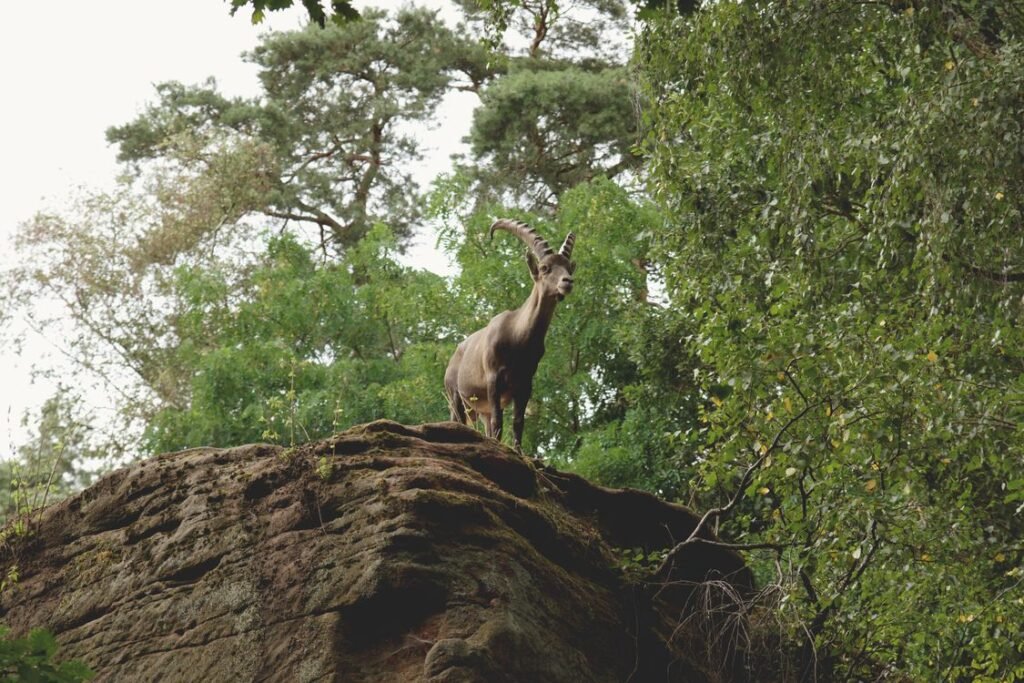
Chitral Gol National Park: The Markhor’s Mountain Stronghold
The wind comes off the ridgeline sharp enough to sting, and somewhere below in the juniper scrub a markhor kicks a stone loose that clatters for three full seconds before the silence returns. That silence is the point of Chitral Gol National Park. Tucked into the mountains just northwest of Chitral town in Khyber Pakhtunkhwa, this is one of the few places on Earth where you can reliably watch wild markhor, Pakistan's national animal, going about their lives on near-vertical cliffs.
Chitral Gol is small by the standards of Pakistan's great parks, just 7,750 hectares, but it carries outsized importance. It holds the largest population of markhor anywhere in the world, a species that was sliding toward extinction a generation ago. It also shelters snow leopards, Himalayan ibex, and a cast of high-mountain predators, all within a two-hour drive of a lively bazaar town. Few national parks anywhere combine that kind of wildlife density with that kind of accessibility.
The park's story is also a human one: a former royal hunting ground, a decades-long legal dispute over who owns it, and a community-based conservation model that turned poachers into protectors. To understand Chitral Gol, you have to understand the markhor, and to understand the markhor, you have to start with the mountain.
The park the Mehtar once owned
Chitral Gol's history is unusual. Until 1983, the entire area was the private property of the Mehtar of Chitral, the ruler of the former princely state. The Mehtars used it as a hunting reserve and summer retreat, which, paradoxically, protected its wildlife: royal game reserves often survived because only the ruler could hunt there.
When the state was absorbed into Pakistan, the land's status became contested. The park was officially established as a national park in 1984, but the heirs of the former Mehtar challenged the takeover, and the ownership dispute has been in litigation for decades. It is a strange legal limbo for a national park, but it has not stopped conservation work on the ground.
The name "Gol" refers to the valley and stream at the park's heart. The park is also sometimes called Chitral National Park, though Chitral Gol is the formal name. Whatever you call it, its purpose has been consistent since 1984: protect the markhor and the mountain ecosystem around it.
Where Chitral Gol is and what it looks like
The park sits in Lower Chitral District, beside the Chitral River, roughly a two-hour drive from Chitral town. The road in is narrow and rough, worse in rain, which keeps visitor numbers low and the atmosphere wild.
Elevation runs from about 1,450 meters at the valley floor to nearly 5,000 meters at the highest ridges. That vertical range compresses several ecological zones into a small area: riverine scrub at the bottom, coniferous forest (cedar, blue pine, fir, birch) through the middle elevations, juniper and holly oak on the drier slopes, and alpine meadows above the treeline.
Three valleys cut through the park, and glaciers at the heads of those valleys feed springs that join into a single stream running about 18 kilometers eastward into the Chitral River. The water is cold year-round, and the stream corridor is the park's green spine, lined with vegetation that draws both wildlife and livestock.
At the park's edge sits Birmoghlasht, at about 2,800 meters above sea level, where the Mehtar's summer fort still stands. The fort was built to overlook the whole of Chitral, and the Mehtar's court moved here in summer during the state's existence. Today Birmoghlasht is a popular viewpoint and picnic spot, a short drive from town, and the easiest taste of the park for casual visitors.
The markhor: Pakistan's national animal
The markhor (Capra falconeri) is a large wild goat built for cliffs. Both sexes carry the spectacular spiraled horns that give the species its English nickname, the screw-horned goat. Males' horns can reach 160 centimeters, and the animals stand up to 115 centimeters at the shoulder. The name "markhor" comes from Persian, commonly translated as "snake eater," from an old belief that the goats killed and ate snakes.
Taxonomists recognize several forms, and the one in Chitral Gol is the Kashmir markhor (Capra falconeri cashmiriensis), also called the flare-horned markhor for the wide outward flare of its horns. It is an animal of steep, rocky slopes between roughly 600 and 3,600 meters, browsing on shrubs, grasses, and leaves, and descending to lower slopes in winter when snow covers the high pastures.
The species' conservation journey is remarkable. Heavily hunted for meat and trophies through the 20th century, and squeezed by livestock competition and habitat loss, the markhor was listed as Endangered on the IUCN Red List. As community-based protection took hold in Pakistan, populations recovered, and in 2015 the species was downlisted to Near Threatened. It remains on CITES Appendix I, the highest level of international trade protection. Globally, the IUCN assessment estimates about 5,754 mature individuals, with the population trend increasing.
For Pakistan, the markhor is more than a conservation statistic. It is the national animal, printed on currency and stamped on official emblems, a symbol of the country's mountain heritage. Chitral Gol is where that symbol is most alive.
How the markhor came back
The recovery of the markhor in Chitral Gol is one of Pakistan's best-documented conservation successes, and the numbers tell the story. Peer-reviewed surveys using direct counts during the winter rut, when markhor gather on lower slopes, have tracked the population over the years.
| Survey period | Estimated markhor in/around the park | Source |
|---|---|---|
| ~2020 | ~2,926 (around 3,000) | Kakakhel, cited in Safi et al. 2024 |
| 2021 | 2,278 | Safi et al. 2024 (published estimate) |
| December 2024 | 2,451 (636 females, 966 males, 357 yearlings, 492 fawns) | Yousufzai et al., rut-season survey |
Survey methods and coverage areas differ between studies, so the figures are not perfectly comparable, but the trend is clear: from a few hundred animals at the low point, the population now numbers in the low thousands, the largest concentration of markhor on the planet. A 2018-2020 camera-trap study found the markhor was by far the most frequently recorded large mammal in the park, with a relative abundance index of 49.6, far ahead of any other species.
What drove the recovery? Protection, first and foremost: the park's establishment ended unregulated hunting, and wildlife department rangers began active patrolling. But the decisive factor was community involvement. Programs that gave local villages a stake in the markhor's survival, through employment as guards and a share of trophy hunting revenue, turned the animal from a poaching target into a community asset. Safi and colleagues (2024) attribute the increase directly to the park's establishment plus active protection by wildlife departments and communities.
Community conservation and the trophy hunting debate
The most controversial, and most effective, tool in the markhor's recovery is regulated trophy hunting. Here is how it works in Khyber Pakhtunkhwa: the government sets a small annual quota, currently four markhor per year for the province, limited to old males past breeding prime. Foreign hunters bid for permits, sometimes paying enormous sums. A record permit for a Kashmir markhor in the Tushi-Shasha Conservancy near Chitral sold for $243,000 (about 68.3 million rupees), the hunter taking a 55-inch trophy animal under wildlife department supervision.
Eighty percent of the permit fee goes directly to local communities, funding anti-poaching patrols, schools, and development projects. The logic is blunt: a living markhor must be worth more to a village than a dead one. Since the community-based program began in 1999, Pakistan's markhor population has grown from near-collapse to more than 5,000 animals nationally, and the IUCN downlisted the species partly on the strength of this recovery.
Critics argue that killing an endangered animal to save it is morally incoherent, and that the system can be corrupted. Supporters point to the numbers and ask what alternative has worked as well. The debate is genuine and unresolved, but in the valleys around Chitral Gol, the practical effect is visible: villages that once poached markhor now guard them, because the goats pay for the school roof.
Researchers caution that the model needs care. Safi et al. recommend that quotas be tied to the actual number of trophy-size males rather than fixed arbitrarily, and that livestock competition in core markhor habitat be reduced. The program works, but it is not self-maintaining.
Other wildlife: snow leopards, ibex, and high-mountain predators
The markhor may be the star, but Chitral Gol's predator community is what makes the ecosystem whole. The most exciting recent news concerns the snow leopard (Panthera uncia). Long present but rarely seen in the park's high zones above 3,500 meters, snow leopards have been increasingly recorded in and around Chitral Gol, drawn by the abundant markhor and ibex prey base. A Dawn report in May 2026 described the cat's comeback in Chitral's rugged terrain as an established trend rather than a rumor.
The 2018-2020 camera-trap survey documented 13 mammal species besides humans and livestock. Common leopards showed higher detection rates than snow leopards, working the mid-altitude forests. Himalayan lynx, grey wolves, golden jackals, red foxes, and leopard cats were all recorded, along with stone martens, golden marmots, cape hares, and the Kashmir flying squirrel. Siberian ibex share the cliffs with markhor, and the Ladakh urial, Himalayan black bear, Himalayan wolf, red fox, Eurasian otter, and yellow-throated marten are all reported from the park.
Birdlife rewards the patient observer. The park hosts the Himalayan monal pheasant, a blaze of iridescent color; the Himalayan snowcock on the high screes; chukar partridges on the lower slopes; and raptors including golden eagles and bearded vultures riding the thermals. More than 50 bird species have been recorded, and the dawn chorus in the juniper forest in spring is worth the trip alone.
For wildlife watchers, the practical advice is consistent across sources: go at dawn or dusk, scan the steep south-facing slopes, and ask rangers and locals where the herds are. Markhor move seasonally, and local knowledge beats guesswork.
Forests, glaciers, and alpine meadows
The park's vegetation tells the story of its altitude. The forests are dominated by deodar cedar, blue pine, fir, and birch, with juniper and holly oak on the drier, sunnier slopes. Botanists have recorded more than 20 tree species, 14 shrub species, and over 150 species of wildflowers. In spring, the lower meadows and forest clearings fill with blooms fed by snowmelt, and the air in the conifer belt smells of resin.
Above the treeline, alpine meadows take over, the summer pastures used by local shepherds. These high pastures are ecologically sensitive: they feed markhor in summer and livestock too, and the overlap is one of the park's persistent management problems. Studies have found high dietary overlap between markhor and domestic goats and sheep in Chitral's limited pastures, which can reduce the wild goats' survival and reproductive rates.
The glaciers at the valley heads are the park's water towers. Several small glaciers feed the springs that form the 18-kilometer stream, and their meltwater sustains the entire valley ecosystem through the dry summer. Like glaciers across the Hindu Kush, they are vulnerable to warming, and their long-term retreat would reshape everything downstream.
Visiting: best time, getting there, and practical tips
Best time to visit Chitral Gol National Park: Autumn, especially October, is the sweet spot. The weather is cool, dry, and clear, crowds are thin, and markhor descend to lower slopes as the rutting season approaches, making them easier to spot. Spring (March to May) brings wildflowers and snowmelt-fed streams, though higher trails can be muddy. May and June are the best months for Birmoghlasht specifically, when the meadows are greenest. Summer (June to August) is warm with long daylight hours but brings the most local weekend visitors. Winter (December to February) is cold, often dropping to minus 5°C overnight, with snow blocking the higher elevations; most travelers skip it.
Getting there: Chitral town is the base. The town is reachable by road from Peshawar via the Lowari Tunnel or by air, and the park entrance is a short drive or jeep ride from town. The road into the park is narrow and rough, so a local jeep or a sturdy vehicle is advisable, particularly after rain.
Costs and logistics: Entrance fees are minimal, typically a few dollars collected at the gate. Budget guesthouses in Chitral town are inexpensive, and mid-range hotels with hot water cost modestly more. There is no formal lodging inside the park; camping is informal and depends on ranger permission, so bring your own gear and all supplies. A local guide is not mandatory but is worth the modest daily fee for finding markhor and navigating unmarked ridge routes. Bring cash, as cards are unreliable in Chitral.
What to bring: Warm layers even in summer (mountain weather changes fast), sturdy boots, sun protection, water, and snacks, since nothing is sold inside the park. Binoculars are essential for markhor spotting; the animals are often distant dots on cliffs until glass brings them close.
Etiquette: Keep noise down, stay on existing paths where they exist, carry out all waste, and never approach wildlife closely. If you want photographs of markhor, a long lens and patience will serve you better than scrambling up their slopes, which stresses the animals and risks a fall.
Threats the park still faces
The markhor's recovery is real but not secure. Competition with livestock remains the most chronic pressure: thousands of domestic goats and sheep share the park's pastures, and in core markhor habitat the overlap is severe. Reducing that competition, through regulated grazing zones and alternative pastures, is the single most recommended management action in the recent literature.
Poaching has declined dramatically but has not vanished, and the legal dispute over the park's ownership complicates long-term planning. Habitat fragmentation from roads and settlement in the buffer zone squeezes the corridors animals use to move between seasonal ranges. Climate change threatens the glaciers and shifts the timing of snowmelt that the whole system depends on.
The encouraging news is that the trend lines point the right way. Each successive survey has found more markhor, not fewer. Snow leopards are returning. The community institutions built around the trophy hunting program, village conservation committees with offices, equipment, and patrol experience, are assets that did not exist thirty years ago. Chitral Gol shows what sustained, locally rooted protection can do, and how much of it is still needed.
FAQ
Where is Chitral Gol National Park located?
In Lower Chitral District, Khyber Pakhtunkhwa, beside the Chitral River, about a two-hour drive from Chitral town. It covers 7,750 hectares between 1,450 and 5,000 meters above sea level.
Why is Chitral Gol National Park famous?
It protects the largest population of markhor in the world, Pakistan's national animal. The Kashmir markhor population here has recovered from near-collapse to over 2,000 animals through community-based conservation.
What is the markhor population in Chitral Gol National Park?
Recent peer-reviewed surveys estimate between 2,278 (2021) and about 2,926 (2020), with a December 2024 rut-season count recording 2,451 animals. Methods differ between surveys, but all confirm a large and growing population.
When is the best time to visit Chitral Gol National Park?
October is ideal: clear weather, thin crowds, and markhor descending to lower slopes for the rutting season. May and June are best for the Birmoghlasht meadows. Winter is very cold and higher areas become inaccessible.
Are there snow leopards in Chitral Gol National Park?
Yes, snow leopards occur in the park's high elevations above 3,500 meters. They are rarely seen, but camera traps and field reports confirm their presence, and sightings have increased in recent years as the markhor and ibex prey base recovered.
What is the trophy hunting program at Chitral Gol?
A regulated program allowing a small annual quota of old male markhor to be hunted under permit (four per year for Khyber Pakhtunkhwa). Eighty percent of the fee goes to local communities, funding anti-poaching patrols and development. It is credited with driving the markhor's recovery, though it remains debated.