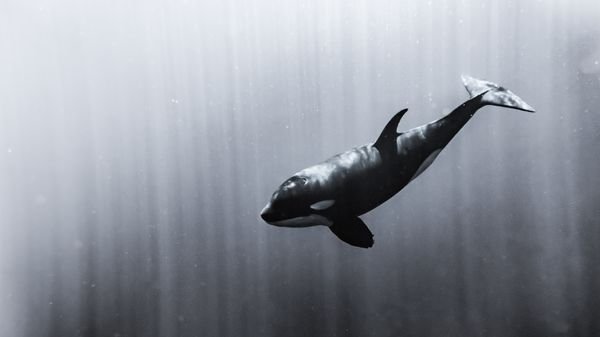
Orca Killer Whale Facts: The Ocean’s Smartest Apex Hunter
Few animals command instant recognition like the orca. That black back, white belly, and the flash of an eye patch slicing through a wave are known around the world, from Antarctic research stations to school classrooms in Karachi. But the most interesting orca killer whale facts go far beyond the famous coloring. Orcas are not one simple animal. They are a mosaic of cultures, hunting traditions, and family dialects spread across every ocean, and scientists are still arguing about how many species they actually represent. Here is what is known, verified against marine research and conservation records.
What Exactly Is a Killer Whale?
Despite the name, an orca is not a whale in the way most people picture whales. The killer whale, Orcinus orca, is the largest member of the oceanic dolphin family, the Delphinidae, which makes it the biggest dolphin on the planet. Taxonomists place it among the toothed whales (odontocetes), a group that includes dolphins, porpoises, and sperm whales, so calling it a whale is not wrong in a scientific sense. It is simply that the animal's closest relatives are dolphins, not the giant baleen whales.
The name itself has a violent history. Whalers who watched orcas attack large whales called them "whale killers," a description of what the animals did. Over time, through retelling and perhaps a taste for drama, the phrase flipped into "killer whale." The animal never earned the name by threatening people. It earned it by hunting whales.
Orca Killer Whale Facts: Size, Teeth and Spots
Orcas are built on an impressive scale. Adult males can reach 32 feet, nearly 10 meters, and weigh 6 tons or more. Females are smaller, topping out around 27 feet. The most obvious difference between the sexes is the dorsal fin. In a mature male it stands straight up like a sail, reaching about 1.8 meters. In females and juveniles it is curved and usually under a meter tall.
Every orca carries a natural fingerprint. Researchers identify individuals by the size and shape of the dorsal fin, the gray "saddle patch" behind it, and the pattern of scars and nicks on the body. This method, called photo-identification, has let scientists follow the same whales for decades and build detailed family trees.
| Feature | Detail |
|---|---|
| Scientific name | Orcinus orca |
| Family | Delphinidae (oceanic dolphins) |
| Male length | Up to 32 feet (about 10 meters) |
| Female length | Up to 27 feet (about 8 meters) |
| Weight | 3 to 6 tons, large males heavier |
| Dorsal fin | Males up to 1.8 m, straight; females curved, under 1 m |
| Teeth | 48 to 52, up to 4 inches long; used to grip, not chew |
| Lifespan | Females up to 80-90 years, males up to 50-60 years |
| Group name | Pod |
| IUCN status | Data Deficient |
One detail surprises many people: orcas do not chew. Their 48 to 52 conical teeth, which can reach 10 centimeters, are tools for seizing and tearing. Chunks of food are swallowed whole. Calves grow their first teeth at just 2 to 4 months of age, and newborns look slightly different from adults. Their white patches start out creamy yellow and turn true white during their first year.
Where Orcas Live: Every Ocean on Earth
No other cetacean ranges as widely as the orca. These animals swim in every ocean, from the pack ice of Antarctica to tropical waters near the equator. They show up along the coasts of Norway and Alaska, off Argentina and New Zealand, in the North Pacific, and in the open ocean far from any shore. They are documented most often in cooler coastal waters, where prey gathers, but they are true cosmopolitans.
They do not migrate the way baleen whales do, making one long annual journey between feeding and breeding grounds. Instead, orca movements follow food and the seasons. Some populations travel enormous distances tracking fish runs or seal colonies, while others stay in the same region year-round. Their distribution is really a map of dinner.
This global spread hides an important secret. Orcas from different regions look different, eat different things, and even speak different dialects. Scientists have proposed splitting them into subspecies or entirely separate species. The uncertainty is exactly why the IUCN lists the orca as Data Deficient: conservation assessors cannot finalize a status for a species when they are not sure how many species there are. The best available estimate puts the global population at a minimum of roughly 50,000 animals, with wide error bars around that number.
What Do Orcas Eat? One Species, Many Menus
Orcas sit at the very top of the marine food web, and their menu is astonishingly broad. Depending on the population, they eat bony fish, sharks and rays, squid, penguins, seals, sea lions, dolphins, and even large whales. A pod that specializes in herring may swim in waters shared by another pod that hunts seals, and the two groups will ignore each other's prey almost entirely.
In the North Pacific, the best-studied orcas on Earth, scientists recognize three distinct forms:
| Ecotype | Main diet | Lifestyle |
|---|---|---|
| Residents | Fish, especially salmon | Large, stable family pods; vocal and social |
| Transients (Bigg's) | Marine mammals: seals, sea lions, porpoises | Small, quiet groups; stealth hunters |
| Offshores | Sharks and other fish | Travel widely in open water |
The differences run deeper than diet. Transients hunt in small, silent groups because marine mammals can hear them coming. Residents are chattier because fish cannot flee a conversation. Offshore orcas that specialize in sharks show teeth worn flat by the sandpaper skin of their prey. In Antarctic waters there are further forms, including one that specializes in hunting minke whales and a smaller type that feeds on fish. These ecotypes overlap in range but do not interbreed and do not share dialects, which is part of why some researchers argue they are separate species in the making.
Family Pods, Dialects and Orca Culture
Orcas are among the most social mammals on Earth. They live in pods, family groups that can number from a handful of animals to around 40, and many orcas spend their entire lives with their mothers. These are matrilineal societies: grandmothers, mothers, and calves traveling together for decades, with knowledge passing down the female line.
Each pod speaks its own dialect. Orcas produce a wide variety of communicative sounds, clicks, whistles, and pulsed calls, and the specific repertoire of a pod is distinct enough that its members can recognize each other at a distance. Calves learn these calls from their mothers, much like children learn language. Alongside communication, orcas use echolocation to hunt, sending out sound pulses that bounce off objects and return information about location, size, and shape.
Their hunting is famously cooperative and often looks planned. Pods work together the way wolf packs do, herding fish into tight balls, beaching themselves briefly to snatch seals from shore, and creating waves to wash seals off floating ice. Because these techniques are learned and passed between generations rather than hardwired by instinct, biologists describe them as animal culture. A hunting trick invented by one grandmother can still be in use by her great-grandcalves.
Orcas are also protective parents. Mothers give birth every three to eight years, and adolescent females in the pod often help care for calves that are not their own, a behavior scientists call alloparenting. The long childhood of an orca, years of nursing and learning, is part of what makes their culture possible.
How Long Do Killer Whales Live? Birth, Breeding and Old Age
Killer whales are slow-growing, long-lived animals, and females dramatically outlive males. Maximum lifespans reach 80 to 90 years for females and 50 to 60 years for males. Average wild lifespans are often given as 50 to 80 years, with females at the upper end. In orca society, old females matter. Post-reproductive grandmothers, females that stop breeding between 35 and 45 years of age, are thought to guide their pods to food during lean times, a role researchers have linked to the survival of their grandchildren.
Reproduction is a slow business. Mating and birth happen mainly in autumn and winter. Pregnancy lasts 16 to 17 months, among the longest gestations of any marine mammal. A newborn calf is 6 to 7 feet long and weighs nearly 400 pounds, about 180 kilograms. Calves nurse for about two years, though they start sampling solid food much earlier. Females become sexually mature at 12 to 16 years old.
This slow life history has a consequence for conservation. When a population loses adults faster than calves can replace them, recovery takes decades. An orca population cannot bounce back the way fast-breeding fish can, which is why protecting breeding females and their food supply is so critical.
How Scientists Study Orcas in the Wild
Studying an animal that spends its life underwater and can outswim most research boats takes creativity. The foundation of orca science is photo-identification. Because each whale's dorsal fin, saddle patch, and scars are unique, researchers photograph whales from boats and match the images against catalogs built up over decades. Some individual orcas have been photographed and recognized for more than 40 years, giving scientists unusually complete life histories for a wild marine mammal.
Modern technology has added new layers. Satellite tags attached with small darts have tracked offshore orcas traveling from Southern California to the Aleutian Islands of Alaska, journeys covering thousands of kilometers, with tags transmitting for up to nearly five months. The same tags record dives: one study logged over a thousand dives with median depths of 41 and 100 meters for the two tagged whales, and a maximum depth of 480 meters. Dives were typically short, just a few minutes each.
Acoustic monitoring adds the soundtrack. Underwater microphones capture pod dialects and echolocation clicks, letting researchers identify which families are present even when no whale surfaces. Together, photographs, tags, and sound have revealed the ecotype divisions, the cultural hunting traditions, and the family structures described in this article. Long-term studies of known individuals are also how scientists discovered the slow decline of the Southern Residents, a decline that would have been invisible without decades of careful record-keeping.
Are Orcas Dangerous to Humans?
This is one of the most searched questions about killer whales, and the answer from the wild is reassuring. There are no confirmed records of an orca ever killing a person in the wild. Wild orcas are curious about boats and divers, and they sometimes approach closely, but they do not treat humans as prey.
That safety record changes in captivity, where the stress of confinement has been linked to aggression toward trainers. The capture of orcas for marine parks became deeply controversial over the twentieth century and is now heavily restricted in many countries. The story of Keiko, the orca star of the film Free Willy, captured the public imagination in the 1990s. After a global campaign, Keiko became the first captive orca ever returned to the ocean, a release that showed both the possibilities and the enormous difficulties of setting a long-captive whale free.
The wild record tells its own story. Orcas are powerful enough to kill almost anything in the sea, and they choose not to harm people. Respect, distance, and responsible whale watching keep it that way.
Conservation: Why Some Orcas Are Endangered
Globally, the orca is listed as Data Deficient, but that label hides serious trouble in specific populations. The Southern Resident killer whales of the Pacific Northwest, the fish-eating orcas that frequent the waters of Washington State and British Columbia, were added to the United States endangered species list in late 2005. Their numbers tell a stark story: the population fell from 98 animals in 1995 to just 73 by December 2021, and it has struggled to recover since.
The causes are almost entirely human-made. Southern Residents feed mainly on Chinook salmon, and salmon runs have declined sharply, leaving the whales short of food. The whales also carry heavy loads of industrial pollutants, especially PCBs, which accumulate in their blubber and can suppress immune function and reproduction. Vessel noise and disturbance make hunting harder for animals that find food by sound. Researchers have warned that current PCB levels could threaten the viability of more than half of the world's killer whale populations over the next century.
Other populations face their own pressures: entanglement in fishing gear, collisions with ships, and historical captures for marine parks. Because orcas live so long and breed so slowly, every adult lost is a loss the population feels for decades. Protecting orcas ultimately means protecting what they eat and the quiet, clean water they need to find it.
Frequently Asked Questions
Are orcas whales or dolphins? Orcas are the largest members of the dolphin family, the Delphinidae. Scientifically they are toothed whales, a broad group that includes all dolphins, so both descriptions have truth in them. In everyday language, "largest dolphin in the world" is the most accurate short answer.
How long do killer whales live? Females can live 80 to 90 years and males 50 to 60 years, with average wild lifespans often cited as 50 to 80 years. Females stop reproducing between 35 and 45 but may live decades longer as pod leaders.
Do killer whales eat humans? No. There are no confirmed records of a wild orca killing a person. Orcas do not regard humans as prey, though like any large wild animal they should be observed from a respectful distance.
Why are orcas called killer whales? Whalers originally called them "whale killers" because they saw orcas hunting and killing other whales. The phrase was later reversed into "killer whale," which stuck even though the name says nothing about any danger to people.
How many orcas are left in the world? The best estimate is a minimum of about 50,000 worldwide, but the figure carries wide uncertainty. The IUCN lists the species as Data Deficient because different ecotypes may actually be separate species, making a single global assessment impossible.
What is a baby orca called, and what does it eat? A baby orca is called a calf. Calves nurse on their mother's milk for about two years, though they begin tasting solid food earlier. At birth they are already 6 to 7 feet long and weigh around 180 kilograms.
How do scientists tell orcas apart? By photographing the dorsal fin, the gray saddle patch behind it, and any scars or nicks. These markings are unique to each whale, so researchers can recognize individuals across decades. The method is called photo-identification.
Why Orcas Deserve Their Reputation
Orcas earned their fame honestly. They are the ocean's most widespread hunters, its most cultured predators, and animals whose family bonds last a lifetime. A male orca's towering fin, a pod's private dialect, a grandmother leading her family to salmon, a wave engineered to wash a seal off the ice: these are the real orca killer whale facts, stranger and richer than the old "killer" nickname suggests. The better we understand them, from their many ecotypes to the fragile Southern Residents, the clearer it becomes that protecting orcas means protecting the whole living ocean they rule.