Keystone Species Examples: 8 Wild Architects of Nature
Some species shape their ecosystems far out of proportion to their numbers. A handful of sea otters can decide whether an entire underwater forest thrives or vanishes. One predator's return can change how rivers behave. These are keystone species, and understanding them is one of the most powerful lenses in conservation.
The idea is simple to state but rich in consequences: remove a keystone species and the whole community shifts, sometimes collapsing into something barely recognizable. Below are the classic keystone species examples, the story of how the concept was born, how keystone species differ from flagship and umbrella species, and what protecting them means for conservation.
What Is a Keystone Species?
A keystone species is a species whose impact on its ecosystem is large relative to its abundance. It is not necessarily the most numerous or the biggest organism around. A wolf pack makes up a tiny fraction of a park's biomass, yet wolves can reshape plant communities, riverbanks, and the fortunes of other animals.
The term borrows from architecture. The keystone is the central stone at the top of an arch, a small piece that locks the structure together. Pull it out and the arch fails. In the same way, an ecosystem can shift dramatically if a keystone species disappears, though the species may have been a small part of the system by any simple count of individuals or biomass.
Zoologist Robert T. Paine introduced the term in 1969. His original definition was precise: a keystone predator feeds preferentially on the dominant competitor among its prey, keeping it in check so that more species persist than would exist without the predator. Over the decades the concept widened beyond predators to include species that engineer habitats, transport nutrients, or anchor mutualistic partnerships. The core idea stayed the same. Some species punch far above their weight, and ecosystems depend on them.
The Experiment That Started It All
Paine found them in the tide pools of Mukkaw Bay, at the tip of Washington state's Olympic Peninsula.
In the early 1960s, Paine was studying the rocky intertidal community, the band of shore between high and low tide marks. A conspicuous predator there was the ochre sea star, Pisaster ochraceus, a large orange or purple starfish that fed on mussels, barnacles, and snails. Paine suspected that this single predator was structuring the entire community from the top down.
To test the idea, he did something bold and simple. He physically removed the sea stars from a stretch of shore and watched what happened, comparing it with untouched areas nearby. Without their main predator, California mussels (Mytilus californianus) expanded aggressively across the rocks, crowding out algae, barnacles, and other invertebrates. Species diversity plummeted as mussels formed near-monocultures on the rock faces.
Paine published his findings in 1969 in The American Naturalist under the title "A Note on Trophic Complexity and Community Stability," and coined the term keystone species to describe species with this kind of outsized community role. The ochre sea star became the original keystone species, and the experiment became a landmark in ecology: a demonstration that community structure could be controlled from the top down by a single predator.
Three Ways Keystone Species Shape Ecosystems
Not every keystone species hunts. Ecologists usually recognize three broad roles, and some species fill more than one.
Keystone predators regulate prey from the top down, sending indirect effects through the food web in a trophic cascade. Sea otters, wolves, and sea stars all fall here.
Ecosystem engineers physically build or reshape habitats. The North American beaver is the textbook case, raising dams that turn streams into ponds and wetlands. African elephants push over trees and dig water holes. Prairie dogs dig burrow networks. Corals build reefs. Their construction work creates living space, water, and shelter for whole communities.
Mutualists hold ecosystems together through partnerships. Fig trees produce fruit that feeds hundreds of animal species. Pollinators such as bees keep plant communities reproducing. Without them, whole plant communities can fail to reproduce.
Some ecologists also recognize keystone prey, species whose availability shapes predator communities or nutrient cycles. Horseshoe crabs are one example: their eggs provide a seasonal food pulse for migrating shorebirds, linking marine and terrestrial systems.
Classic Keystone Species Examples Around the World
Here are the keystone species examples every ecology student learns, each with the mechanism that earns it the label.
The ochre sea star (Pacific Northwest shores)
The species that started it all. Pisaster ochraceus patrols rocky intertidal zones, feeding mainly on California mussels. By preying on them, it prevents mussels from monopolizing limited rock space, leaving room for algae, barnacles, limpets, and chitons. Remove it and the shore becomes a mussel monoculture with far lower diversity.
The sea otter (North Pacific coasts)
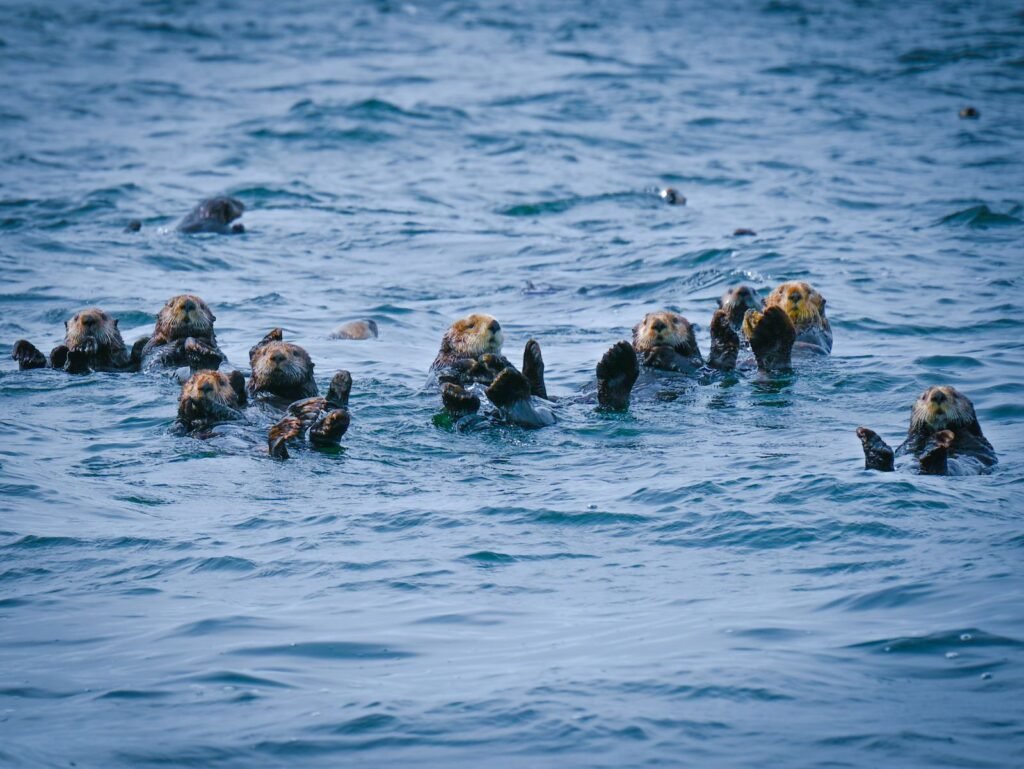
The sea otter is a keystone predator of kelp forests. It feeds on sea urchins, which graze on kelp. Where otters are present in healthy numbers, urchin populations stay in check and kelp forests flourish, providing food and shelter for fish, invertebrates, and marine mammals. Where otters have been lost, urchin numbers explode and strip the kelp, leaving bare "urchin barrens."
The history makes the point sharply. Sea otters were hunted nearly to extinction for their fur by the early 20th century, and kelp beds declined along with them. Legal protection and recovery efforts allowed otters to rebound in places, and kelp forests recovered with them, a recovery documented by agencies such as the U.S. Geological Survey. A sea otter can eat a fifth to a quarter of its body weight daily, and urchins are among its favored prey.
The gray wolf (North America, Eurasia)
Wolves regulate large herbivores, and the most famous demonstration comes from Yellowstone National Park. Wolves were eradicated from the park by the 1920s through hunting and predator control. After that, elk numbers rose and heavy browsing stripped willows and aspens along streams for decades.
Between 1995 and 1997, 41 gray wolves from Canada and Montana were reintroduced to Yellowstone. Elk numbers fell and elk changed their behavior, avoiding some open riparian areas. Willows and aspens began recovering along streams, and research over a 20-year period documented about a 1500 percent increase in willow crown volume at riparian sites in northern Yellowstone. Scientists still debate exactly how strong the cascade was and how much credit belongs to wolves versus other factors, but the reintroduction remains the most watched keystone experiment of modern times.
The North American beaver (wetlands of North America and Eurasia)
Beavers are ecosystem engineers without equal among mammals. Their dams slow streams, trap sediment, raise water tables, and create ponds and wetlands. These wetlands store water during droughts, moderate floods, filter water, and provide habitat for fish, amphibians, birds, and mammals. A single beaver family can turn a simple stream into a mosaic of ponds and marshes.
The African elephant (savannas and forests of Africa)
Elephants reshape vegetation and water availability. They uproot trees and knock back bush, maintaining the open grassland-woodland mosaic that supports grazing animals. In dry seasons, elephants dig water holes that other animals then use. Their dung disperses seeds across vast distances, and some plants depend on passage through an elephant's gut before their seeds can germinate.
Fig trees (tropical forests worldwide)
Figs are keystone mutualists. Many fig species fruit year-round rather than in one short season, providing reliable food for birds, bats, monkeys, and other animals when little else is available. The figs in turn depend on tiny fig wasps for pollination, one of nature's most specialized partnerships.
The parrotfish (coral reefs)
Parrotfish graze algae off coral reefs. Without grazers, fast-growing algae can smother corals and tip reefs into decline. As a bonus, parrotfish grind coral rock with their beak-like teeth and excrete it as sand, literally building the beaches of tropical islands.
The prairie dog (North American grasslands)
Prairie dogs dig vast burrow systems that aerate soil, improve water infiltration, and provide shelter for a remarkable list of other species: burrowing owls nest in their tunnels, and the endangered black-footed ferret depends almost entirely on prairie dogs for both food and housing.
| Species | Ecosystem | Keystone role | What happens without it |
|---|---|---|---|
| Ochre sea star (Pisaster ochraceus) | Rocky intertidal, Pacific Northwest | Predator of mussels | Mussel monoculture, diversity collapses |
| Sea otter (Enhydra lutris) | Kelp forests, North Pacific | Predator of sea urchins | Urchin barrens, kelp forests destroyed |
| Gray wolf (Canis lupus) | Temperate forests and mountains | Predator of elk and deer | Overgrazing, streamside vegetation lost |
| North American beaver (Castor canadensis) | Freshwater streams and wetlands | Engineer (dams) | Wetlands drain, flood and drought risk rise |
| African elephant (Loxodonta africana) | Savannas and forests | Engineer and seed disperser | Woodland encroachment, water holes lost |
| Fig trees (Ficus spp.) | Tropical forests | Mutualist (year-round fruit) | Fruit-eating animals lose a key food source |
| Parrotfish (Scaridae) | Coral reefs | Grazer and nutrient cycler | Algae smothers corals, reefs degrade |
| Prairie dog (Cynomys spp.) | North American grasslands | Engineer (burrows) and grazer | Burrow-dependent species lose shelter |
Keystone vs Flagship vs Umbrella vs Indicator Species
Keystone species often get mixed up with other conservation labels. The terms sound similar but mean different things, and one animal can wear several hats. The jaguar, for example, is described as a keystone predator, a flagship species, and an umbrella species all at once.
Here is how they differ:
| Label | What it means | Example |
|---|---|---|
| Keystone species | Has an outsized ecological effect relative to its abundance | Sea otter, gray wolf, beaver |
| Flagship species | Charismatic species used to raise public support and funds for conservation | Giant panda, Bengal tiger, African elephant |
| Umbrella species | Needs such large habitat that protecting it shelters many other species | Northern spotted owl, Florida panther |
| Indicator species | Signals ecosystem health; its decline warns of trouble | Oysters in coastal waters, amphibians in wetlands |
| Foundation species | Dominant species that creates habitat by its sheer abundance | Corals, kelp, seagrass |
The distinctions matter for strategy. A flagship species may be chosen for its fundraising appeal regardless of its ecological role. An umbrella species is valuable for reserve design: draw a big enough protected area for it and you protect a whole community. A keystone species is valuable for ecological understanding: lose it and the system unravels.
Note that categories can shift. Kelp is a foundation species where it dominates, and sea otters are the keystone predators that keep it standing. A species can also be a flagship, an umbrella, and a keystone species at the same time, like the jaguar in the Americas or the tiger in Asia.
What Happens When a Keystone Species Disappears
The strongest evidence for the keystone concept comes from what happens when these species are lost. On rocky shores, removing the ochre sea star lets mussels smother the intertidal zone. Diversity collapses toward a single dominant species.
In kelp forests, the near-extinction of sea otters from the fur trade turned productive forests into urchin barrens along large stretches of coast. Where otters have recovered, kelp and its associated community have followed.
In Yellowstone, seven decades without wolves let elk browse streamside willows and aspens nearly to the ground in many areas, simplifying habitat for beavers, songbirds, and fish. The wolves' return set a slow reversal in motion, though scientists continue to argue about its full extent.
In North America, the near-extirpation of beavers by the fur trade drained countless wetlands.
Each case follows the same logic. The keystone species holds competitors, herbivores, or physical conditions in check. Take it away and the release triggers a cascade: one population explodes or collapses, habitat changes, and species that depended on the old arrangement decline or disappear.
Keystone Species in South Asia's Wild Places
The classic examples come from North America, but the concept travels. South Asia has its own keystone species, and recognizing them can focus conservation where it counts.
The Bengal tiger (Panthera tigris tigris) is the region's great keystone predator. As an apex carnivore in the forests of India, Nepal, Bhutan, and Bangladesh, it regulates deer and wild pig populations, indirectly protecting the vegetation structure that supports everything from forest birds to insects. The tiger is also a flagship and umbrella species: reserves large enough for tigers shelter entire forest communities. In Pakistan, where wild tigers no longer roam, the lesson applies to native carnivores like the snow leopard, which plays a comparable top-down role in the high Himalaya and Karakoram.
The Asian elephant (Elephas maximus) is an ecosystem engineer of South and Southeast Asian forests. Like its African cousin, it knocks down trees, opens clearings, disperses seeds in its dung, and digs for water in dry riverbeds, creating resources other animals use.
Pollinators play a keystone mutualist role in the Himalaya and beyond. Bees and other insects keep entire plant communities reproducing. In mountain ecosystems, where growing seasons are short and flowers are patchy, the loss of key pollinators can ripple through plant and animal communities alike. This matters directly for Pakistan, where pollinators support both wildflower meadows and fruit orchards in the northern valleys.
The Fine Print: What the Concept Gets Wrong
For all its usefulness, the keystone species concept has limits, and honest science acknowledges them.
First, keystone status is context-dependent. A species can be keystone in one ecosystem and unremarkable in another. Pisaster sea stars dominate the story on wave-exposed rocky shores, but research has suggested that smaller sea stars in the genus Leptasterias also shape parts of the intertidal community, sharing some of the keystone load.
Second, the Yellowstone wolf story is more debated than documentaries suggest. The reintroduction clearly triggered ecological change, and long-term studies found large increases in willow growth at riparian sites. But ecologists argue about the strength of the cascade and how much credit belongs to wolves versus climate, hydrology, and other factors. This is science working as it should, refining a famous story rather than discarding it.
Third, the label can be overused. Because calling a species "keystone" is a powerful argument for its protection, there is a temptation to apply it loosely. Ecologists have long cautioned that the term should rest on evidence of disproportionate effect, not just on a species being important or charismatic.
None of this undermines the concept. It refines it. The takeaway is that keystone species are real, powerful, and worth protecting, but their roles must be demonstrated rather than assumed, and they vary with place and time.
Why Keystone Species Matter for Conservation
Why are keystone species important to conservation practice? Because they offer leverage.
Efficient protection. Conservation budgets are limited. Protecting a keystone species can stabilize an entire community at lower cost than trying to save each dependent species separately. Restoring sea otters restores kelp forests. Restoring beavers restores wetlands.
Reintroduction and rewilding. The wolf's return to Yellowstone showed that bringing back a keystone predator can restart ecological processes that had been missing for decades. Similar logic drives reintroductions of beavers in Europe, where they had been hunted out.
Reserve design. Keystone and umbrella concepts often work together. A protected area sized for a wide-ranging keystone predator, like a tiger reserve, automatically protects habitat for countless other species.
Monitoring ecosystem health. Because keystone species influence so much, watching them is watching the system. Declining sea otter numbers warn of trouble in kelp forests. Declining pollinators warn of trouble in plant communities.
Climate resilience. As climate change rearranges habitats, the species that engineer habitats and maintain diversity may determine which ecosystems bend and which break. Beavers' wetlands buffer droughts and floods. Kelp forests store carbon and buffer coastlines.
The practical advice from ecologists is consistent: identify keystone species with real evidence and treat them as priorities in restoration.
Frequently Asked Questions
What is a keystone species in simple terms?
A keystone species is one whose influence on its ecosystem is much larger than its numbers would suggest. Like the central stone in an arch, it holds the structure together. Remove it and the community changes dramatically.
What are five clear examples of keystone species?
The ochre sea star, the sea otter of kelp forests, the gray wolf of Yellowstone, the North American beaver, and the African elephant. Each controls other species or builds habitat in ways that sustain entire communities.
What is the difference between a keystone species and an umbrella species?
A keystone species has an outsized ecological effect relative to its abundance, like a wolf regulating herbivores. An umbrella species has such large habitat needs that protecting it automatically protects many other species, like the northern spotted owl. One animal can be both.
Can a plant be a keystone species?
Yes. Fig trees are classic keystone species because their year-round fruit feeds hundreds of animal species in tropical forests. The saguaro cactus is another: its trunk houses nesting birds and its flowers feed bats and insects.
Are humans a keystone species?
Some ecologists argue that humans fit the definition, since our activities reshape ecosystems far beyond our biomass. Others prefer a separate term. It remains an open debate.
What is a trophic cascade?
A trophic cascade is a chain of indirect effects that travels through a food web when a predator is added or removed. The classic example: wolves reduce elk numbers, elk browse less on willows, willows recover, and streamside habitat improves for other species. The effect cascades down the trophic levels.
Why are keystone species important for conservation?
Because they offer leverage. Protecting one keystone species can stabilize dozens or hundreds of others, making conservation spending more effective. Restoring keystone species through reintroduction can also restart lost ecological processes.
Conclusion
From a starfish in a Washington tide pool to elephants reshaping African savannas, keystone species examples show how much of an ecosystem can depend on a single player. Robert Paine's 1969 insight endures because it keeps proving true: some species do the structural work that lets everything else thrive.
For conservation, the message is practical. Identify the species whose influence runs deepest, protect them with real evidence behind the label, and the rest of the community gets its best chance.