Deosai National Park: Pakistan’s Land of Giants Guide
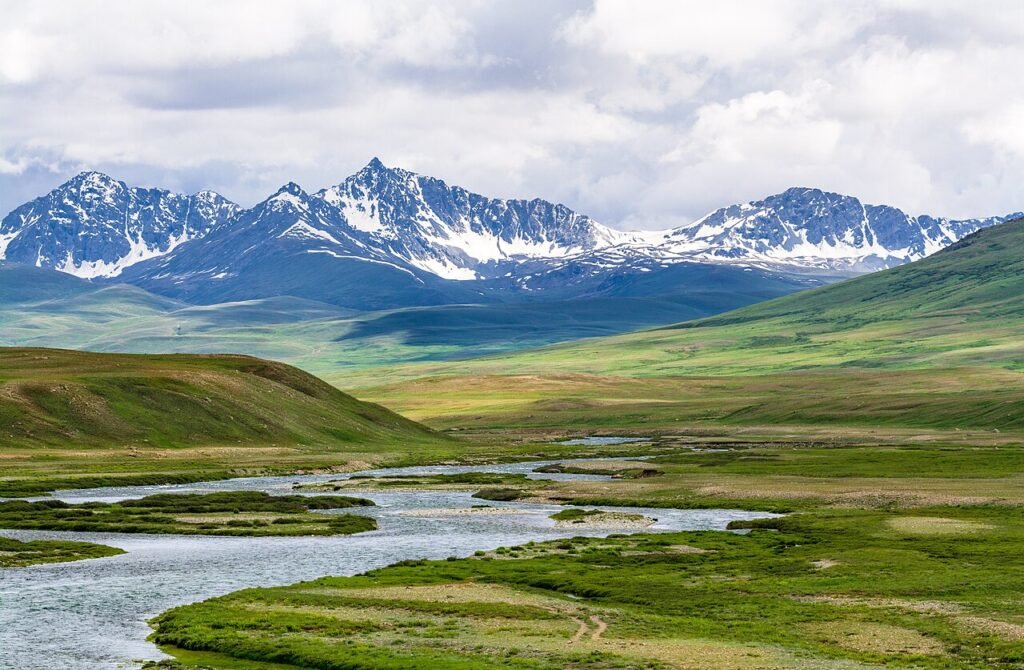
There is a place in Pakistan where the horizon never seems to end. Stand on the Deosai plateau in midsummer and you are surrounded by rolling green meadows in every direction, flecked with wildflowers, cut by clear streams, and ringed by snow peaks. Golden marmots whistle from the rocks. Somewhere out on the plains, a Himalayan brown bear, one of the rarest bears on Earth, is digging for roots. The name Deosai is commonly translated as the Land of Giants, and after a day on the plateau you understand why: everything here feels scaled up except you.
Deosai National Park is Pakistan's great high-altitude wilderness, a protected plateau in Gilgit-Baltistan that is the second-highest in the world. It is a stronghold of the Himalayan brown bear, a haven for migratory birds, a landscape of wildflowers and alpine lakes, and one of the country's most rewarding adventures. This guide covers what the park is, its wildlife and conservation story, the top things to see and do, and everything practical you need to plan a visit.
The Land of Giants: what Deosai National Park is
Deosai National Park sits in Gilgit-Baltistan in northern Pakistan, between the Skardu and Astore districts. It protects a vast, treeless alpine plateau, the Deosai Plains, which stretch for roughly 3,000 square kilometres of hills, marshland, streams and lakes. The plateau's average elevation is about 4,114 metres (13,500 feet) above sea level, which makes it the second-highest plateau in the world after the Changtang plateau of Tibet.
The park was established in 1993 with one clear purpose: to save the Himalayan brown bear (Ursus arctos isabellinus), which had been hunted and poached to the edge of extinction in the region. It has since grown into one of Pakistan's most important protected areas, recognized on the country's UNESCO World Heritage Tentative List for its exceptional natural value.
Deosai is a seasonal world. From November to May it is buried under metres of snow and essentially unreachable. Then the melt comes, and for about four months the plateau explodes into life: grasses green up, millions of wildflowers bloom, bears emerge from their dens, and migratory birds arrive from thousands of kilometres away. That short, intense summer is the only window for visitors, and it is what makes Deosai feel so untouched.
| Fact | Detail |
|---|---|
| Location | Gilgit-Baltistan, Pakistan, between Skardu and Astore districts |
| Plateau area | Roughly 3,000 sq km of alpine plains |
| Average elevation | About 4,114 m (13,497 ft); second-highest plateau in the world |
| Established | 1993, primarily to protect the Himalayan brown bear |
| Name meaning | "Land of Giants" |
| Accessible season | Roughly June to September (snowbound November to May) |
| Recognition | On Pakistan's UNESCO World Heritage Tentative List |
| Flagship species | Himalayan brown bear (Ursus arctos isabellinus) |
The conservation story: how 19 bears became 78
Deosai's greatest story is a rescue. In 1987, two conservationists, Vaqar Zakaria and Dr. Anis Ur Rehman, visited Deosai and were alarmed to find no bears at all during their stay. The Himalayan brown bear, Pakistan's largest land predator, had been a prize kill for poachers and trophy hunters, and it was vanishing from the plateau.
In 1993, their organization, then called the Himalayan Wildlife Project (later the Himalayan Wildlife Foundation, HWF), set up a research camp in Deosai, the first scientific study of the plateau's bears. The census results were shocking: just 19 bears remained. Realizing that these few animals, plus the plateau's birds and flora, needed formal protection, the team campaigned to have Deosai declared a national park. The boundary was demarcated and the area received officially protected status that same year.
HWF then managed the park for roughly a decade with support from the Gilgit-Baltistan Wildlife Department and donors including the Global Environment Facility's Small Grants Programme. Park guards confronted poachers directly, sometimes facing threats for it. In 2001, the foundation's field staff were inducted into the government's Wildlife Department, and management passed fully to the state.
The result is one of Pakistan's clearest conservation successes. Surveys tracked the bear population rising from 19 in 1993 to about 40 in 2005 and around 78 by 2022, making Deosai one of the last places on Earth with a stable, breeding population of Himalayan brown bears. A recent Frontiers in Ecology and Evolution study used species distribution modelling to map the bears' suitable habitat across some 1,125 square kilometres, finding that the most important predictors were elevation between 3,500 and 4,500 metres and distance from rivers, cattle and park borders. Researchers have noted that growth appears to have slowed in recent years and have fitted GPS collars to study the bears' diet, hibernation and territory use, a reminder that even a success story needs constant attention.
Wildlife of Deosai
The Himalayan brown bear
The bear is the reason the park exists, and still its star. The Himalayan brown bear is a subspecies of the brown bear, listed as critically endangered, and Deosai holds the only stable population in Pakistan. These are big, powerful omnivores that spend the short summer eating almost constantly, digging for roots, grazing on sedges and grasses, and hunting marmots, to build the fat reserves needed for a winter den. Seeing one on the plains, a dark shape moving through green grass with mountains behind it, is the defining Deosai moment. Sightings are most likely in the early morning and late afternoon.
Other mammals
The plateau's most abundant large mammal is not the bear but the Himalayan (golden) marmot, locally called phia. These chunky rodents live in colonies, sunbathe on rocks and whistle sharp alarms at the approach of eagles or foxes. Red foxes trot the meadows hunting rodents. Himalayan ibex pick their way along the rocky margins of the plateau. Grey wolves range across Deosai, and the snow leopard passes through the higher, rockier edges, though seeing one is a matter of extraordinary luck. Smaller residents include the Ladakh urial and, in some accounts, the elusive Kashmir musk deer.
Birds
Deosai lies within BirdLife International's Western Himalaya Endemic Bird Area, making it an important breeding and resting ground for resident and migratory birds. More than 124 species have been recorded. Raptors patrol the skies: golden eagles, Himalayan griffon vultures, bearded vultures (lammergeiers), peregrine falcons, kestrels and the Eurasian sparrowhawk. The Himalayan snowcock calls from the rocky slopes. In summer, the wetlands draw migratory waterbirds including bar-headed geese and ruddy shelducks. For birdwatchers, Sheosar Lake and the marshy stream valleys are the richest spots.
Flora
When the snow melts, Deosai becomes a botanical garden. Around 342 plant species have been recorded, many with medicinal properties used by local communities. The summer meadows fill with golden ragwort, forget-me-nots, gentians, Asian bellflowers, pink sedum, edelweiss and wild thyme (locally called tumoro, brewed as herbal tea). The floral abundance draws clouds of butterflies, and the whole plateau hums with insects, the base of a food web that feeds birds, foxes and bears alike.
| Wildlife highlight | What to know |
|---|---|
| Himalayan brown bear | Flagship species; 19 in 1993 to about 78 in 2022; best seen dawn and dusk |
| Himalayan marmot (phia) | Abundant; colonies across the plains; loud alarm whistles |
| Red fox | Common on the meadows; hunts rodents |
| Himalayan ibex | Rocky margins of the plateau |
| Snow leopard | Rare visitor to the high edges; sightings extremely unlikely |
| Golden eagle, griffon vulture, lammergeier | Soaring raptors; scan the ridgelines |
| Bar-headed goose, ruddy shelduck | Summer migrants at Sheosar Lake and wetlands |
Top things to see and do
Sheosar Lake. The crown jewel of Deosai sits at about 4,142 metres, making it one of the highest freshwater lakes in the world. Its deep-blue water mirrors the surrounding peaks, and in summer its shores are edged with wildflowers. The lake is about 9.6 kilometres from Chota Pani and is a prime spot for birdwatching, photography and simply sitting still. Camping near the lake under famously clear night skies is a highlight for many visitors.
Bara Pani and Kala Pani. Bara Pani ("Big Water") is the largest river in Deosai, a superb area for camping, picnics and photography, with basic facilities available. Its waters hold snow trout, which draws fishing enthusiasts. Kala Pani ("Black Water") is another scenic stream crossing, and together these waterways are the lifelines of the plateau, feeding the wetlands that sustain its wildlife.
Wildflower meadows. In July and August, the plains become a carpet of color. Walk slowly through the meadows near the streams and you will find primulas, gentians and dozens of other alpine flowers, with butterflies drifting overhead. This is Deosai at its most magical, and it lasts only weeks.
Wildlife watching. Early mornings and late afternoons are the golden hours. Scan the plains for bears and the rocks for marmots, watch raptors riding thermals along the ridgelines, and keep binoculars ready at the wetlands. Always keep a respectful distance, especially from bears; these are wild animals in a vast landscape, and they deserve space.
Stargazing. With no towns and no light pollution, Deosai's night sky is among the clearest in the world. On a moonless night the Milky Way stretches overhead in startling detail. Campers consistently rate it as one of the great stargazing sites of South Asia.
Jeep safaris and trekking. The classic Deosai experience is a 4×4 journey across the plateau, bouncing over rough tracks between the main sights. For the more active, day hikes around Sheosar Lake and the Chota Pani to Bara Pani route offer gentler walking, while experienced trekkers can attempt longer crossings. The high altitude demands good fitness and a local guide, since weather can change fast and navigation across the open plains is harder than it looks.
How to reach Deosai
There are two main approaches, from Skardu in the north and Astore in the west. Both require a sturdy 4×4 vehicle; ordinary cars cannot handle the tracks. The table below summarizes the routes.
| Route | Distance and time | Notes |
|---|---|---|
| Skardu to Deosai | About 44 km, 2 to 3 hours by 4×4 | Via Sadpara Lake; the most popular approach; reaches Bara Pani area |
| Astore to Deosai | About 70 km, 3 to 4 hours by 4×4 | Via Chilam Valley; more adventurous and scenic |
| Islamabad to Skardu | About 1 hour by air, or 16 to 18 hours by road | Road via Karakoram Highway; flights are weather-dependent |
| Islamabad to Astore | About 570 km via Karakoram Highway (open year-round, around 13 hours), or 472 km via Babusar Pass (June to October only) | Babusar is shorter but seasonal |
Most visitors base themselves in Skardu or Astore, where hotels and jeep rentals are available, and visit Deosai as a day trip or an overnight camping excursion. There are no hotels inside the park itself, so camping means bringing your own tent and gear or hiring a camping service in Skardu. Bara Pani and Sheosar Lake are the established camping areas.
Best time to visit and what the weather is like
Deosai has one of the shortest tourist seasons in Pakistan. The practical window is June through September, with July and August the peak months for wildflowers, wildlife activity and the most reliable weather. June can still hold snow patches at the higher passes, and by late September the cold is already returning.
Even in summer, this is a serious high-altitude environment. Daytime temperatures are pleasant in the sun, but nights can drop near freezing, and wind and sudden storms are common. The weather can swing from warm sunshine to sleet within an hour. Pack as if winter might arrive at any moment, because at 4,100 metres, it can.
Practical tips for a safe and responsible visit
Go prepared. Carry sufficient fuel, food, water and a first-aid kit; facilities inside the park are minimal. Warm clothing is essential even in summer, including a proper sleeping bag if camping. Sun protection matters too: at this altitude the sun is fierce.
Travel early in the day. Start your drives and hikes in the morning so you are not navigating rough tracks in darkness. Weather also tends to be calmer earlier in the day.
Respect wildlife. Keep your distance from all animals, especially bears. Never feed wildlife. Store food securely at camp. If you encounter a bear, stay calm, do not run, and back away slowly while keeping it in sight.
Leave no trace. Take all litter out with you, including food waste. The plateau's ecosystem is fragile and its growing season is only a few months long; damage recovers slowly.
Hire local expertise. A local driver who knows the tracks and a guide who knows the wildlife will transform your trip and keep you safe. They also ensure your visit supports the communities around the park.
Check entry requirements. An entry fee is charged at the park gate; confirm current rates and any permit requirements before you travel, as these can change between seasons.
Threats and the future of the plateau
Deosai's conservation success is real but not finished. Growing domestic tourism brings more vehicles, more waste and more disturbance to wildlife. Livestock grazing on the plateau margins competes with wild herbivores. Climate change is altering snowfall and melt patterns on which the whole short summer depends. The park's hydrological role makes this a national concern, not just a local one: Deosai's snowmelt feeds streams and wetlands that contribute to the Indus River system downstream, so protecting the plateau protects water far beyond its borders.
The way forward is the same formula that saved the bears: science, enforcement and community partnership. Continued monitoring of the bear population, management of tourism pressure, and engagement with the herding communities around the park will decide whether Deosai remains a wilderness or becomes merely a scenic backdrop. For now, the Land of Giants still earns its name.
Frequently asked questions
Where is Deosai National Park? In Gilgit-Baltistan, northern Pakistan, between the Skardu and Astore districts. It protects the Deosai Plains, a high-altitude plateau averaging about 4,114 metres above sea level, the second-highest plateau in the world after Tibet's Changtang.
What is Deosai National Park famous for? The Himalayan brown bear, whose population recovered from 19 in 1993 to about 78 in 2022 thanks to the park's protection. It is also famous for Sheosar Lake, summer wildflower meadows, golden marmots, superb stargazing and dramatic high-altitude landscapes.
What is the best time to visit Deosai National Park? June to September, with July and August the best months for wildflowers and wildlife. The park is snowbound and inaccessible from November to May. Even in summer, nights are very cold, so bring warm clothing.
How do I reach Deosai National Park? By 4×4 jeep from Skardu (about 44 km via Sadpara Lake, 2 to 3 hours) or from Astore (about 70 km via Chilam Valley, 3 to 4 hours). Most visitors fly or drive from Islamabad to Skardu or Astore first. Ordinary cars cannot manage the park's rough tracks.
Can I stay inside Deosai National Park? There are no hotels inside the park. Visitors camp at established sites such as Bara Pani and Sheosar Lake, bringing their own gear or hiring a camping service in Skardu, or stay in hotels in Skardu or Astore and visit on a day trip.
Why Deosai matters
Deosai is more than a beautiful place. It is proof that determined conservation can pull a species back from the edge: 19 bears became 78 because people counted, protected and persisted. It is a water tower for the Indus, a refuge for birds that cross continents, and a reminder of what the high Himalaya looked like before the modern world pressed in. Visit in summer, walk the flower meadows, watch a marmot stand sentinel on a rock, and if you are very lucky and very quiet, you may see the dark, shaggy shape of a bear moving through the green. The Land of Giants asks little of its visitors: come prepared, tread lightly, and leave it as wild as you found it.