Coral Reef Facts: 25 Things You Should Know About Reefs
Coral reefs are among the most astonishing places on Earth: entire underwater cities built by animals smaller than a grain of rice, glowing with color, and crowded with more life per square meter than almost anywhere else in the ocean. These coral reef facts gather what scientists actually know about reefs, from how they are built to why they are in trouble, drawing on research from NASA, the U.S. Geological Survey, NOAA, and the IUCN. Whether you are a student writing a report or simply curious about the "rainforests of the sea," this guide covers the essentials, plus a look at Pakistan's own little-known coral habitats.
What Exactly Is a Coral Reef?
A reef is any ridge-like structure that rises above the ocean floor, but a coral reef is something more specific: a reef whose main framework is built by living organisms, in this case corals. As coral scientist Juan Torres-Pérez of NASA's Ames Research Center puts it, every coral reef is a reef, but not every reef is a coral reef. Some reefs are just rock or even piles of man-made material that sea life has colonized.
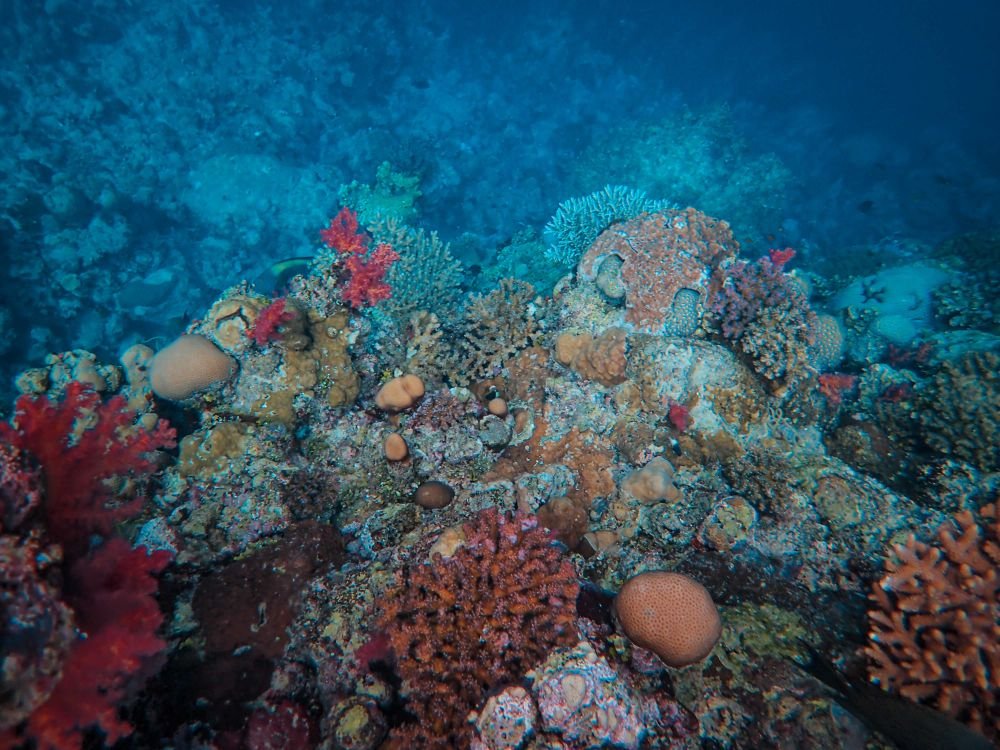
Coral reefs are formed by huge colonies of hard corals. Each colony is made of hundreds to thousands of individual animals called polyps, and each polyp secretes a hard cup of calcium carbonate (essentially limestone) around its soft body. Generation after generation, polyps build on the skeletons of their ancestors, and over centuries the accumulation becomes a massive structure that can stretch for tens or even hundreds of miles.
How Coral Reefs Are Built, Polyp by Polyp
To understand a reef, start with the polyp. Corals are animals in the phylum Cnidaria, relatives of jellyfish and sea anemones. An individual polyp is typically only a few millimeters across. It has a soft, sac-like body with a mouth at the top, ringed by stinging tentacles that snare passing plankton and tiny fish.
Not all corals build reefs. There are two broad kinds. Hard corals, also called stony corals or scleractinians, secrete calcium carbonate to form rigid skeletons, and it is these species that construct reefs. Soft corals, such as sea fans and sea whips, are fleshy and bendable and do not build the reef framework.
Hard coral colonies grow into elaborate shapes: branching antler-like forms, finger shapes, domed mounds, flat tables, and encrusting sheets. As the USGS explains, new polyps live on the calcium carbonate skeletons of their ancestors, adding their own skeleton to the structure. It is slow, patient architecture, one tiny exoskeleton at a time.
The Partnership That Powers a Reef
The most remarkable thing about reef-building corals is that they do not work alone. Inside the tissue of most reef corals live microscopic algae called zooxanthellae, and the two partners run one of nature's most successful businesses.
The coral provides the algae with a safe home and the compounds they need for photosynthesis. In return, the algae share the products of photosynthesis: glucose, glycerol, and amino acids, which the coral uses to make proteins and fats and to build its calcium carbonate skeleton. Zooxanthellae are such efficient food producers that they can supply up to 90 percent of the energy a coral needs to grow and reproduce, according to NOAA educational materials.
This partnership explains the vivid colors of healthy corals: much of the color comes from the algae living inside the coral's otherwise transparent tissue. It also explains where reefs grow. Because the algae need sunlight, reef-building corals thrive in warm, shallow, clear, sunny water. Take away the light, through depth or murky water, and the partnership falters.
Three Types of Coral Reefs
Scientists generally recognize three main kinds of coral reefs, distinguished by their shape and their relationship to land:
| Reef type | What it looks like | Classic example |
|---|---|---|
| Fringing reef | Grows directly along a shoreline, hugging the coast with little or no lagoon between reef and land | Reefs along the Red Sea coast |
| Barrier reef | Runs parallel to the coast but separated from it by a deeper, wider lagoon | The Great Barrier Reef, Australia |
| Atoll | A ring of coral enclosing a central lagoon, with no island in the middle | Atolls of the Maldives |
Atolls have a famous origin story. Charles Darwin proposed that they begin as fringing reefs around volcanic islands; as the island slowly sinks and the coral keeps growing upward toward the light, the result is a ring of reef around a lagoon where an island used to be. Modern geology has largely confirmed his idea.
Where Coral Reefs Grow Around the World
Coral reefs flourish in tropical and subtropical waters, mostly in a band around the equator where water stays warm year-round. They need sunlight and warmth, so the great reef systems of the world lie in clear, shallow seas: the Caribbean, the Red Sea, the waters of Southeast Asia and the Pacific, and the Indian Ocean.
The undisputed giant is Australia's Great Barrier Reef, more than 1,000 miles long and covering around 133,000 square miles, according to NOAA's National Ocean Service. Other famous systems include the Amazon Reef off Brazil and French Guiana, Tubbataha Reef in the Philippines, and the Miami Terrace Reef off the United States. Reefs also exist in deeper and colder water, but on a far smaller scale than the great tropical systems.
Pakistan's Coral Reefs: Astola and Churna Islands
Pakistan is not the first country that comes to mind when people think of coral reefs, but its Arabian Sea coastline holds real coral communities. Two islands off the Balochistan coast are the country's best-known coral habitats: Astola Island and Churna Island.
Astola Island, Pakistan's largest offshore island, was declared the country's first marine protected area in June 2017. Surveys around Astola have found the richest coral communities in Pakistani waters, including dense hard-coral growth on the island's sheltered northern side. Churna Island, near Karachi, followed as Pakistan's second marine protected area in September 2024, a move welcomed by WWF-Pakistan. Churna hosts around 15 coral species and a rare patch reef formation, and its waters are an important fishing ground for communities in Sindh and Balochistan.
These reefs face heavy pressure: trawling, discarded fishing nets, industrial pollution, coastal development, and damage from recreational diving and jet skiing. In 2025 Pakistan added a third marine protected area at Miani Hor lagoon, but the three sites together still cover less than 1 percent of the country's marine territory, far short of the global 30 percent protection target for 2030.
25 Coral Reef Facts Worth Knowing
The builders
- Corals are animals, not plants or rocks. They belong to the phylum Cnidaria, making them relatives of jellyfish and sea anemones.
- Each coral animal is a polyp only a few millimeters across, yet colonies of hundreds to thousands of polyps build structures visible from space.
- Only hard (stony) corals build reefs. Soft corals like sea fans are flexible and never form the limestone framework.
- Corals are ancient reef builders. Fossil reefs containing corals go back about 500 million years, while modern reef-building corals have been constructing reefs for roughly the last 60 million years.
- A coral's brilliant colors come mostly from zooxanthellae, the microscopic algae living inside its tissue, not from the animal itself.
- The algae are generous partners: roughly 80 to 90 percent of the products of their photosynthesis pass to the coral host.
Life on the reef
- Coral reefs cover only about 1 percent of the ocean floor, yet they support an estimated 25 percent of all marine life.
- That staggering diversity earned reefs the nickname "rainforests of the sea."
- More than 800 species of hard coral are known around the world.
- Reefs are nurseries: countless fish, mollusks, crustaceans, sponges, and other creatures spend part of their lives sheltered in reef structure.
- The Great Barrier Reef is the largest reef system on Earth, stretching over 1,000 miles and covering around 133,000 square miles.
- Reef-building corals grow best in warm, shallow, clear, sunny, and wave-washed water, which is why the great reefs lie in the tropics.
What reefs do for people
- Coral reefs generate an estimated $36 billion in annual income worldwide through fisheries, tourism, and coastal protection.
- Reefs are remarkably effective natural breakwaters: NOAA research finds they reduce wave energy and storm damage to coastlines by up to 97 percent.
- Reefs are also a medicine cabinet. Scientists have isolated coral chemicals being developed into antibiotics effective against drug-resistant bacteria.
- Millions of people, especially in island nations, depend on reefs for food and their livelihoods.
- Because reefs prevent coastal erosion and buffer hurricanes and typhoons, their loss directly increases flooding damage to coastal communities.
- Coral skeletons even record history: like trees, many corals lay down annual growth bands that scientists read to reconstruct past ocean conditions.
Reefs under threat
- Coral bleaching occurs when stressed corals expel their zooxanthellae, leaving the white skeleton visible through transparent tissue.
- It takes surprisingly little heat: water just 1 to 2 degrees Celsius above a coral's normal summer maximum can trigger bleaching.
- Bleached does not mean dead. If temperatures fall back in time, corals can take up new algae and recover over months.
- But prolonged bleaching starves corals, leaving them weak, disease-prone, and likely to die if the stress continues.
- The Global Coral Reef Monitoring Network reported that 14 percent of the world's coral reefs were lost between 2009 and 2018.
- In November 2024, the IUCN Red List assessment found that 44 percent of the world's 892 warm-water reef-building coral species are at risk of extinction, up from one-third in 2008.
- The fourth global bleaching event, running from early 2023 to mid-2025, exposed about 84 percent of the world's reef area to bleaching-level heat, the widest such event ever recorded.
How Old and How Fast: The Slow Architecture of Reefs
Reefs are built on geological time. Most of today's shallow tropical reefs began growing after the last ice age, when rising seas flooded continental shelves, and many are between 5,000 and 10,000 years old. Individual corals grow slowly: massive boulder corals may add only millimeters to a couple of centimeters of skeleton per year, while branching species grow faster.
That slowness matters for conservation. A reef flattened by blast fishing or bleaching cannot simply regrow in a season. Even under favorable conditions, severely damaged reefs can take decades to recover their structure, and the complex community of species that lived among the branches takes longer still.
What Is Coral Bleaching, Really?
Coral bleaching is the breakdown of the coral-algae partnership. When water gets too warm, the zooxanthellae can no longer use sunlight efficiently. Instead, they convert the excess solar energy into toxic chemicals called reactive oxygen species that damage both the algae and the coral. To survive the immediate crisis, the coral expels most of its algae.
Because coral tissue is transparent and the skeleton beneath is white, the colony turns bone-white: bleached. Without its main food source, the coral begins to starve. If the heat eases within weeks, the coral can gradually rebuild its stock of algae and return to health. If the heat persists, the starving coral becomes vulnerable to disease and to faster-growing competitors like filamentous algae, which can smother the colony and kill it.
The Fourth Global Bleaching Event (2023-2025)
In April 2024, NOAA confirmed the fourth global coral bleaching event on record, and it became the most widespread ever documented. From early 2023 to mid-2025, bleaching-level heat stress affected about 84 percent of the world's coral reef area across the Pacific, Atlantic, and Indian Oceans, with mass bleaching documented in at least 83 countries and territories. NOAA determined in mid-2025 that the event had likely ended after heat stress declined worldwide.
The trend across the four global events is sobering. The first, in 1998, exposed 21 percent of reefs to bleaching-level heat. The second, in 2010, reached 37 percent. The third, from 2014 to 2017, hit 68 percent. The fourth reached 84 percent. Each successive event has been more widespread than the last, tracking the steady rise in ocean heat. Derek Manzello, coordinator of NOAA's Coral Reef Watch, has warned that reefs are entering an era of near-annual bleaching, which is making it harder even to define where one global event ends and the next begins.
The Biggest Threats to Coral Reefs Today
Warming is the dominant threat, but it is far from the only one:
- Rising ocean temperatures trigger mass bleaching and slow coral growth and reproduction.
- Ocean acidification makes it harder for corals to build their calcium carbonate skeletons. The oceans have absorbed about a third of the carbon dioxide produced by human activity since 1800, steadily lowering seawater pH.
- Overfishing, including blast fishing and cyanide fishing, removes key species and physically shatters reef structure. In some regions the majority of shallow reefs are overfished.
- Pollution and runoff smother reefs. Sediment from deforestation and poor land management clouds the water and blocks the sunlight zooxanthellae need. Excess nutrients from sewage and fertilizers fuel algal blooms that outcompete corals, a process called eutrophication.
- Physical damage from ship anchors, bottom trawling, careless divers stepping on corals, and accumulated trash breaks apart slow-growing colonies.
- Disease spreads more easily among stressed corals. Band diseases with names like black band, white band, and yellow band have been reported from reefs worldwide.
- Sunscreen chemicals washing off swimmers have been linked to coral stress in heavily visited reefs, one reason some destinations have restricted certain products.
Can Coral Reefs Recover?
The honest answer is: sometimes, and only if we give them the chance. Corals that bleach mildly can recover within months once temperatures normalize. Reefs shielded from local pressures like overfishing and pollution bounce back faster than those facing every threat at once. Marine protected areas, better coastal land management, and sustainable fishing all buy reefs time.
Scientists are also actively helping. Coral gardening, growing fragments in underwater nurseries and transplanting them onto damaged reefs, is underway in places from Florida to the Pacific. Researchers are identifying heat-tolerant coral strains and studying how some reefs naturally resist bleaching.
But restoration cannot outrun runaway warming. The IUCN's 2024 assessment names climate change as the leading threat to reef-building corals, and the pattern of ever-larger global bleaching events shows what continued warming means. Protecting reefs locally matters enormously, yet their long-term survival depends on cutting greenhouse gas emissions enough to slow ocean heating.
Frequently Asked Questions
Are corals animals or plants?
Corals are animals. They belong to the phylum Cnidaria, related to jellyfish and sea anemones. Each coral is a colony of tiny polyps that catch food with stinging tentacles. Their plant-like colors come from symbiotic algae living inside them, not from the coral animal itself.
What causes coral bleaching?
Bleaching is caused by stress, most often unusually warm water. When temperatures rise even 1 to 2 degrees Celsius above a coral's normal summer maximum, the coral expels the zooxanthellae algae that provide most of its food and color. The white skeleton then shows through the transparent tissue.
Can a bleached coral recover?
Yes, if conditions improve quickly. Bleached corals are starving but alive, and they can take up new algae over several months once temperatures return to normal. Prolonged heat, however, leads to starvation, disease, and death, and severely damaged reefs can take decades to recover.
Where is the largest coral reef in the world?
Australia's Great Barrier Reef is the largest reef system on Earth, stretching more than 1,000 miles and covering around 133,000 square miles. It is so large it can be seen from space.
Are there coral reefs in Pakistan?
Yes. Pakistan's Arabian Sea coast hosts coral communities around Astola Island and Churna Island off Balochistan. Astola became Pakistan's first marine protected area in 2017 and Churna the second in 2024, though the country's coral habitats remain under pressure from trawling, pollution, and coastal development.
Conclusion
These coral reef facts tell a story of extraordinary achievement and growing peril. Tiny animals, working with microscopic algae, have built some of the largest living structures on the planet, sheltering a quarter of marine life and protecting coastlines and livelihoods worth tens of billions of dollars. Yet within a single human lifetime, warming seas have pushed reefs into an era of near-annual bleaching, and nearly half of reef-building coral species now face extinction. The science is clear about both the wonder and the warning. What happens to coral reefs next depends largely on how quickly the world acts on each.