Captive Breeding Programs: Saving Endangered Species
In 1987, biologists made the most drastic call in conservation: they captured the last wild California condors on Earth, gambling that a captive flock could save a species reduced to dozens of birds. Four decades later, more than 600 condors exist and nearly 400 fly free. That turnaround is the work of a captive breeding program, one of the most powerful tools for pulling endangered species back from the edge.
Captive breeding programs for endangered species breed threatened animals in controlled environments, build up their numbers, and eventually return them to the wild. They have produced some of conservation's greatest comebacks, but they are controversial, expensive, and far from a guaranteed fix. This guide explains how they work, which species they have saved, where they struggle, and what genetic rescue looks like next.
What Captive Breeding Programs Actually Are
Captive breeding, sometimes called captive propagation, is a form of ex situ conservation: breeding threatened animals in zoos, reserves, botanical gardens, and dedicated centers to produce a healthy, genetically sound population that can reinforce or rebuild wild populations.
Unlike simply keeping endangered animals in zoos, a real breeding program is managed at the population level across dozens of institutions and countries. Animals are paired by genetics, every birth and transfer is recorded, and reintroduction, the release of captive-bred animals back into nature, is built into the plan from the start.
Captive breeding is typically a last resort or a complement to protecting habitat. It is used when wild populations are too small to recover alone, when threats like disease or poaching cannot be stopped quickly, or while habitat is restored. The first real programs only began in the 1960s, including the Arabian oryx breeding program started at the Phoenix Zoo in 1962, and the approach expanded rapidly after conservation laws such as the United States Endangered Species Act of 1973.
Programs are coordinated regionally: the Americas through the AZA's Species Survival Plan (SSP) and Saving Animals From Extinction (SAFE), Europe through the European Endangered Species Programme (EEP), with sister associations in Australasia, Africa, Japan, Southeast Asia, and South Asia (SAZARC). This network is why a condor chick hatched in Oregon can end up released in Arizona, or why a tamarin born in a Brazilian zoo can carry genes from animals in Europe.
How a Captive Breeding Program Works, From Rescue to Release
A successful program follows a sequence of carefully managed steps.
Founder selection. Everything depends on the starting animals. Conservationists aim to capture or select enough founders to represent the genetic diversity of the original wild population. The more founders, the better. The black-footed ferret program began with 18 captured animals, of which only seven ever bred, and the genetic consequences are still being managed today.
Studbooks and genetic matchmaking. Each managed species has an international studbook recording birth dates, sex, locations, and lineage for every known individual. A species coordinator analyzes this data and recommends pairings that minimize inbreeding and preserve rare genes. Compatible animals at different facilities may be transported for mating, which is stressful, so programs increasingly ship semen for artificial insemination instead.
Breeding and veterinary care. Because reproductive biology is poorly understood for many rare species, programs invest heavily in hormone monitoring, assisted reproduction, and neonatal care. New arrivals are quarantined, examined, and treated for parasites before joining the breeding population.
Pre-release conditioning. Captive-born animals often lack survival skills, so programs prepare them. Golden lion tamarins were quarantined, acclimated in outdoor cages at release sites, and given supplementary food and shelter boxes for months after release, with wanderers recaptured and returned. This intensive support is expensive but dramatically improves early survival.
Soft release and monitoring. Releases are usually gradual, with animals acclimated at the site and often fitted with radio collars or tags. Tamarins were monitored five or six days a week for at least three months after release. Such monitoring is essential but often neglected, and it is the only way to know whether released animals survive, breed, and integrate.
Habitat protection. Breeding is pointless if the original threat still operates. Every genuine program pairs releases with action on the causes of decline: banning lead ammunition for condors, restoring forest corridors for tamarins, controlling plague for ferrets. Without that second half of the work, releases are just a revolving door.
Four Species Brought Back by Captive Breeding
Each of these stories began with a species at or near zero, an emergency captive population, and a long, imperfect road back.
The California condor: from 27 birds to 607
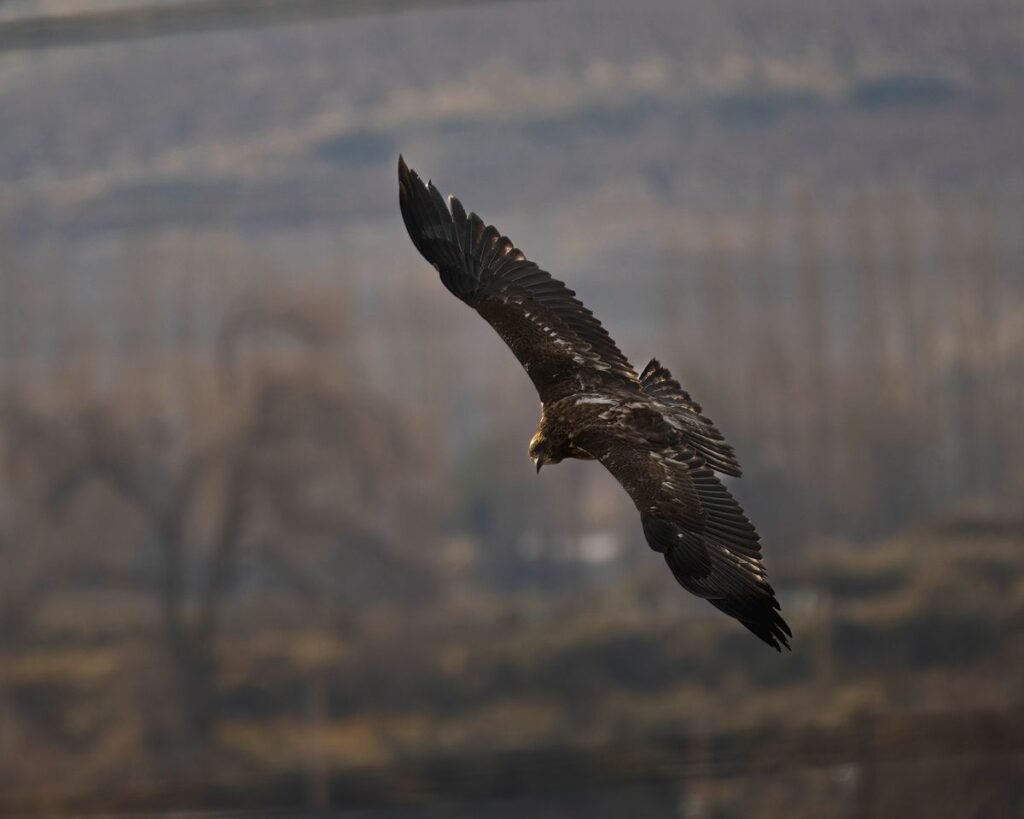
North America's largest flying bird, with a wingspan nearing ten feet, was driven to the brink by habitat loss, poaching, and lead poisoning from bullet fragments in carcasses. The wild population fell to 22 birds by 1982, and between 1986 and 1987 officials captured every remaining wild condor for a captive breeding program run at facilities including the San Diego Zoo Safari Park.
Condors breed slowly, maturing at about six, laying a single egg, and raising each chick for over a year. But by 1992 the first captive-bred birds were released, and in 2019 the program celebrated its 1,000th chick hatching. The U.S. Fish and Wildlife Service's 2025 status report puts the world population at 607 birds as of December 31, 2025: 392 flying free and 215 in captivity. That year, 54 breeding pairs laid 67 eggs, producing 45 chicks, and 46 captive-bred birds were released.
The recovery is real but fragile. Lead poisoning remains the leading cause of death, which is why California banned lead ammunition for hunting in 2019. Microtrash fed to chicks and avian influenza (H5N1) add further threats. The condor is still classified as critically endangered, a reminder that captive breeding buys time, not certainty.
The black-footed ferret: cloned back from the edge
The black-footed ferret, a masked weasel that hunts prairie dogs, was thought extinct until 1981, when a ranch dog named Shep caught one near Meeteetse, Wyoming. Biologists found more than 100 ferrets, but sylvatic plague, a disease humans introduced from Asia, began killing them. Researchers captured the last 18.
Only seven of those 18 ever bred, and every black-footed ferret alive today descends from them. Led by the U.S. Fish and Wildlife Service since 1996, the program has produced some 10,000 ferrets, many released across western North America, and ferrets have been returned to the Meeteetse ranches where the species was rediscovered.
The genetic bottleneck was severe: average kinship among the animals falls between siblings and first cousins, and inbreeding has produced defects such as kinked tails. The fix came from a freezer. In 1988, biologists banked skin cells from a ferret named Willa, who never bred, in the San Diego Zoo's Frozen Zoo. Her tissues held three times the genetic diversity of any living ferret. In December 2020, using somatic cell nuclear transfer, the technique behind Dolly the sheep, scientists produced Elizabeth Ann, the first successfully cloned endangered species in the United States. She was later joined by two more clones from Willa's cell line, Antonia and Noreen, whose offspring could inject long-lost genes back into the wild population.
The Arabian oryx: extinct in the wild, then returned
The Arabian oryx, the desert antelope sometimes called the unicorn of Arabia, was hunted to extinction in the wild, with the last individual believed shot in 1972. As wild herds vanished, a handful of captured animals were combined with oryx from royal collections into a captive herd known as the World Herd. The Phoenix Zoo's breeding program, begun in 1962 from just nine founders, produced more than 200 oryx that seeded herds worldwide.
In January 1982, the first ten founder oryx, descendants of the World Herd, were reintroduced at Jiddat al-Harasis in central Oman, with a second release in 1984. The herd passed 100 animals by 1990 and topped 400 by 1996. Then poaching struck: illegal live capture for private collections crashed the wild population to about 138 by 1998, and some were pulled back into captivity. The program regrouped, with reintroductions in Oman, Saudi Arabia, Jordan, and Israel. By 2017, roughly 1,100 oryx lived in the wild, with 6,000 to 7,000 in captivity.
The oryx is the first species ever moved down the IUCN Red List from Extinct in the Wild to Endangered and then Vulnerable, three full categories. It also shows how reintroduction can be undone by the same threat that caused the extinction, since poaching, not breeding, decided the outcome in Oman.
The golden lion tamarin: a monkey saved by teamwork
By the 1970s, Brazil's golden lion tamarin, a tiny orange monkey of the Atlantic Forest, had fallen below 200 wild animals, crushed by deforestation and the illegal pet trade. Its rescue became one of the first great international breeding collaborations: the zoo population was managed globally from 1973, the species joined the AZA's Species Survival Plan in 1981, and Smithsonian biologist Devra Kleiman led pioneering work.
Between 1984 and 2000, the Golden Lion Tamarin Conservation Program released 146 captive-born tamarins and seven confiscated wild-born animals, born in 43 zoos and research centers across Brazil, Europe, and the United States. Releases were paired with restoring and reconnecting Atlantic Forest fragments so wild groups had somewhere to live. The IUCN downlisted the species from critically endangered to endangered in 2003, and the 2022/2023 census estimated more than 4,800 tamarins in the wild, rebounding even after a yellow fever epidemic. Roughly a third to half descend from reintroduced animals.
Other examples widen the picture. Przewalski's horse, the only truly wild horse, was reintroduced to Mongolia in the 1990s and now numbers more than 750 free-roaming animals. The Espanola Island Galapagos tortoise recovered from as few as 12 individuals to more than 2,000. Each success followed the same formula: a managed captive population, careful genetics, releases, and action against the original threat.
Captive breeding success stories: the numbers
| Species | Low point | Reintroduction began | Where it stands now |
|---|---|---|---|
| California condor | 22 wild birds (1982); all captured by 1987 | 1992 | 607 total, 392 in the wild (USFWS, Dec 2025) |
| Black-footed ferret | 18 captured (1980s), descended from 7 breeders | 1990s onward | ~10,000 bred; hundreds wild at 29+ sites |
| Arabian oryx | Extinct in the wild (1972) | January 1982, Oman | ~1,100 wild; downlisted to Vulnerable |
| Golden lion tamarin | Under 200 wild (1970s) | 1984 | 4,800+ wild (2022/23 census) |
| Przewalski's horse | Extinct in the wild | 1990s, Mongolia | 750+ wild (as of 2020) |
The Hard Part: Why Captive Breeding Is Not Enough
But captive breeding has deep, structural problems, and the failures teach as much as the successes.
Genetic erosion. The goal is to preserve wild genetic diversity, but captive populations are small and live in artificial conditions. Random genetic drift erases genes by chance, bottlenecks strip diversity at the start, and inbreeding, mating between relatives, lowers fitness. The ferret is the textbook case, but every program fights the same math. The defenses are to start with many founders, keep the effective population large, and limit generations in captivity.
Adaptation to captivity. This is the subtler danger. In captivity, natural selection relaxes and different traits are favored: tameness, tolerance of crowding, breeding on schedule. Over generations, animals adapt to cages instead of the wild. Modeling suggests reintroduction success peaks at an intermediate program length, long enough to release many animals but short enough to limit generations of relaxed selection. Programs counter this with naturalistic enclosures and, where feasible, new wild genes.
Behavioral loss. Captive-born animals often cannot do what wild life demands. Released animals commonly struggle to hunt or forage and take more risks around predators. Golden lion tamarin mothers raised in captivity sometimes died before reproducing because they could not climb and forage properly. Pre-release training in anti-predator behavior helps, but its effectiveness varies.
Unintended consequences of intensive care. Sometimes the rescue itself creates new problems. The Chatham Island black robin of New Zealand fell to a single breeding pair in 1980 and recovered to 200 birds by 1998. Managers noticed some birds laying eggs on the nest rim, where they never hatched, and pushed the eggs back to the center. That boosted reproduction but let the trait persist: it was a dominant genetic trait, and eventually more than half the population were rim-layers, dependent on human help.
Hybridization risks. Breeding the wrong animals together can be worse than not breeding at all. Before taxonomic revisions in the 1980s, zoos commonly mated orangutans from different populations, producing hybrids with lower fitness. Large genetic differences between distant populations can cause outbreeding depression, so modern studbooks track provenance carefully.
Cost and scale. These programs are enormously expensive and can run for decades, absorbing funding that might otherwise protect habitat. Critics argue that a species preserved only in cages while its habitat disappears is conservation theater. Practitioners answer that captive breeding is a bridge, not a destination: it only works when the wild still has a place for the animals to return to.
When Releases Fail: The Houbara Bustard Warning
The limit of breeding without threat removal is clearest in the Asian houbara bustard, a desert bird whose wintering grounds include Pakistan. The International Fund for Houbara Conservation built one of the world's largest breeding operations, raising annual production from 979 birds in 2003 to 40,011 in 2013, and thousands of captive-bred bustards have been released in Pakistan, many fitted with satellite tags.
Yet a long-term study by the University of East Anglia, BirdLife International, and the Emirates Bird Breeding Centre delivered a sobering verdict. Wild houbara numbers were declining at 9.4 percent per year, driven by unsustainable hunting and trapping on wintering grounds in Iran, Afghanistan, and Pakistan, and captive-bred birds survived worse than young wild birds. To stabilize the study population while allowing even modest hunting, 7,200 captive-bred birds would have to be released each year into a wild population of just 4,700, a ratio that would also risk domesticating the wild breeding stock. Regulating hunting did far more than releasing more birds.
The houbara is classified as Vulnerable by the IUCN, and the lesson travels far beyond one bird. Breeding can manufacture animals; it cannot manufacture a safe wilderness. Where the original threat, hunting, lead poisoning, plague, deforestation, is left running, releases become a treadmill.
The Next Frontier: Frozen Zoos and Genetic Rescue
The newest chapter of captive breeding is written in liquid nitrogen. The San Diego Zoo's Frozen Zoo holds cell samples from more than 1,000 species. The ferret cloning story began there, with cells banked in 1988 from an animal that never reproduced, and conservationists now plan to bank tissue from every endangered species in the United States as insurance.
Genetic rescue is expanding beyond cloning. Artificial insemination moves genes between continents without moving animals. Genome sequencing identifies which individuals carry the rarest variation, so pairings can be chosen with precision the old studbook keepers never had. Cryopreserved sperm and embryos could one day rebuild a population from a freezer.
The most promising shift is organizational. Conservationists increasingly plan captive and wild populations as a single system, an approach the IUCN calls the One Plan. Zoo and wild populations are managed together, with animals, genes, and knowledge flowing both ways, alongside habitat protection and threat removal.
Frequently Asked Questions
What is the main goal of captive breeding programs for endangered species? The primary goal is to prevent extinction by building a healthy, genetically diverse captive population that can reinforce dwindling wild populations or reestablish lost ones. Secondary goals include research, public education, and an insurance population while wild threats are addressed.
Do captive breeding programs actually work? Yes, when paired with action against the original threat. The condor grew from 27 captive birds to 607 total, the Arabian oryx went from extinct in the wild to Vulnerable, and the golden lion tamarin rebounded from under 200 to more than 4,800 in the wild. Programs fail when the cause of decline, such as hunting or lead poisoning, is not fixed.
What is the biggest problem with captive breeding? Loss of genetic diversity. Small founder groups, inbreeding, and adaptation to captivity can leave released animals less fit for the wild. The black-footed ferret, descended from just seven breeding animals, shows inbreeding effects that scientists are now trying to fix with cloning.
How are animals chosen for breeding in these programs? Through international studbooks and species coordinators who track every individual's birth date, sex, location, and lineage. Pairings minimize inbreeding and preserve rare genes, and animals or semen are moved between zoos to make the best matches.
What happens to captive-bred animals before release? They go through quarantine and veterinary checks, acclimation in outdoor enclosures at the release site, and often receive supplementary food and shelter after release. Most are fitted with radio collars or tags and monitored intensively for months.
Are zoos the only places that run captive breeding programs? No. Programs also run at dedicated breeding centers, wildlife reserves, and research institutes, such as the National Black-Footed Ferret Conservation Center in Colorado. Zoos are important partners, but the work is coordinated across many institutions internationally.
Can extinct species be brought back with captive breeding? Only if living individuals or viable preserved cells exist. Cloning from banked tissues, as with the black-footed ferret, can restore lost genetic diversity, but it cannot resurrect a species with no surviving genetic material. True de-extinction remains experimental.
Conclusion
Captive breeding programs are among the most ambitious projects humans have attempted: the deliberate, generation-by-generation reconstruction of a wild animal. The condor, the ferret, the oryx, and the tamarin prove the method can work. But the houbara bustard, the inbred ferret, and the rim-laying black robin prove something equally important: breeding is only half the job. A species is not saved when it survives in a cage. It is saved when the wild is made safe enough to take it back.