Himalayan Brown Bear: Pakistan’s Deosai Giant Explained
On a treeless plateau higher than most of the Alps, where golden marmots whistle from their burrows and the wind never really stops, lives one of the rarest large mammals in Pakistan. The Himalayan brown bear (Ursus arctos isabellinus) is a sandy-coated subspecies of the brown bear found only in the high Himalaya and its western ranges. In Pakistan its stronghold is Deosai National Park, the vast alpine plateau between Skardu and Astore in Gilgit-Baltistan, often called the Land of Giants.
The bear's story in Pakistan is a genuine conservation drama: a population that slid toward extinction, a national park created to save it, a remarkable recovery, and a new generation of science trying to understand an animal that is still deeply mysterious. Here is everything worth knowing about the Himalayan brown bear in Pakistan.
The bear of the Land of Giants
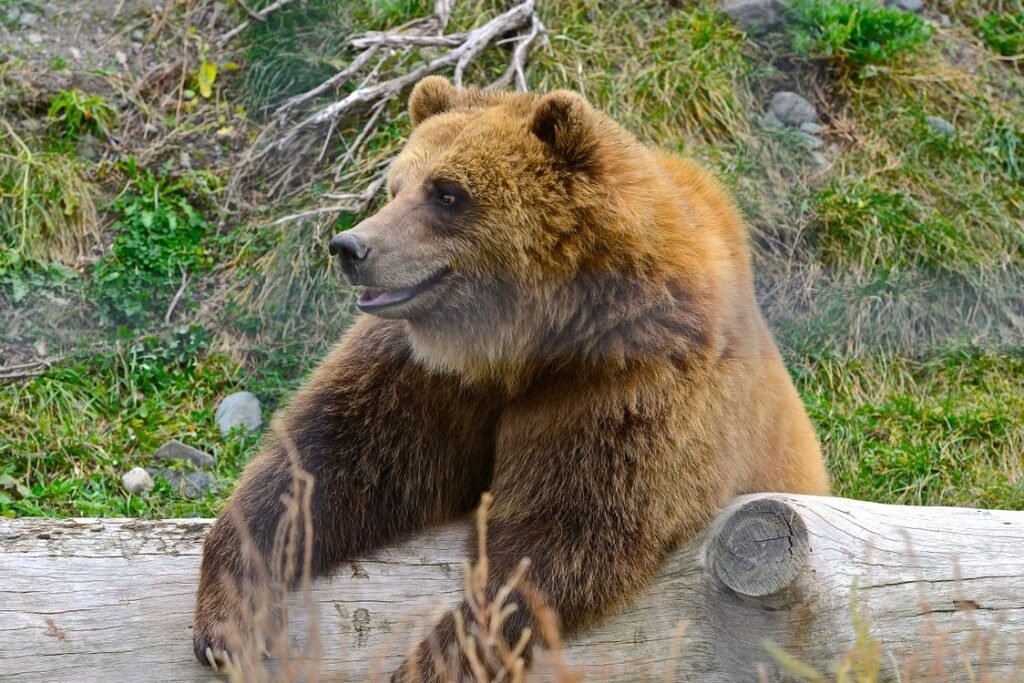
The Himalayan brown bear is the largest land animal in the Himalaya. Adults have a sandy or reddish-brown coat, a muscular hump over the shoulders, and long claws on the front paws built for digging. Males measure roughly 1.5 to 2.2 metres in length; females are smaller, about 1.37 to 1.83 metres. Compared with the great coastal brown bears of Alaska, it is a small, compact animal, shaped by life at altitude where food is seasonal and winters are brutal.
Its range spans the high Himalaya across Pakistan, India, Nepal and Tibet. In Pakistan the bears are creatures of the high alpine zone, living on open plateaus and mountain meadows above 3,000 metres, in a landscape with no dense forest to hide in. That openness is unusual for a brown bear and it shapes everything about how the animal is studied: unlike forest bears that must be tracked with camera traps and DNA, Deosai's bears can sometimes be counted directly, by eye, across the plateau.
Deosai itself is the stage. The plateau averages about 4,114 metres (13,500 feet) above sea level, and the national park's boundaries stretch across roughly 1,981 square kilometres. For half the year it is buried in snow and inaccessible; for the brief summer it explodes into wildflowers, marmots and grazing herds, and the bears emerge from hibernation to make the most of it.
Where Himalayan brown bears live in Pakistan
Deosai is the species' stronghold, but it is not the only place. Brown bears have been recorded in several other protected areas in the north, notably Khunjerab National Park, Qurumbar National Park and Broghil Valley National Park. In 2021 the government added two more protected areas within the bear's natural habitat, Himalaya National Park and Nanga Parbat National Park, strengthening the legal shield around the population.
That matters because the Himalayan brown bear's Pakistani range is fragmented. The 2007 national estimate put the population at just 150 to 200 animals spread across some 150,000 square kilometres of northern Pakistan. When a population that small is scattered across separate valleys, each local group is vulnerable to disappearing on its own, which is why connecting and protecting the habitat between strongholds is as important as protecting the strongholds themselves.
How many are left?
Counting bears on a plateau the size of a small country is serious science, and the best number Pakistan has comes from a 2022 survey by the Government of Gilgit-Baltistan, led by wildlife officer Syed Naeem Abbas and colleagues. Using a double-observer method based on capture-mark-recapture modelling, and identifying individual bears by the white chest patches of males, coat colour and body size, the team estimated 66 Himalayan brown bears in Deosai National Park and its neighbouring valleys, with a 95 percent confidence interval of 58 to 77 animals. Bear density ranged from zero to 0.04 animals per square kilometre.
Sixty-six sounds small, and it is. But context transforms it. When Deosai was notified as a protected area in 1993, the bear population was at the verge of extinction after years of decline. Strict protection, first as a Category-I strict reserve and later as a Category-II national park permitting limited ecotourism, allowed the population to climb back. The 2022 figure represents a genuine recovery, and Deosai now holds the most significant and stable Himalayan brown bear population anywhere.
Nationally, the Himalayan brown bear is classified as critically endangered in Pakistan. That is the highest threat category short of extinction in the wild, and it reflects how small, slow-breeding and fragmented the population remains despite the Deosai success.
Himalayan brown bear in Pakistan: key figures
| Measure | Figure |
|---|---|
| Scientific name | Ursus arctos isabellinus |
| Stronghold | Deosai National Park, Gilgit-Baltistan (avg. 4,114 m elevation) |
| Deosai population (2022 survey) | 66 bears (95% CI: 58-77) |
| National estimate (2007) | 150-200 bears across ~150,000 sq km |
| National status | Critically endangered in Pakistan |
| Other protected areas | Khunjerab, Qurumbar, Broghil Valley, Himalaya and Nanga Parbat national parks |
| Hibernation | Roughly October/November to April/May |
Life on the high plateau
Himalayan brown bears are omnivores with a largely vegetarian menu. They eat grasses, roots, shoots, flowers, fruits and berries, supplementing with insects and small mammals, and they will occasionally take livestock, including sheep and goats. They are most active before sunrise and in the late afternoon, resting through the heat of the day, and outside the mating season they are solitary animals.
Hibernation dominates their year. The bears den up around October or November and emerge in April or May, sleeping through the months when Deosai is a frozen waste. Mating takes place from about mid-May to July, and females give birth to one or two cubs in the den, nursing them through the winter and leading them out in spring. Cubs stay with their mother for several years, and females breed only every few years, which is why the population grows so slowly and recovers so gradually from losses.
Because the plateau has no forest, the bears' lives play out in the open: grazing the alpine meadows, digging for roots and marmots, and wandering between seasonal feeding areas. Researchers still know surprisingly little about the details, which is what made the recent collaring work so important.
The marmot-burrow surprise
In 2023, a team from South Africa's University of the Free State, working with Deosai park officials under the Himalayan Brown Bear Foundation's project, fitted GPS collars to three bears. The goal was basic but vital: to learn where the bears roam, what they eat, and where they hibernate. As the project's wildlife habitat expert put it, understanding how an animal fits into its broader landscape is the foundation of protecting it.
The collars delivered a genuine surprise. When winter came and the collars dropped into battery-saving sleep mode, rangers tracked two of the bears with VHF radio antennas and discovered that both were hibernating inside the park boundaries, something officials had not known. Even more unexpected was where: not in deep mountain caves, but in the burrows of golden marmots (Marmota caudata aurea) on grassy, sun-facing slopes. The bears had taken over the burrows of an animal they sometimes prey on, and camouflaged each den entrance with tufts of yellowed grass. Rangers said they had patrolled those very slopes in previous years without noticing the dens.
The third collared bear began hibernation only in late November, by which time heavy snow made its exact location hard to pin down. The collaring team also trained Pakistani staff in dart-gun use, drone surveys and telemetry, building local capacity to keep studying the bears. One sobering note from the scientists: while local estimates put the Deosai population at 66, the visiting researchers, who saw just eight bears in three weeks of intensive searching, suspected the true number could be lower. The 2022 survey remains the authoritative figure, but it shows how hard these animals are to count, and how much monitoring matters.
What threatens them
The Himalayan brown bear's enemy list is long. Habitat loss and fragmentation top it, driven above all by livestock. The 2022 survey team counted 19 transhumant camping sites inside Deosai and its buffer valleys, housing some 244 people and around 4,834 head of livestock. Thousands of sheep, goats and yaks compete with bears for the same short summer grazing, trample vegetation and bring herders and dogs into bear country. The survey authors recommended a complete ban on transhumant grazing permissions in the park and its immediate buffer valleys.
Poaching persists, including killing for the illicit trade in bear fat and pelts. Bear baiting, the cruel spectacle of setting dogs on a captive bear, has historically taken animals from the wild. Poorly managed tourism adds disturbance, and the extraction of medicinal and ethno-botanical plants degrades the meadows the bears feed on.
Human-bear conflict is the sharp edge. As the Deosai population recovered, bears and people began colliding more often. In September 2025, a brown bear found dead in Minimarg, in Astore district, set off a major public controversy, with conservationists fearing illegal hunting; wildlife officials ordered a postmortem, which indicated severe lung infection, but the episode showed how thin the margin of trust is. Earlier, a well-known Pakistani singer was injured by a bear while camping at Bara Pani in Deosai and had to be evacuated to hospital in Skardu. Park authorities now advise tourists to camp near hotels and designated safe zones at night and to take proper precautions.
Climate change is the slow threat behind all the others. A shorter, warmer winter and shifting plant seasons could disrupt the hibernation and feeding calendar the bears depend on, on a plateau with nowhere higher to go.
Hope: the population that came back
It is worth ending the threats section with perspective, because the Deosai story is, by the standards of large-carnivore conservation, a success. In the early 1990s the Himalayan brown bear in Pakistan was sliding toward extinction. The 1993 notification of Deosai as a protected area, with hunting strictly prohibited, gave the bears a refuge. Protection held, the population grew, and today Deosai's bears are the most secure in the country.
The next steps are clear from the science: annual monitoring with robust methods, so population changes are caught early; enforcement of grazing controls in the park and buffer valleys; sensitisation of communities in the surrounding valleys, where most conflict happens; and continued investment in the research that the collaring project began. The 2021 addition of Himalaya and Nanga Parbat national parks shows the government understands that one stronghold is not enough.
A year in the life of a Deosai bear
Put the fragments of research together and a yearly rhythm emerges, tuned to one of the harshest calendars any bear lives by.
| Season | What the bears do |
|---|---|
| April-May | Emergence from hibernation; lean bears graze the first green shoots; mating season begins (mid-May to July) |
| June-August | Peak feeding on grasses, roots, flowers and berries; females nurse spring cubs; best season for sightings |
| September-October | Intense feeding to build winter fat; bears range widely; denning begins around October |
| November-March | Hibernation in dens, some in repurposed golden-marmot burrows; collars switch to battery-saving mode |
Spring emergence is the hungriest moment of the year. A bear that has burned through its fat reserves over five or six months of sleep must rebuild on a plateau where the growing season is barely four months long. Summer is a race to eat: the bears graze the alpine meadows almost continuously during their active hours before dawn and in the late afternoon. By autumn, the imperative shifts to fat. A bear that enters the den underweight may not survive the winter, and a female that enters underweight will not carry cubs to term.
This compressed calendar is why disturbance matters so much. Every hour a bear spends avoiding tourists, dogs or herders in August is an hour not spent eating, and on Deosai there are no spare hours. It is also why the grazing conflict is so serious: 4,834 livestock heads counted in the park and buffer valleys eat the same short summer flush the bears depend on. Protecting the bear ultimately means protecting the meadow calendar it lives by.
Frequently asked questions
Where can Himalayan brown bears be seen in Pakistan? Deosai National Park in Gilgit-Baltistan is the stronghold and the best place to see them, between Skardu and Astore. They also occur in Khunjerab, Qurumbar and Broghil Valley national parks. Summer (July to September) is the viewing season; the park is snowbound in winter.
How many Himalayan brown bears are left in Pakistan? A 2022 government survey estimated 66 bears in Deosai and neighbouring valleys (range 58-77). The last national estimate, from 2007, put the countrywide population at 150-200. The bear is classified as critically endangered in Pakistan.
What do Himalayan brown bears eat? They are omnivores: mostly grasses, roots, shoots, flowers, fruits and berries, plus insects and small mammals. They occasionally prey on livestock such as sheep and goats.
When do Himalayan brown bears hibernate? Roughly from October or November until April or May. Recent GPS-collar research found that some Deosai bears hibernate inside the park in repurposed golden-marmot burrows on sun-facing slopes, with den entrances camouflaged with grass.
Are Himalayan brown bears dangerous? They are wild predators and should be treated with respect. Attacks are rare but have occurred, including an incident at a Deosai campsite. Visitors should camp in designated safe zones, store food securely, never approach a bear, and follow park staff guidance.
What is being done to protect them? Deosai National Park (established 1993) bans hunting; two more national parks were added in their habitat in 2021; a 2022 scientific survey set a population baseline; and GPS-collaring research is mapping their movements and dens. Conservationists call for grazing controls, anti-poaching enforcement and annual monitoring.
How is the Himalayan brown bear different from other brown bears? It is a distinct high-altitude subspecies (Ursus arctos isabellinus) with a sandy or reddish-brown coat, smaller and more compact than lowland brown bears, adapted to treeless alpine plateaus. It occurs only in the Himalaya and adjoining ranges of Pakistan, India, Nepal and Tibet.
Why is it called the bear of the "Land of Giants"? Deosai is nicknamed the Land of Giants, and the brown bear is its most iconic animal, the largest creature on the plateau and the symbol of the national park.
Giants worth keeping
The Himalayan brown bear asks for very little: a plateau left alone in summer, a marmot burrow to sleep in come winter, and meadows ungrazed enough to feed it. Pakistan has already shown it can provide that, pulling a population back from the edge of extinction with three decades of protection. The science now exists to do the job properly, from satellite collars to rigorous surveys. Whether the recovery continues is a matter of funding, enforcement and the willingness of herders, tourists and officials to share the plateau with its oldest residents. The giants of Deosai have survived this long. With steady protection, they can survive much longer.