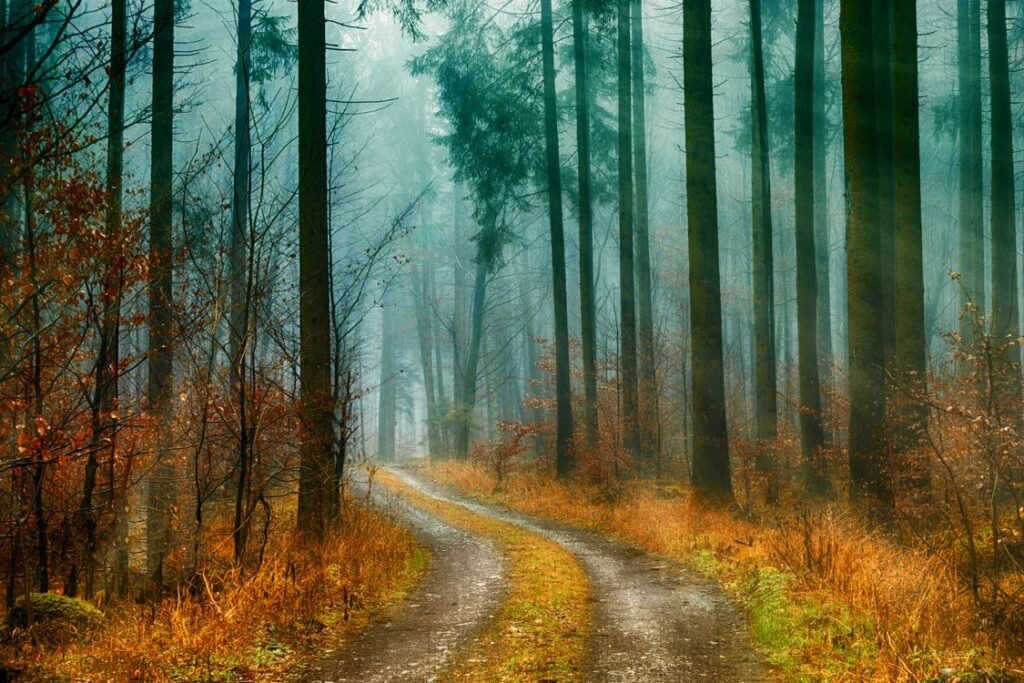
Shinrin-Yoku Benefits: The Science of Forest Bathing
In 1982, Japan's Forestry Agency launched a campaign with an unusual prescription for the stresses of modern life: go and spend time among the trees. They called it shinrin-yoku, which translates roughly as "forest bathing" or "taking in the forest atmosphere." There is no water involved and no exercise required. The idea is simply to immerse yourself in a forest with all your senses open, and let the woods do the rest.
Four decades later, that poetic idea has grown into a genuine field of research. Scientists, led in large part by Japanese researchers, have spent years measuring what actually happens inside the human body during and after time in forests. The results are striking enough that a new discipline, called Forest Medicine, now exists to study them. This article walks through what shinrin-yoku is, what the science says about the benefits of forest bathing, how researchers think it works, and how you can try it yourself, with an honest look at what the evidence does and does not prove.
What Shinrin-Yoku Actually Means
Shinrin means forest, and yoku means bath. Put together, shinrin-yoku describes bathing in the atmosphere of the forest: breathing its air, hearing its sounds, seeing its light, touching its textures. It is a deliberate slowing down, not a workout. You might wander slowly along a trail with no destination, sit against a tree trunk and watch the canopy move, or simply stand still and listen.
That distinction matters, because forest bathing is often confused with hiking. Hiking is exercise with a goal: reach the viewpoint, finish the loop, log the kilometers. Forest bathing has no goal beyond presence. You are not trying to get anywhere or burn calories. You are giving your nervous system what researchers describe as a recovery session, time in which attention can soften and the body's stress machinery can stand down.
The practice grew quickly in Japan, where it fit naturally into a culture that already prized seasonal nature rituals. Over time the government went further, designating official forest therapy bases and trails across the country where the health effects of the forest environment could be studied and experienced. Similar programs have since appeared in South Korea, Finland, Canada, and elsewhere, and guided forest therapy walks are now offered on several continents.
The Science Behind Forest Bathing: 7 Evidence-Backed Benefits
Most of what we know comes from Japanese research programs that began in the mid-2000s, when teams started taking volunteers into forests and measuring their physiology before, during, and after. The most comprehensive summary comes from Dr. Qing Li, a physician and researcher whose team coined the term Forest Medicine to describe this new interdisciplinary field. A 2019 systematic review that pooled 28 studies reached broadly similar conclusions. Here are the benefits with the strongest support.
1. Lower stress hormones
This is the most consistently reported effect. Studies find that time in forests reduces cortisol (the main stress hormone, measured in saliva and blood), as well as urinary adrenaline and noradrenaline. In one widely cited experiment conducted across 24 forests in Japan, participants who walked in woodland showed cortisol levels nearly 16 percent lower than when they walked in urban settings. The effect appears quickly: measurable drops in blood pressure have been recorded after roughly 15 minutes among trees.
2. Reduced blood pressure and heart rate
Forest exposure lowers both systolic and diastolic blood pressure and slows the heart rate. Researchers interpret this as a preventive signal for hypertension and cardiovascular strain, though it is worth noting that most studies measure short-term changes rather than long-term disease outcomes. The 2019 systematic review found improvements in cardiovascular and hemodynamic markers across many different study designs, which strengthens confidence in the pattern.
3. A calmer nervous system
Your autonomic nervous system has two branches: the sympathetic branch drives the fight-or-flight response, while the parasympathetic branch governs rest and digest. Forest bathing appears to nudge the balance toward the parasympathetic side, increasing indicators of relaxation while quieting stress arousal. In plain language, the body shifts out of emergency mode. People often describe this subjectively as feeling their shoulders drop and their breathing deepen, and the physiology backs up the sensation.
4. Stronger immune activity
The finding that attracts the most attention concerns natural killer (NK) cells, immune cells that patrol for infected or abnormal cells. In studies led by Qing Li's team, participants who spent two to four hours in a forest on two consecutive days showed a marked increase in NK cell activity, with one well-known study reporting a surge of nearly 40 percent in women. The effect was linked to phytoncides, the aromatic compounds trees release into the air, and follow-up measurements suggested the boost lingered for days after the forest visit. Researchers are careful to frame this as an immune-supporting effect, not a cancer treatment or a guarantee against illness.
5. Better mood and less anxiety
Psychological testing tells a consistent story. On the Profile of Mood States (POMS), a standard questionnaire, forest exposure reduces scores for anxiety, depression, anger, fatigue, and confusion, while increasing vigor. Participants report feeling calmer, more positive, and mentally refreshed. The 2019 review likewise found significant improvements in emotional state and clear alleviation of anxiety and depressive feelings across the pooled studies.
6. Improved sleep
Several studies report that forest bathing improves sleep quality, including both subjective sleep ratings and physiological markers. The proposed chain is straightforward: lower stress hormones and a calmer autonomic balance in the daytime make it easier for the body to wind down at night. For people whose sleep suffers mainly from a racing mind, an unhurried afternoon among trees appears to help reset the rhythm.
7. Metabolic and restorative signals
This is the least discussed benefit, but Qing Li's review notes that forest exposure increases blood levels of adiponectin, a protein involved in regulating glucose and fat metabolism, and DHEA-S, a hormone associated with stress resilience. The same body of work suggests potential applications in rehabilitation settings. These findings are preliminary compared with the stress and mood data, but they hint that the forest's influence reaches beyond the nervous system into metabolism.
| Outcome | Forest setting | Urban setting |
|---|---|---|
| Cortisol (stress hormone) | About 16% lower in woodland walks | Higher baseline |
| Blood pressure | Drops measurably within about 15 minutes | Little or no drop |
| Heart rate | Slows; parasympathetic activity rises | Sympathetic dominance persists |
| NK cell activity | Rises sharply after forest trips; effect lasts days | No comparable change |
| Mood (POMS scores) | Anxiety, anger, fatigue down; vigor up | Smaller or no improvement |
| Self-reported restoration | High; attention and focus recover | Lower |
How Forest Bathing Works: Three Mechanisms
Researchers point to three overlapping explanations, none of them mystical.
Phytoncides. Trees constantly release volatile organic compounds, such as alpha-pinene and limonene, to defend themselves against insects, fungi, and decay. When you breathe forest air, you inhale these compounds. Laboratory and field studies link phytoncide exposure to reduced stress hormones and increased NK cell activity, making it the leading explanation for the immune findings.
Stress-response downshift. Forests are quiet, shaded, and free of the alerts, crowds, and time pressure that keep city nervous systems on edge. Removing those triggers lets the sympathetic branch power down. Lower noise, softer visual stimulation, and cooler, cleaner air all contribute to an environment the body reads as safe.
Attention restoration. Psychologists have long observed that natural scenery captures attention gently, without demanding decisions or vigilance. This "soft fascination," watching light move through leaves or listening to water, lets the directed attention we burn through at work and on screens recover. The result is the clearer focus people report after time among trees.
Forest Bathing vs. Hiking: What Is the Difference?
The two activities overlap, since both happen outdoors, but they are built for different purposes. Understanding the difference helps you choose the right one for how you feel.
| Forest bathing | Hiking | |
|---|---|---|
| Primary goal | Sensory immersion and relaxation | Exercise, distance, destination |
| Pace | Very slow; stopping often or sitting | Steady; keeps moving |
| Attention | Outward to senses: smell, sound, texture | Often inward or navigational |
| Phone | Put away entirely | Often used for maps, photos, tracking |
| Best for | Stress, mental fatigue, mood reset | Fitness, cardiovascular training |
| Session length in studies | 20 minutes to a few hours | Usually longer outings |
Neither is better in any absolute sense. A brisk hike trains your heart; a slow forest session settles your nerves. Many people benefit from both, on different days, for different reasons.
How to Practice Forest Bathing: A Beginner's Guide
You do not need a remote wilderness. Research shows that city parks and modest green spaces deliver much of the benefit, though denser, older forest tends to deliver more. Here is a simple way to begin.
1. Choose your spot. Anywhere with mature trees and relative quiet will do: a wooded park, a riverside grove, a botanical garden. In Pakistan, the Margalla Hills trails around Islamabad, the hill forests near Murree and Nathia Gali, or even a large tree-lined park can work. Aim for somewhere you feel safe lingering.
2. Give it real time. Studies use sessions from about 20 minutes up to a couple of hours. Start with 30 to 45 unhurried minutes. The benefits appear stronger with repetition, so a weekly session beats a single marathon outing.
3. Put the phone away. Not on silent in your pocket, but away, in a bag. Notifications shatter exactly the mental state you are trying to cultivate. Leave the earbuds at home as well, since the forest soundscape itself is part of the therapy.
4. Slow down deliberately. Walk at half your normal pace or slower. Stop often. Sit if you like. There is no route to complete and nothing to achieve.
5. Move through your senses. Spend a few minutes on each: notice the layered greens and the way light falls; listen for the nearest sound, then the farthest; breathe in the smell of bark, soil, and leaf litter; touch bark textures and run your fingers through moss or fallen leaves.
6. End gently. Before leaving, stand still for a minute and notice how you feel compared with when you arrived. Many guides suggest a short closing ritual, such as a few slow breaths or a quiet thank-you to the place, which sounds sentimental but helps mark the transition back to ordinary life.
Guided walks exist in many countries now, led by certified forest therapy guides who offer structured "invitations" to engage the senses. They can be a good first step if wandering aimlessly feels awkward, but they are optional. The forest itself is the main practitioner.
What the Research Does Not Prove: Honest Caveats
A trustworthy guide to forest bathing should say plainly where the evidence ends.
First, many studies are small or short-term, and some were conducted by researchers who are also advocates of forest therapy, which calls for healthy skepticism about exact effect sizes. Second, the immune boost, while real in the measured studies, is temporary and modest in clinical terms. It is not disease prevention, and forest bathing is not a treatment for any illness. Third, most research comes from Japan and East Asia, and more diverse populations and longer follow-ups would strengthen the conclusions.
None of this erases the findings. Lower stress, calmer nerves, and better mood after time among trees are supported well enough to act on, especially since the practice has essentially no downside. Treat forest bathing as an evidence-backed way to lower everyday stress, not as medicine.
Frequently Asked Questions
What does shinrin-yoku mean in English?
It translates roughly as "forest bathing" or "taking in the forest atmosphere." The term was coined by Japan's Forestry Agency in 1982 as part of a national campaign encouraging people to spend restorative time in forests for their health.
How long should a forest bathing session last?
Research studies typically use 20 minutes to a few hours. Blood pressure improvements have been measured after about 15 minutes, while the well-known immune studies used two to four hours on consecutive days. For regular practice, 30 to 60 unhurried minutes once a week is a sensible starting point.
Is forest bathing the same as hiking?
No. Hiking is exercise with a destination and a pace to keep. Forest bathing is slow, goalless sensory immersion: wandering, sitting, noticing smells, sounds, and textures. Hiking trains the body; forest bathing is aimed at settling the nervous system.
Can I do forest bathing in a city park?
Yes. Studies, including Qing Li's review work, report that forest bathing in city parks also produces health benefits. Denser and more natural forest tends to give stronger effects, partly because of higher phytoncide levels, but you do not need wilderness to begin.
What are phytoncides?
Phytoncides are natural antimicrobial compounds that trees and plants release into the air to protect themselves from insects and decay. When humans breathe forest air, inhaling these compounds is linked in studies to lower stress hormones and increased natural killer cell activity.
Does forest bathing really boost the immune system?
Studies have measured increased natural killer cell activity after forest visits, with effects lingering for days. Researchers describe this as immune support, not disease prevention. It is a promising finding, but the studies are small and forest bathing should not be treated as medical therapy.
Is there a best time of day or season for forest bathing?
Research does not point to one ideal hour, but mornings in a forest offer cooler air, active birdsong, and softer light, which many guides prefer. Seasonally, phytoncide levels vary with temperature and tree activity, so a thriving summer or spring forest may offer richer air than a dormant winter wood. That said, winter walks have their own quiet beauty, and the stress-relief effects appear year-round. The best time is simply the time you will actually go.
Conclusion
Shinrin-yoku began as a Japanese public health slogan and matured into a research-backed practice with measurable effects on stress, cardiovascular markers, immunity, mood, and sleep. Four decades after the term was coined, the prescription remains disarmingly simple, and the science keeps confirming what walkers in the woods have always known. The mechanisms are down to earth: aromatic compounds in forest air, a genuine break from urban stress triggers, and the gentle restoration of tired attention. The evidence has limits, and honest guides acknowledge them, but the core message is simple and well supported. Spending slow, unhurried time among trees is one of the cheapest and safest ways to lower the stress of modern life. The forest has been offering this all along; science is finally catching up to what people felt instinctively.