Bamboo Facts: 15 Things You Didn’t Know About Bamboo
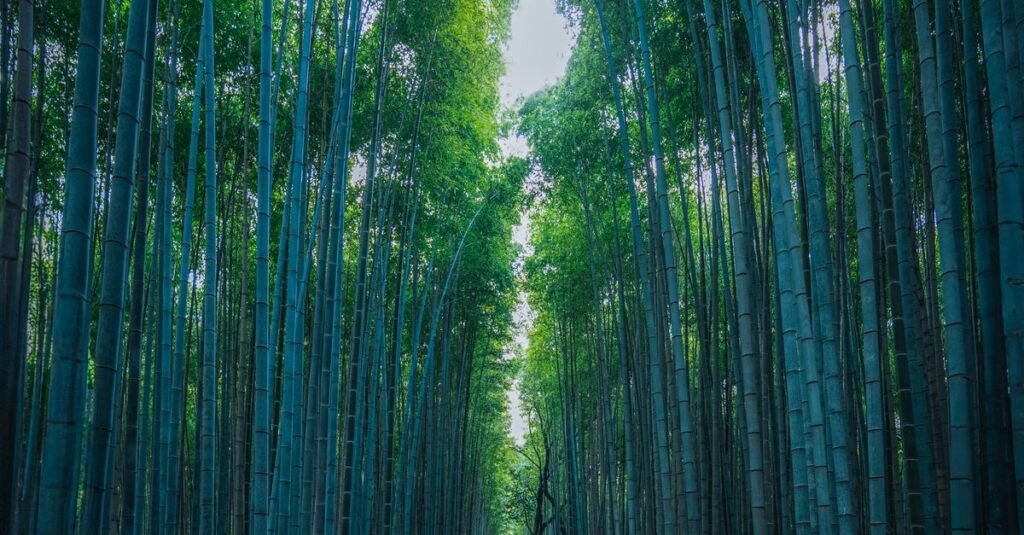
Walk into a bamboo grove on a still day and the first thing you notice is the sound. Tall green culms knock softly against each other in the wind, and light filters down through the leaves in shifting patterns. It feels like a forest, and most people would call it one. But bamboo is not a forest of trees at all. It is a forest of grass, and some of the most surprising bamboo facts start with that simple twist.
Bamboo belongs to the grass family Poaceae, the same family that gives us wheat, rice, and the lawn under your feet. Botanists place bamboos in the subfamily Bambusoideae, a group of woody, mostly evergreen, perennial flowering plants. Estimates of how many species exist range from roughly 1,000 (cited by Guinness World Records from the RHS Dictionary of Gardening) to more than 1,400. They grow naturally across tropical, subtropical, and temperate regions of Asia, Africa, and the Americas, from steamy lowland riverbanks to mountain slopes more than 13,000 feet high, according to the Smithsonian.
What follows is a tour of what makes this giant grass one of the most remarkable plants on the planet, from its record-breaking speed to its once-in-a-century flowers, its bond with pandas, and its growing role in countries like Pakistan.
What Is Bamboo? A Giant Grass, Not a Tree
The single most misunderstood of all bamboo facts is the plant's identity. Bamboo looks like a tree, is used like timber, and can tower over 30 metres tall. But botanically it is a grass. Its stems, called culms, are jointed and usually hollow, with vascular bundles scattered through the culm wall rather than arranged in rings the way a tree trunk is built. That is why a bamboo culm rises at a nearly constant diameter instead of tapering like a trunk.
Bamboo also grows the way grasses grow: from the ground up, not from the top down. Each new shoot emerges from the soil already at its final thickness, then races upward. There is no second season of thickening. Once a culm reaches its full height, usually within a single growing season, it will never grow taller or wider. It simply hardens, branches, and leafs out.
Despite this grass-like body plan, bamboo behaves like a woody plant in many respects. Some species, like Dendrocalamus sinicus, produce culms 46 metres long, 36 centimetres in diameter, and weighing up to 450 kilograms, according to Wikipedia's bamboo entry. Others are tiny: Raddiella vanessiae, a bamboo of the savannas of French Guiana, has stalks just 10 to 20 millimetres long. The word "bamboo" itself most likely travelled into English from Malay via Dutch or Portuguese traders.
The Fastest Growing Plant on Earth
Ask for bamboo facts and this one always comes first: bamboo is the fastest growing plant in the world, and Guinness World Records confirms it. Certain species have been measured growing up to 91 centimetres (35 inches) in a single day, a rate of about 4 centimetres an hour. Kew Gardens puts it even more vividly, noting that some species can grow an incredible 1 metre in 24 hours under the right conditions. The Chinese moso bamboo (Phyllostachys edulis), one of the most commercially important species, can grow almost a metre in a single day, according to BBC Science Focus.
Why is bamboo so fast? The answer lies underground. Bamboo spreads through rhizomes, thick underground stems that store energy produced by mature culms. When a new shoot emerges, it is plugged into this energy bank through the rhizome network, so it does not need leaves of its own until it reaches full height. It is, in effect, being fed by the whole grove while it climbs.
The shoot's anatomy helps too. As BBC Science Focus explains, bamboo stems have two distinct zones of cell division. The zones at the nodes form leaves, while the zones between nodes produce cells that stretch rapidly upward by taking up water. Because the stem is a hollow tube rather than a solid trunk, it needs far fewer resources to reach the same height a tree would. There are no growth rings to lay down, no trunk to thicken. It is one stick, growing straight up, and the structural rigidity of the tube lets woody reinforcement begin well behind the growing tip, so elongation can proceed at astonishing speed.
A few practical notes make the record even more interesting. First, the fastest growth happens in warm, humid conditions with plenty of water; a stressed plant grows far more slowly. Second, a newly transplanted bamboo can take several seasons before its shoots reach their full potential height, because the rhizome system needs time to build up energy reserves. And third, the record speeds belong to the giant timber species. Most garden bamboos grow at a far more modest pace, which is just as well for anyone with a small backyard.
Running vs Clumping Bamboo: Know the Difference
One of the most useful bamboo facts for gardeners concerns the two growth habits. Bamboo spreads through its rhizome system, and species fall into two broad groups with very different manners.
| Feature | Running bamboo | Clumping bamboo |
|---|---|---|
| Rhizome type | Long, spreading underground stems | Short, compact rhizomes |
| Spread | Can advance several metres per year | Expands slowly outward from the clump |
| Behaviour | Often aggressive; can invade neighbouring gardens | Well-behaved; stays in a defined clump |
| Control | Needs a buried physical barrier or regular shoot removal | Rarely needs control |
| Best for | Large screens, erosion control, commercial groves | Gardens, patios, smaller spaces |
| Examples | Many Phyllostachys species, including moso | Many Bambusa and Fargesia species |
Running bamboos are the ones with a reputation for taking over. Because there is no central root to destroy, cutting down the visible culms does nothing to the underground network, which simply sends up new shoots the following year. Removing running bamboo entirely usually means digging out the whole rhizome system or containing it from the start with a barrier sunk below the depth the rhizomes travel. Clumping bamboos, by contrast, are the polite garden citizens, expanding gradually and rarely causing trouble.
This distinction matters ecologically too. In their native habitats, running species can colonize disturbed ground quickly, stabilizing soil after landslides or logging. In places where they are introduced, the same vigour can make them invasive. Anyone planting bamboo should choose the habit to match the space.
The Once-in-a-Lifetime Bloom
Perhaps the strangest of all bamboo facts is how bamboo flowers. Most plants bloom every year. Many bamboo species bloom once in their entire lives, and they do it together, on a schedule written into their genes.
This phenomenon is called gregarious flowering. All the plants of a given species, across entire forests and sometimes across continents, burst into flower at the same time, produce seed, and then die. The cycle length depends on the species: some wait a few decades, others more than a century. The Japanese henon bamboo (Phyllostachys nigra var. henonis) flowers only about once every 120 years. The last nationwide flowering was documented in 1908, and researchers from Hiroshima University, publishing in the journal PLOS ONE, have been studying the current round of flowering to understand how, or whether, the species regenerates afterwards. Their sobering finding: more than 80 percent of sampled culms flowered, but the flowering culms produced no viable seeds.
Why would a plant evolve such an extreme strategy? Scientists believe synchronized flowering overwhelms seed predators. By flooding the forest with seeds all at once, bamboo ensures that even if rodents and birds eat enormous quantities, enough survive to sprout. The mass die-off that follows also opens the canopy, letting light reach the next generation of seedlings.
The consequences can ripple far beyond the forest. In northeast India, the mass flowering of Melocanna baccifera bamboo, an event known locally as mautam or "bamboo death," occurs roughly every 48 years. The sudden abundance of bamboo seed triggers explosions in rat populations, and when the seed runs out, the hungry rats turn to farmers' crops. Historically, mautam flowering events have been followed by famines. A similar story played out in China in the 1980s, when the flowering and death of arrow bamboo in the Qinling Mountains removed the main food source of giant pandas across wide areas, contributing to one of the species' worst crises in modern times.
For gardeners, there is a practical footnote: if your bamboo suddenly flowers, enjoy the rare spectacle, because the plant will likely die afterwards. It is not a sign of disease. It is the end of a life cycle that may have begun before you were born.
Bamboo and Wildlife: Why Pandas Depend on It
No discussion of bamboo facts is complete without the giant panda. Bamboo makes up about 99 percent of the giant panda's diet, according to Kew Gardens. Pandas live mainly in the mountain forests of southwest China, where they eat bamboo leaves, shoots, and stems almost continuously.
The catch is that bamboo is not very nutritious. Pandas must eat between 12 and 38 kilograms of it every day to meet their energy needs, and they choose different bamboo parts and species with the seasons, foraging for shoots and leaves when they are richer in nutrients like nitrogen and calcium. They spend up to 14 hours a day eating.
Pandas are the most famous bamboo eaters, but they are far from the only ones. Red pandas, some lemurs, mountain gorillas, chimpanzees, and elephants all eat bamboo, and bamboo thickets shelter countless smaller animals, from birds that nest in the dense undergrowth to insects that feed on the leaves. In a curious footnote, some animals have even been observed becoming intoxicated on fermented bamboo sap.
The panda's dependence on bamboo is also its greatest vulnerability. Because pandas specialize so narrowly, a gregarious flowering event that kills off their local bamboo can leave them with nothing to eat. Conservationists now track bamboo flowering cycles as part of panda habitat management, a reminder that the fate of an iconic animal can hinge on the flowering calendar of a grass.
Bamboo Uses: From Scaffolding to Edison's Light Bulb
Humans have been using bamboo for thousands of years, and Kew notes its use in China as a building material, in clothing, and in musical instruments stretches back millennia. Before paper was invented, strips of bamboo were used as writing material and even bound into books.
The list of modern bamboo uses is just as long:
- Construction: Bamboo's strength, flexibility, and light weight make it a traditional building material for houses, bridges, and scaffolding across Asia. It is still widely used for scaffolding, including on high-rise construction sites, because lashed bamboo poles are strong, resilient, and cheap.
- Flooring and furniture: Engineered bamboo products now compete with hardwoods for flooring and decorative panels.
- Fabric: Bamboo can be processed into fibre. As Kew describes it, the plants are crushed, broken down with natural enzymes, and the fibres are combed out and spun into yarn.
- Paper: Bamboo pulp has long been used for papermaking in Asia.
- Food: Bamboo shoots are eaten across Asia and feature in traditional Japanese, Chinese, and Indonesian cooking. A word of caution: the shoots of some species contain natural toxins and must be properly cooked before eating.
- Music: Flutes, xylophones, and other instruments are traditionally made from bamboo across Asia, Africa, and South America.
And then there is the light bulb. In 1880, Thomas Edison used a carbonized bamboo filament in an early incandescent lamp, an experiment the Smithsonian has noted in its history of the plant. Bamboo fibre, it turned out, made an excellent, long-lasting filament, and bamboo filaments were used in early bulbs before other materials took over. A grass literally helped light up the modern world.
What makes bamboo especially attractive as a material today is its sustainability. A bamboo grove does not need replanting after harvest: the rhizome system simply sends up new shoots, which reach harvestable size in three to five years, compared with decades for most timber trees. Harvesting can be done selectively by hand, culm by culm, without clear-felling.
Bamboo in Pakistan and South Asia
For readers in South Asia, bamboo is not an exotic curiosity but a working plant with deep regional roots. India is one of the world's largest bamboo producers, second only to China, and bamboo underpins rural economies across the subcontinent, from the mautam forests of the northeast to the paper mills that use bamboo pulp.
Pakistan's relationship with bamboo is smaller but growing. Bamboo is cultivated commercially in districts of Punjab including Sargodha, Faisalabad, and Jhang, and bamboo plants are a familiar sight in gardens across the country. Historically, Pakistan imported most of its bamboo from East Pakistan, now Bangladesh, and after 1971 supplies had to come from other Asian countries at greater cost, which limited the industry's development.
That may be changing. Pakistani experts and development organizations have been calling for large-scale bamboo farming as a tool for both the economy and the environment. Writing for WealthPK, the Centre for Rural Change's Muhammad Saleh Mangrio has highlighted bamboo's uses in furniture making, textile production, paper manufacturing, bioenergy, and construction, arguing that bamboo farming on degraded and marginal lands could generate rural income while restoring the land. Bamboo's extensive root and rhizome network stabilizes soil and prevents erosion, it tolerates drought and poor soils, and it self-mulches by dropping its leaves, returning nutrients to the ground.
The climate argument is gaining attention too. Because bamboo grows so fast and can be harvested without replanting, bamboo plantations are promoted as a way to sequester carbon while producing a steady supply of material. For a country facing deforestation pressure, water stress, and expanding wastelands, advocates argue that bamboo deserves a formal place in forestry policy, with research into suitable varieties and better farming techniques.
Bamboo vs Trees: A Quick Comparison
Since bamboo is so often confused with trees, a side-by-side comparison helps make the differences clear.
| Feature | Bamboo | Typical tree |
|---|---|---|
| Plant family | Grass (Poaceae) | Various (mostly dicots and conifers) |
| Stem structure | Hollow, jointed culm; no growth rings | Solid trunk with annual growth rings |
| Growth pattern | Reaches full height in one season; never thickens afterwards | Grows taller and thicker every year |
| Time to maturity | 3 to 5 years for timber species | 20 to 100+ years for timber species |
| Regeneration | Regrows from rhizomes; no replanting needed | Usually needs replanting or seeding after harvest |
| Record growth rate | Up to 91 cm per day | A few centimetres per day at most |
| Maximum height | Around 30 to 46 metres (tallest species) | Over 100 metres (coast redwood) |
| Lifespan of a stem | Culms live roughly 10 to 15 years | Centuries to millennia |
The takeaway is not that bamboo is "better" than trees, but that it occupies a different niche: speed and renewability versus size and longevity.
Frequently Asked Questions
Is bamboo a tree or a grass?
Bamboo is a grass. It belongs to the grass family Poaceae, subfamily Bambusoideae. It only resembles a tree because some species grow very tall and develop woody stems, but its jointed, hollow culms and lack of growth rings mark it unmistakably as a grass.
How fast does bamboo grow?
Bamboo is the fastest growing plant in the world. Guinness World Records credits certain species with growth of up to 91 centimetres (35 inches) per day. Kew Gardens notes that some species can grow a full metre in 24 hours. Most garden varieties grow more slowly, and peak speeds require warm, humid conditions.
Why does bamboo flower only once and then die?
Many bamboo species are monocarpic at the level of the whole population: after decades of vegetative growth, every plant of the species flowers at once (gregarious flowering), sets seed, and dies. Scientists believe this synchronized strategy overwhelms seed predators so that enough seeds survive. Flowering cycles range from a few decades to about 120 years.
Is bamboo good for the environment?
Generally, yes, with caveats. Bamboo grows quickly without replanting, stabilizes soil with its rhizome network, and provides a renewable alternative to timber. However, running bamboo species can become invasive outside their native range, so they should be planted with containment in mind.
Can bamboo grow in Pakistan?
Yes. Bamboo is already cultivated commercially in parts of Punjab, including the Sargodha, Faisalabad, and Jhang districts, and grows in gardens across the country. Experts advocate expanding bamboo farming onto marginal and degraded lands for timber, paper, and carbon sequestration, though the sector still needs more research and policy support.
Conclusion
Bamboo packs more surprises into a grass stem than almost any other plant on Earth. It is the fastest growing plant known, yet it can wait a century to flower a single time. It feeds one of the world's most beloved animals almost exclusively, helped light Edison's early bulbs, and continues to shelter, feed, and house millions of people across Asia. For countries like Pakistan, it may also be a quiet climate ally: a crop that restores degraded land, locks away carbon, and regrows itself after every harvest.
The next time you hear bamboo culms knocking in the wind, remember what you are listening to. Not a forest of trees, but a forest of grass, and one of the most extraordinary plants evolution ever produced.