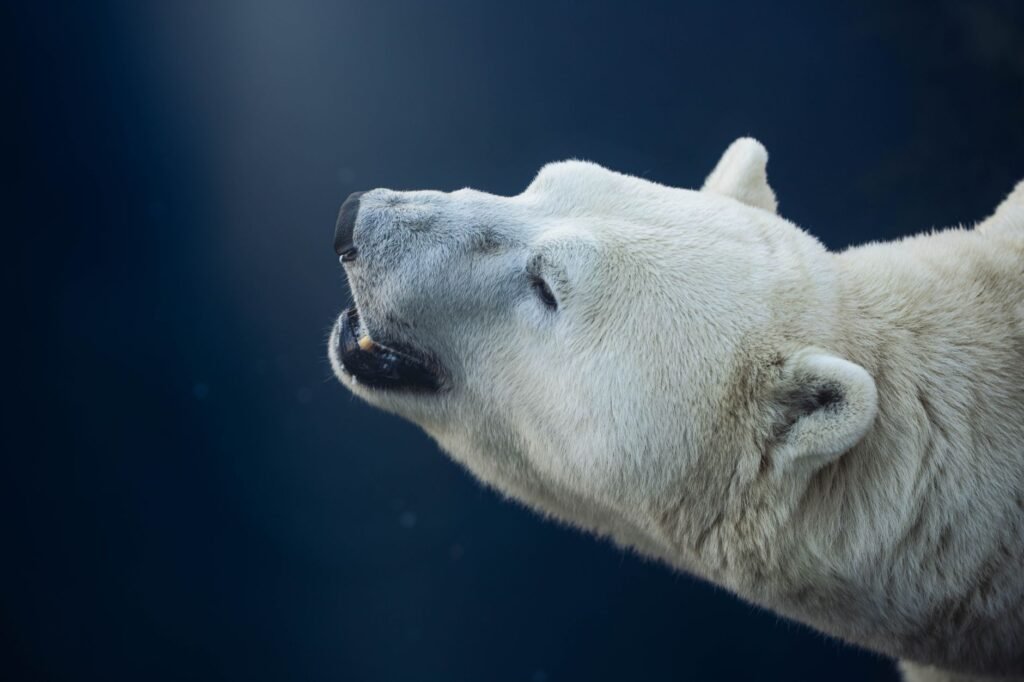
Polar Bear Adaptations: How They Survive the Arctic Cold
The polar bear is the largest land predator on Earth and one of the most perfectly adapted animals alive. It hunts on floating ice in temperatures that can plunge to minus 45 degrees Celsius, swims for hours in near-freezing water, and goes months without eating. Its scientific name, Ursus maritimus, means "sea bear," a nod to how completely its life is tied to the Arctic Ocean and its ice.
Every part of the polar bear, from its transparent fur to its dinner-plate paws to the genes that let it thrive on a diet of pure fat, is an adaptation to the cold. Here is how those adaptations work, system by system.
Meet the Arctic's Ultimate Specialist
Polar bears evolved from brown bears somewhere between 343,000 and 479,000 years ago, according to Polar Bears International, and received their Latin name in 1774. In that relatively short evolutionary time, they transformed from a land-dwelling omnivore into a marine mammal specialized for hunting seals on sea ice.
Today around 26,000 polar bears roam the circumpolar Arctic across five nations: Canada, which hosts roughly two-thirds of the world's population, the United States (Alaska), Russia, Greenland, and Norway. Their true home is not land but sea ice, the frozen platform where they hunt, travel, mate, and in some regions den.
Adult males typically weigh 350 to 590 kilograms and can stand 3 meters tall on their hind legs; females are smaller at 150 to 295 kilograms. They are built on a grand scale because in the Arctic, size itself is an adaptation: larger animals lose heat more slowly relative to their volume.
The Insulation System: Fur That Is Not Really White
The polar bear's coat is its most famous adaptation, and it is full of surprises. Polar bears have two layers of fur that together prevent almost all heat loss. The insulation is so effective that adult males can overheat simply from running.
Here is the surprise: polar bear fur is not actually white. Each hair shaft is pigment-free and transparent, with a hollow core that scatters and reflects visible light. That scattering is what makes the coat look white or creamy yellow. The two layers work as a team. The dense undercoat is made of short, fine hairs that trap still air against the body, the classic mechanism of insulation. The outer layer consists of longer guard hairs, also hollow, which add insulation and help shed water. The trapped air even gives polar bears extra buoyancy in the water.
This coat is camouflage as well as insulation. Against snow and ice, a white bear is nearly invisible to seals, which is essential for a predator that hunts by stealth at breathing holes and along ice edges. Recent research suggests the hollow structure of the guard hairs contributes primarily to this camouflage effect, scattering light to create the white appearance, rather than providing insulation by trapping air as was once assumed.
The coat needs maintenance. After swimming, polar bears shake off water and roll in snow to clean and restore the insulating loft of their fur. In summer, they shed the winter coat for a shorter, lighter one, though even the summer coat is formidable by the standards of any other bear.
Black Skin and the Heat-Absorption Myth
Beneath all that fur, a polar bear's skin is jet black. For years, popular accounts claimed this was an adaptation to absorb solar heat and warm the bear, a neat story that turns out to be mostly myth. Studies have challenged the idea that black skin provides meaningful thermal warming, and researchers still debate why polar bears evolved dark skin when most bears have pinkish skin.
What is certain is that the combination of transparent fur over dark skin creates the bear's signature look, and that the fur, not the skin, does the heavy lifting of temperature control. It is a good reminder that not every striking trait has the obvious function we assign to it. Evolution does not always leave explanatory labels.
Blubber: The Insulation Blanket and Energy Bank
Fur is only half the insulation story. Beneath the skin lies a thick layer of blubber that can measure up to 11.4 centimeters (about 4.5 inches) deep in a well-fed bear. Fat insulates even when fur cannot: in the water, where wet fur loses much of its insulating power, polar bears rely more on their blubber to keep out the cold.
But blubber is more than insulation. It is the bear's energy bank. Polar bears do most of their feeding in spring and early summer when seals are abundant, then draw down their fat reserves through the ice-free months when hunting is impossible. A bear at its autumn peak can weigh 50 percent more than at its leanest, and that entire surplus is stored energy.
The efficiency of this system is remarkable. Polar bears can eat more than 45 kilograms of seal blubber in a single sitting. Their digestion extracts an extraordinary share of what they eat, allowing them to convert seal fat into body fat at high speed. They consume roughly two-thirds of their entire annual food intake between April and June, the great Arctic feast that must carry them through the rest of the year.
Fat even helps solve the Arctic's water problem. The Arctic is technically a polar desert with little liquid freshwater, but polar bears can generate metabolic water from their fat reserves, the same trick camels use with their humps. For an animal that cannot simply drink from a frozen ocean, this is a quiet but critical adaptation.
Perhaps most astonishing is what the fat does not do. Polar bears eat one of the fattiest diets of any mammal, and like humans on such a diet they carry high levels of LDL cholesterol. In humans that spells arterial disease. In polar bears, genetic adaptations prevent fatty deposits from clogging their arteries. Genes controlling body fat, fatty acid metabolism, and heart function all show signs of strong selection, the molecular signature of a species rebuilt for life on seal blubber.
Paws Built for Two Worlds: Ice and Ocean
A polar bear's paws are marvels of multi-purpose engineering, equally at home on ice and in water.
On ice, size matters. The paws can measure up to 30 centimeters across, nearly a foot, spreading the bear's enormous weight like snowshoes so it can walk on thin ice without breaking through. The soles are covered in small, soft bumps called papillae that grip the ice like traction studs, and fur grows on the bottom of the feet for insulation. Short, stocky, curved claws add digging grip for hauling out seals and purchase on slippery surfaces.
In water, the same paws become paddles. The front paws are slightly webbed and stroke powerfully while the hind paws trail behind as rudders, a swimming style unique among bears. Polar bears are strong swimmers that can cover long distances and keep up a steady pace for hours, which matters because their seal prey lives in the water and their habitat is literally melting beneath them each summer.
The paws also stay warm through clever plumbing. A countercurrent heat exchange system in the legs and paws lets warm blood flowing outward pass close to cold blood returning inward, transferring heat before it can be lost to the ice. The paws stay just warm enough to function without draining the bear's core temperature.
Built to Hunt: Smell, Teeth, Skull, and Camouflage
Polar bears are patient, precise hunters, and their senses and anatomy are tuned for catching seals.
Their sense of smell is legendary. Polar bears can detect seals, and other scents, from up to 32 kilometers away, and can smell prey hidden under snow. A bear will stand on its hind legs to catch the wind, sampling the air for the faintest trace of a seal at a breathing hole.
Their teeth tell the story of a carnivore. Compared with omnivorous brown bears, which have broad flat molars for grinding vegetation, polar bears have large canines for seizing prey and sharper, smaller molars for shearing meat and blubber. Their skulls have elongated over evolutionary time into a longer, narrower shape that helps them strike down through narrow breathing holes in the ice.
Their hunting strategy exploits all of this. The classic technique is still-hunting: the bear waits motionless at a seal's breathing hole, sometimes for hours, then strikes with explosive speed when the seal surfaces. White camouflage, silence, patience, and power combine into a hunting system with no wasted motion. When hunting is good, a bear may eat only the energy-rich blubber and skin of a seal, leaving the meat for scavengers like Arctic foxes.
The Energy Strategy: Feast, Fast, and "Walking Hibernation"
Unlike most bears, polar bears do not truly hibernate. Instead, they run one of the most extreme feast-and-famine cycles in nature.
The feast comes in spring. As seals haul out on the ice to breed and molt, polar bears hunt intensively, building the fat reserves that will sustain them. Then the ice melts, the seals disperse, and the famine begins. Through the ice-free summer and autumn, bears on land may go months with little or no food, living entirely off their blubber.
To survive the fast, polar bears can enter a state sometimes called walking hibernation. They reduce their heart rate and body temperature and minimize activity, conserving energy while remaining mobile and alert enough to respond to opportunities or threats. Pregnant females take a different path: they dig maternity dens in snowdrifts in autumn and enter a true denning dormancy, giving birth to tiny cubs in midwinter and nursing them on fat-rich milk without eating for up to eight months.
This energy strategy is the deep reason sea ice matters so much. The entire system depends on a long, productive spring hunting season on solid ice. Shorten the ice season, and the feast shrinks while the fast grows longer.
Cold-Blooded Engineering: Reducing Heat Loss Everywhere
Beyond the headline adaptations, polar bears are full of small refinements that cut heat loss.
Their ears are small and fur-covered, and their tail is short, minimizing the surface area that radiates heat. Their limbs are relatively compact for a bear of their size, another application of the same principle: less surface, less loss. Even their body shape follows it. A stocky, massive torso holds heat far better than a lanky one.
Their nostrils can close, keeping out icy water when swimming. Their eyes have a protective membrane. None of these is dramatic on its own, but together they form a comprehensive thermal defense with no weak points, exactly what you would expect from an animal that routinely endures minus 40 degrees.
Do Polar Bears Hibernate?
This is one of the most common questions about polar bears, and the answer is nuanced. Most polar bears do not hibernate. Males and non-pregnant females stay active through the Arctic winter, hunting seals on the ice, which is actually their most productive season.
The exception is pregnant females, which dig maternity dens and enter a dormant state through the winter while they give birth and nurse. Even this differs from true hibernation in other bears in its triggers and physiology, but functionally it is the closest polar bears come.
What most bears do instead is the walking hibernation described above: a summer energy-saving mode of lowered metabolism that they can switch off instantly when a hunting opportunity appears. It is hibernation's flexibility without its commitment.
When Adaptations Are Not Enough: Climate Change and Sea Ice
Here is the hard truth about polar bear adaptations: every one of them assumes sea ice. The white camouflage works on ice. The paws are built for ice. The hunting strategy needs ice. The feast-and-fast cycle is timed to the ice.
As the Arctic warms and sea ice forms later and melts earlier, each adaptation is undermined. Bears must swim longer distances between ice floes, burning the fat they need for winter. Spring hunting seasons shorten, so bears enter the fasting season thinner. Thinner mothers produce smaller cubs with lower survival odds. Scientists estimate about 26,000 polar bears remain, and a widely cited 2020 study projected that without action on climate change, all but a few populations could disappear by the end of this century.
Polar bears are also classified as marine mammals, a legal and ecological recognition of how completely they depend on the marine environment. Protecting them ultimately means protecting the ice itself, which means confronting the warming that is melting it.
Polar Bear Adaptations at a Glance
| Adaptation | How it works | What it is for |
|---|---|---|
| Two-layer transparent fur | Hollow hairs scatter light; trapped air insulates | Warmth and camouflage |
| Black skin | Dark pigment under translucent fur | Debated; not proven as heat absorber |
| Blubber up to 11.4 cm | Fat layer under skin | Insulation in water; energy storage |
| Giant webbed paws | 30 cm across; papillae grip; fur soles | Walking on thin ice; swimming |
| Countercurrent heat exchange | Warm and cold blood pass close in legs | Keeps paws functional without heat loss |
| Small ears and tail | Reduced surface area | Less heat radiation |
| 32 km sense of smell | Acute olfaction | Finding seals under snow and ice |
| Carnivore teeth and long skull | Large canines; shearing molars | Catching and eating seals |
| Walking hibernation | Lowered heart rate and temperature | Surviving summer food scarcity |
| Fat-metabolism genes | No arterial deposits despite high cholesterol | Thriving on a pure-fat diet |
| Metabolic water from fat | Water produced by burning fat | Hydration in a frozen desert |
Polar Bear FAQs
How do polar bears survive the cold? Through layered defenses: two layers of transparent insulating fur, up to 11.4 cm of blubber, small ears and tail to reduce heat loss, fur-covered feet, and a countercurrent heat exchange system in their legs. They are so well insulated they risk overheating when they run.
Is polar bear fur really white? No. Each hair is transparent and pigment-free with a hollow core; the hairs scatter visible light, which makes the coat appear white. The skin underneath is black.
Do polar bears hibernate? Most do not. Males and non-pregnant females stay active all winter hunting seals. Pregnant females den through winter to give birth, and all bears can enter a flexible energy-saving state called walking hibernation in summer.
What do polar bears eat? Mostly ringed and bearded seals, hunted on sea ice. They prefer the energy-rich blubber and can eat more than 45 kilograms in one sitting. They also take walruses, bird eggs, beached whales, and kelp when seals are scarce.
How many polar bears are left? Scientists estimate around 26,000 worldwide, with about two-thirds in Canada. Their future depends on Arctic sea ice, which is shrinking as the climate warms.
Why are polar bears considered marine mammals? Because their survival depends on the marine environment: they hunt marine mammals, travel and mate on sea ice, and are classified as marine mammals for conservation purposes.
The Bear That the Ice Built
The polar bear is what happens when evolution is given half a million years and a single brutal problem: survive and hunt on frozen seawater. Transparent fur, black skin, a blanket of blubber, snowshoe paws, a nose that can smell for miles, and genes rewritten for a diet of pure fat: each adaptation is an answer to the cold, and together they make the most formidable predator in the North.
They are also a warning. Adaptations this perfect are also this specific. The polar bear cannot be a forest bear or a tundra bear; it is a sea-ice bear, and its future is written in the ice. As long as the Arctic freezes, the white bear will walk it. What happens next is up to us.