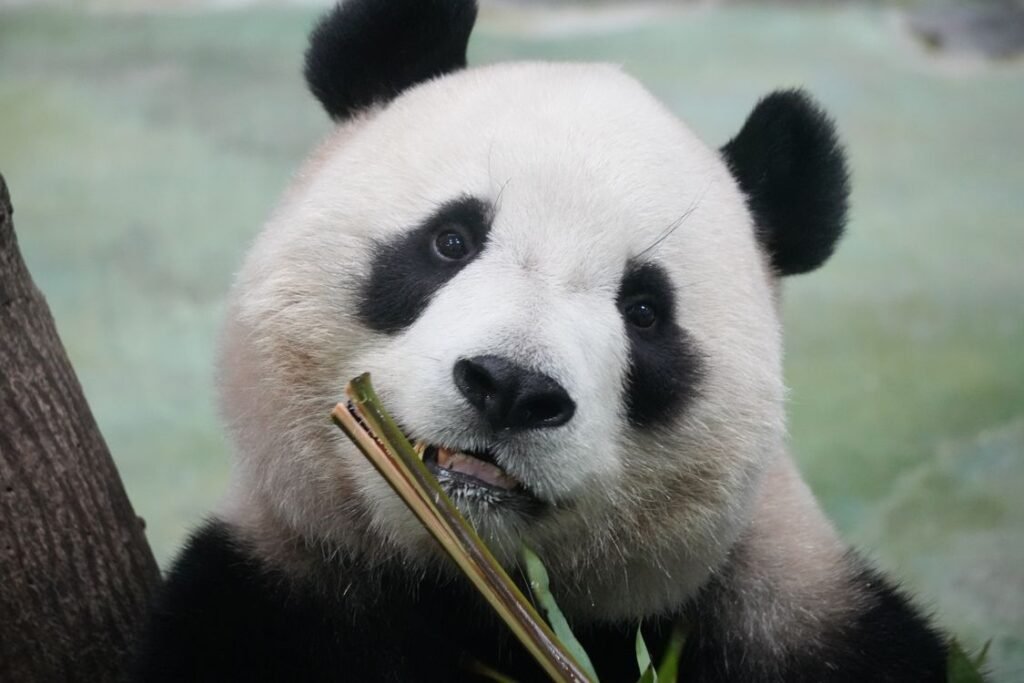
Giant Panda Diet: How a Bear Survives on Bamboo Alone
The giant panda is one of the strangest eaters on the planet. It belongs to the bear family, carries the digestive system of a meat eater, and then spends its life doing something no other bear does: eating bamboo, almost exclusively, for up to 14 hours a day.
Understanding the giant panda diet is really understanding one of evolution's boldest experiments. A large mammal committed itself to a food so poor in nutrients that it must shovel down staggering quantities just to stay alive. This article explains what pandas eat, how much, which parts of the bamboo they choose through the seasons, the specialized body parts that make it possible, and why this all-bamboo lifestyle leaves the species exposed.
What Does a Giant Panda Eat? The Short Answer
Bamboo. A giant panda's daily diet consists almost entirely of the leaves, stems, and shoots of various bamboo species, according to WWF. Bamboo makes up roughly 99 percent of what a wild panda eats.
That remaining 1 percent is where things get interesting. Pandas occasionally branch out into other plants, and even meat. They will sometimes hunt pikas and other small rodents. They also eat grasses, bulbs, fruits, insects, and carrion when the opportunity arises. So while the giant panda is almost entirely vegetarian in practice, it is technically an omnivore with a carnivore's gut.
The bamboo itself is a poor food. It contains very little nutritional value, so a panda must eat between 12 and 38 kilograms of it every day to meet its energy needs, depending on which part of the plant it is eating. To put that in perspective, an adult panda can eat close to a third of its own body weight in bamboo in a single day.
Bamboo, Bamboo, and More Bamboo: The 99% Diet
Giant pandas live in the temperate bamboo forests of the mountains of southwest China, mainly in Sichuan, Shaanxi, and Gansu provinces, at elevations between roughly 1,200 and 3,400 meters. These forests are defined by their bamboo understory, and pandas rarely stray far from it.
Pandas are not fussy about bamboo in general, but they are particular in practice. Wild pandas feed on around 30 species of bamboo across their range. The exact species on the menu depend on where a panda lives, since different mountain ranges host different bamboo communities. A panda's home range is essentially drawn around reliable bamboo patches.
What is remarkable is how completely pandas depend on this one plant group. Most large herbivores hedge their bets with varied diets. The panda went the other direction, narrowing its diet until bamboo became almost everything. The reason it can get away with this is that bamboo is available year round. Unlike fruit or leaves that vanish in winter, bamboo stays green and standing through the cold months, so a panda never faces a season with nothing to eat. The trade off is that the food is always low quality, so the panda's whole life is organized around eating enough of it.
Which Parts of Bamboo? A Seasonal Menu
Pandas do not eat bamboo the same way all year. They shift which parts of the plant they eat as the seasons change, tracking nutrition through the bamboo's annual cycle. Shoots are the prize: soft, relatively nutritious, and available in spring and early summer. Leaves are eaten through much of the year. Stems and culms, the woody stalks, are the fallback food when nothing better is on offer.
| Season | Preferred bamboo part | Why |
|---|---|---|
| Spring | Young shoots | Soft, highest nutrition, easiest to digest |
| Summer | Shoots, then leaves | Shoots harden; leaves still tender |
| Autumn | Leaves | Leaves remain available and reasonably nutritious |
| Winter | Stems and culms | Tough fallback; shoots gone, leaves sparse |
This seasonal switching matters because the 12 to 38 kilogram daily range comes from it. When pandas eat tender shoots, they can get by on the lower end of that range. When they are reduced to gnawing woody stems in winter, they must eat far more bulk to extract the same energy. The WWF notes that daily intake depends directly on which part of the bamboo the panda is eating.
Pandas also get most of their water from bamboo. Fresh bamboo is roughly half water, and young shoots can be mostly water. Pandas still visit streams and rivers in their forest habitat to drink, but the bamboo itself covers a large share of their water needs, which helps them stay in dense bamboo stands for long stretches.
How Much Bamboo Does a Panda Eat Per Day?
The numbers are striking. A giant panda spends 10 to 14 hours a day eating. Some individuals feed for up to 12 hours or more in a single day, sitting in their characteristic upright posture, methodically stripping and chewing.
Daily intake runs from about 12 kilograms of tender shoots to as much as 38 kilograms of woody stems. For comparison, an adult male panda weighs roughly 86 to 125 kilograms, and females 70 to 100 kilograms. A panda eating 30 kilograms of bamboo in a day is consuming something like a quarter to a third of its body mass in plant fiber.
Why so much? Because bamboo is mostly indigestible fiber, and the panda's digestive system is not built for it. As members of the bear family, giant pandas possess the digestive system of a carnivore: a short, simple gut without the multi-chambered stomach or long fermentation vats that true herbivores use to break down fiber. Much of the bamboo a panda eats passes straight through and is expelled as waste, with only a modest fraction of its nutrients extracted. The panda compensates with volume and time, eating almost constantly and resting in between.
This is also why pandas are so sedentary. Moving burns energy, and energy is precious on a bamboo budget. Pandas keep their home ranges small, move slowly, and rest for long periods between feeding bouts. It is an energy conservation strategy that matches their food.
The 1%: Do Pandas Ever Eat Meat?
Yes, though rarely. About 1 percent of a giant panda's diet comes from other sources: grasses, bulbs, fruits, insects, carrion, and occasionally small mammals like pikas and other rodents.
This is not an accident or a quirk. It is a leftover from the panda's ancestry. Giant pandas evolved from carnivorous bears, and their digestive tract still reflects that heritage. When a panda encounters an easy source of animal protein, a pika it can catch or carrion it stumbles across, it will eat it. Captive pandas are routinely offered foods like specially made biscuits, apples, and carrots alongside bamboo, and they eat them readily.
The meat-eating habit also confirms something important: pandas are not obligate herbivores in the way a cow is. They are bears that have specialized in bamboo but retained the ability, and the gut, to process other foods. That flexibility may be part of what allowed the species to commit so fully to bamboo in the first place.
Built for Bamboo: The Panda's Feeding Tools
The panda's body is a toolkit for processing bamboo, and several of its most famous features exist for exactly this job.
The pseudo-thumb. A giant panda's paw has five fingers plus a remarkable extra: an enlarged wrist bone, the radial sesamoid, that functions like an opposable thumb. This "pseudo-thumb" lets the panda grip bamboo stalks with precision, holding a stem in place while the teeth strip it. Without it, handling smooth bamboo culms would be far clumsier. It is one of the clearest examples in nature of an existing bone being repurposed for a new job.
Crushing molars and massive jaws. Pandas have broad, flat molars modified for grinding fibrous plant material, and the jaw muscles that drive them are enormous. The panda's large, rounded head is partly shaped by the heavy musculature needed to crush bamboo hour after hour. These are the teeth and jaws of an animal that chews for a living.
A carnivore's gut, adapted as far as it can go. The panda's digestive system remains fundamentally that of a bear: relatively short, simple, and built for meat. What adaptation has occurred is largely in the gut microbiome, the community of microbes in the intestines that helps ferment some of the bamboo fiber. Even with microbial help, digestion stays inefficient, which is why the panda must eat so much.
Thick fur and a sturdy build. Less obviously, the panda's thick, woolly coat is an adaptation to its cold mountain habitat, and its robust body carries the fat reserves that get it through lean periods. Pandas do not hibernate, so they keep eating bamboo through winter, relying on their coat and body condition to handle the cold.
Why a Bear Eats Like a Rabbit: The Evolutionary Backstory
How does a bear end up eating bamboo? The giant panda's ancestors were carnivores, and the shift toward bamboo happened over millions of years. Fossil evidence shows that ancient pandas ate a broader diet, and the narrowing to bamboo was gradual.
The leading explanation is competition and opportunity. Bamboo is abundant, reliably available, and largely ignored by other large mammals because it is so hard to digest. For a bear willing to pay the digestive price, bamboo was an enormous, uncontested food supply. Natural selection then favored every trait that made bamboo eating easier: stronger jaws, flatter molars, the pseudo-thumb, and behaviors like long feeding hours and energy conservation.
The result is a paradox that fascinates biologists. The panda kept the bear's body plan and gut, but rebuilt its teeth, paws, and lifestyle around a grass. It is a carnivore wearing a herbivore's uniform, and the fit is imperfect, which is exactly why the panda must work so hard at eating.
How Cubs Learn to Eat Bamboo
Panda cubs are born tiny, blind, and helpless, weighing only about 100 to 160 grams, and they live entirely on their mother's milk at first. The transition to the family diet is slow.
Cubs begin to taste bamboo at around 7 to 9 months of age, while still nursing. They start eating bamboo more seriously at about a year old, and continue to take milk alongside solid food until they are weaned at around 18 months. During this long transition, the mother is the teacher: cubs watch her feed, handle bamboo stalks themselves, and gradually build the jaw strength and gut microbes needed for the diet.
This matters because bamboo eating is partly learned. A cub must develop the handling skills for the pseudo-thumb, the chewing endurance for the molars, and the right gut microbiome. The extended time with the mother, often up to 18 months or more before independence, gives the cub time to acquire all three.
The Price of Specialization: Why Bamboo Dependence Is Risky
The giant panda's bamboo dependence is its greatest vulnerability. WWF identifies habitat loss as the major threat to the species' survival, and the diet is a big reason why.
Because pandas eat almost nothing but bamboo, they cannot simply move to a different forest type when their habitat is damaged. They need connected bamboo forests with enough variety of bamboo species to provide food year round. When forests are fragmented by roads, farms, or development, panda populations become isolated in shrinking patches, each dependent on the bamboo within it.
Bamboo itself adds another risk. Many bamboo species flower and die off simultaneously in cycles that can span decades, temporarily wiping out the food supply across large areas. A generalist eater would switch foods; a panda cannot. Historically, pandas could migrate to areas with different bamboo species when this happened. In today's fragmented landscape, those escape routes are often gone.
There is good news. The giant panda's conservation story is one of the great successes in wildlife protection. In 2016, the IUCN downgraded the species from Endangered to Vulnerable, reflecting population recovery driven by habitat protection, anti-poaching enforcement, and reforestation in China. The panda has become a global conservation icon and an umbrella species: protecting panda habitat automatically protects the many other species that share those forests, from golden monkeys to crested ibis.
What Do Pandas Eat in Zoos?
Wild pandas forage across mountain slopes for their bamboo, but the pandas living in zoos and breeding centers around the world eat a managed version of the same diet. Bamboo remains the foundation, and keeping a captive panda fed is a serious logistical operation. A single adult can work through tens of kilograms of fresh bamboo every day, so zoos maintain dedicated bamboo supplies, often grown on site or delivered fresh daily, and offer several species so the pandas can choose.
Alongside bamboo, captive pandas receive supplementary foods that mirror the "1 percent" of the wild diet and then some: specially formulated high-fiber biscuits, apples, carrots, and sweet potatoes. These extras provide concentrated nutrition that wild bamboo alone cannot, and they are also useful tools. Keepers use favorite treats as rewards during training for voluntary health checks, turning feeding time into medical care time. Cubs born in breeding centers follow the same slow path as wild cubs, nursing for months before keepers introduce bamboo and solid foods.
Captive feeding programs have taught scientists a great deal about panda nutrition, including how much of which bamboo parts pandas prefer when given a choice. That knowledge feeds back into wild conservation, helping managers assess whether a patch of forest offers the right mix of bamboo species and growth stages to support a panda through every season.
Giant Panda Diet FAQs
What do giant pandas eat? Almost entirely bamboo: the leaves, stems, and shoots of various bamboo species make up about 99 percent of the diet. The remaining 1 percent includes grasses, fruits, insects, carrion, and occasionally small rodents like pikas.
How much bamboo does a panda eat per day? Between 12 and 38 kilograms per day, depending on which part of the bamboo it is eating. Tender shoots provide more nutrition per kilogram, so pandas eat less of them; woody stems require much larger quantities.
Are pandas herbivores or carnivores? Taxonomically they are bears, members of the order Carnivora, and they have a carnivore's digestive system. Ecologically they function as near-total herbivores. The honest answer is that they are specialized omnivores: bamboo specialists that still eat meat opportunistically.
Do pandas drink water? Yes. They get a large share of their water from bamboo itself, which is roughly half water, and they also drink from streams and rivers in their mountain forest habitat.
Why do pandas spend so much time eating? Bamboo is low in nutrition and the panda's gut extracts only a fraction of what is there. To meet its energy needs, a panda must eat for 10 to 14 hours a day and consume enormous quantities. Long feeding hours plus long rest periods are the panda's whole energy strategy.
Why the Panda's Diet Matters
The giant panda diet looks like a punchline, a bear that eats grass all day, but it is really a case study in how far evolution can push a specialist. The pseudo-thumb, the crushing molars, the endless chewing, the seasonal menu, the energy miser lifestyle: every piece of the panda's life is shaped by bamboo.
That same specialization is what makes pandas worth protecting with such effort. An animal this committed to one food cannot adapt to a broken habitat. Every bamboo forest that survives keeps a panda alive, and every panda that survives keeps an entire mountain ecosystem under the umbrella of protection. The panda's diet is the reason the species is vulnerable, and the reason saving it saves so much else.