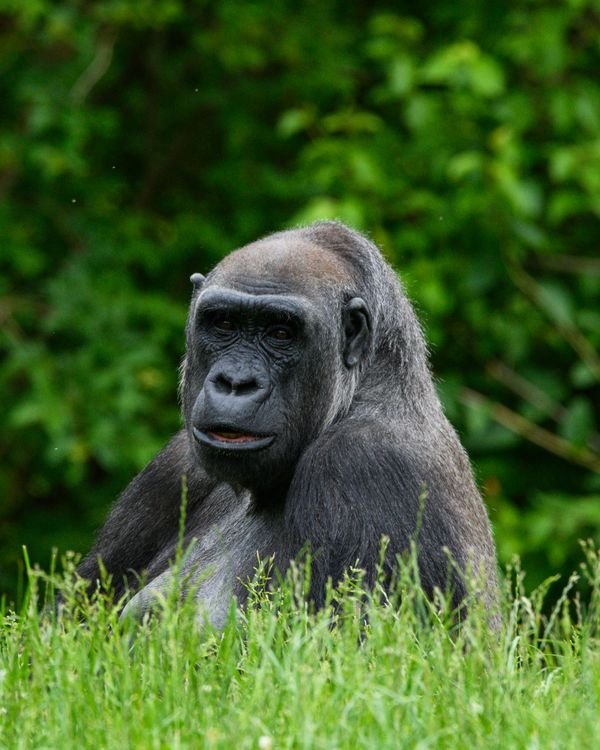
Mountain Gorilla Trekking in Uganda: A Complete Guide
There are wildlife encounters, and then there is the hour you spend with mountain gorillas. After a steep climb through dripping rainforest, the trackers stop, the forest goes quiet, and a silverback the size of a small car looks up from his breakfast of nettles and regards you with calm, intelligent eyes. For sixty minutes, you are a guest in one of Earth's most intimate societies.
Mountain gorilla trekking in Uganda is widely considered the finest value great-ape experience in Africa. Uganda shelters more than half of the world's remaining mountain gorillas, its permits cost far less than Rwanda's, and its forests offer a wilder, more adventurous trek. This guide covers everything you need to plan the journey: the gorillas themselves, where to trek, permits and prices, the rules that protect them, and how your visit directly funds their survival.
Meet the Mountain Gorilla
The mountain gorilla (Gorilla beringei beringei) is a subspecies of the eastern gorilla and one of our closest living relatives, sharing around 98 percent of its DNA with humans. These are the largest living primates: adult males, known as silverbacks for the saddle of silver hair across their backs, can weigh as much as 200 kilograms and stand close to 1.8 meters tall when upright. Females are roughly half that size.
Mountain gorillas live only in two isolated pockets of central Africa: the Virunga volcanoes on the borders of Rwanda, Uganda, and the Democratic Republic of Congo, and Uganda's Bwindi Impenetrable National Park. They inhabit montane and bamboo forests between roughly 2,200 and 4,000 meters in elevation, feeding on leaves, stems, shoots, and fruit, and building fresh nests each night.
Their conservation story is one of the great comebacks in wildlife history. Listed as Endangered on the IUCN Red List, mountain gorillas number roughly 1,000 individuals, making them the only great ape whose wild population is growing. That recovery came from anti-poaching patrols, veterinary care, habitat protection, and, crucially, tightly managed tourism.
Gorilla society itself is worth understanding before you go. Gorillas live in family groups of five to thirty individuals, led by a dominant silverback who decides where the group travels and defends everyone against threats. Females form the group's core, infants cling to their mothers for their first years, and young males eventually leave to form their own groups. When you trek, you are visiting one habituated family: a group gradually accustomed to human presence over years of careful contact by researchers and rangers, so the animals behave naturally while you watch.
Where to Trek: Uganda's Two Gorilla Parks
Uganda protects its mountain gorillas in two national parks in the country's southwest, both part of the ecologically rich Albertine Rift.
Bwindi Impenetrable National Park is the main destination and the heart of Uganda's gorilla tourism. This ancient rainforest, a UNESCO World Heritage Site, holds the largest single population of mountain gorillas anywhere, with roughly twenty habituated families open to visitors. The park is also extraordinarily biodiverse, sheltering chimpanzees, forest elephants, and hundreds of bird species, including many found nowhere else.
Mgahinga Gorilla National Park is the smaller, quieter alternative. Set against the volcanic peaks of the Virunga Massif on the Rwandan border, Mgahinga protects a single habituated gorilla family, the Nyakagezi group. It is also the only park in Uganda where you can track both mountain gorillas and the endangered golden monkey, making a rare double-primate visit possible.
The Four Sectors of Bwindi
Bwindi is divided into four trekking sectors, each with its own character, terrain, and set of gorilla families. When you buy a permit, you book a sector, and rangers assign your specific family on the morning of the trek based on fitness levels and availability.
| Sector | Location | Character and difficulty | Best for |
|---|---|---|---|
| Buhoma | North | The original trekking area and park headquarters; generally moderate terrain with good infrastructure | First-time trekkers; combining with Queen Elizabeth National Park |
| Ruhija | East | High elevation (around 2,350 meters) with beautiful forest scenery; cooler and sometimes tougher going | Birders and photographers; quieter trails |
| Rushaga | South | The most habituated families, plus the only sector offering the gorilla habituation experience | Best permit availability; deeper, longer encounters |
| Nkuringo | Southwest | Steepest, most physically demanding trails with spectacular ridge views | Fit, adventurous trekkers seeking a challenge |
Notable families include Mubare, the oldest habituated group, in Buhoma, along with Habinyanja, Rushegura, and Katwe. Rushaga hosts the largest number of families, including Nshongi, Mishaya, Busingye, and Kahungye. Ruhija's families include Bitukura, Oruzogo, and Kyaguriro, while Nkuringo is home to the Nkuringo, Bushaho, and Christmas families.
Gorilla Trekking Permits: Costs and How to Book
The gorilla trekking permit, issued by the Uganda Wildlife Authority (UWA), is both your ticket to the forest and your direct contribution to conservation. Permits are strictly limited, with a maximum of eight visitors per family per day.
| Permit type | Foreign non-residents | Foreign residents | East African citizens |
|---|---|---|---|
| Standard gorilla trekking | US$800 | US$700 | UGX 300,000 |
| Gorilla habituation experience | US$1,500 | US$1,000 | UGX 750,000 |
The standard permit includes park entry, ranger guides, and trackers for the day. The gorilla habituation experience, available only in Bwindi's Rushaga sector, is a special option for those who want more: a maximum of four visitors spend up to four hours with a semi-habituated family alongside researchers. It costs nearly twice the standard permit but offers an unmatched window into gorilla behavior and field science.
A few booking realities to know. Permits for peak dry-season months often sell out, and the standard advice is to book six to twelve months in advance. UWA sells permits through licensed tour operators, who bundle them with transport and lodging, and a deposit, typically 30 percent, secures a reservation. Because permit prices and tourism regulations can change, always confirm the current UWA tariff before finalizing your plans.
Your permit is not just an entry ticket; it is the financial engine of the whole conservation system, funding ranger patrols, veterinary teams, and community development around the parks, as explained in the conservation section below.
The Rules of the Trek (and Why Each One Exists)
Gorilla trekking is governed by strict rules, and every one exists for a reason: mountain gorillas are profoundly vulnerable to human diseases, and even a common cold can be fatal to them. The rules below are enforced by UWA rangers in both Bwindi and Mgahinga.
| Rule | Detail | Why it matters |
|---|---|---|
| Minimum age 15 | No one under 15 may trek | Young children are more likely to carry infections and harder to manage near wild animals |
| Maximum 8 visitors per family | Small groups only, once per day per family | Limits stress on the gorillas and keeps the experience intimate |
| One hour with the gorillas | Viewing time is capped (four hours for habituation) | Minimizes disturbance, stress, and disease exposure |
| Keep 7 meters distance | Stay at least 7 meters from the gorillas | Reduces disease transmission; gorillas sometimes approach closer on their own |
| No flash photography | Flash is strictly forbidden | Startles the animals and can provoke a defensive reaction |
| Wear a face mask | Masks required during the visit | Blocks respiratory droplets that carry human pathogens |
| Do not trek if ill | Stay back if you have any symptoms of illness | Even mild colds can devastate a gorilla family |
| Do not touch the gorillas | Never initiate contact | They are wild animals; touching risks disease transfer and bites |
| Bury all waste | Human waste must be buried properly | Prevents disease spreading to gorillas and other wildlife |
| Keep voices low | Speak quietly, especially near the family | Loud noise stresses the animals and disrupts natural behavior |
Your guides will brief you on all of this before you set out. If a curious juvenile wanders up to inspect you, enjoy the moment, stay still, and let the rangers manage the encounter.
Best Time to Trek: Dry Season vs Rainy Season
Uganda's equatorial climate means gorilla trekking runs year-round, with two dry and two wet seasons. Most travelers aim for the drier months.
| Factor | Dry seasons (Jun to Aug, Dec to Feb) | Wet seasons (Mar to May, Sep to Nov) |
|---|---|---|
| Trail conditions | Drier, firmer paths; easier climbing | Muddy, slippery; more physically demanding |
| Visibility | Clearer views, better volcano scenery | Mist and rain can obscure long views |
| Forest atmosphere | Pleasant, moderate | Lush, green, dramatic; fewer tourists |
| Permit demand | Peak; book far ahead | Lower; occasional discounted rates |
| Wildlife viewing | Excellent | Excellent; gorillas are there year-round |
Here is the honest trade-off. The dry seasons offer the easiest walking and the clearest photographs, but they are also the busiest and most expensive. The wet seasons bring mud and rain, but also empty trails, greener forests, and sometimes lower prices. The gorillas do not migrate and do not care about the calendar: your chances of finding them are superb in any month, because trackers monitor the habituated families daily.
Preparing for the Forest: Fitness and Packing
A gorilla trek is a real hike, not a stroll. Depending on where your assigned family is feeding, you may walk for one hour or for eight, climbing steep, muddy slopes at altitude. In the weeks before your trip, build stamina with hill walks or stair climbing, and break in your boots thoroughly.
Porters are available at the trailhead for a small fee, usually around US$20, and hiring one is one of the best decisions you can make. They carry your pack, offer a steadying hand on slippery descents, and the fee goes directly to local community members, tying their livelihoods to the gorillas' survival. Walking sticks are often provided or available to borrow, and they are worth their weight on Bwindi's slopes.
Pack the following for trek day:
- Sturdy, waterproof hiking boots with ankle support
- Long trousers and long-sleeved shirt (tuck trousers into socks against insects and nettles)
- Waterproof jacket or poncho; rain is possible any day
- Gardening or hiking gloves for gripping wet vines and steadying yourself
- Insect repellent, sunscreen, a hat, and at least two liters of water
- Energy snacks or a packed lunch for longer treks
- Camera with spare batteries (no flash), ideally in a waterproof bag
- A small backpack, a change of dry clothes for afterward, and your passport for permit checks
The Trek Day, Hour by Hour
Trek day starts early. After breakfast at your lodge, you transfer to the sector headquarters for registration and the ranger briefing, usually around 7:30 to 8:00 in the morning. Rangers divide trekkers into groups of eight and assign each group a gorilla family, matching the expected difficulty to the group's fitness.
Then you walk. The first stretch often follows community paths and farmland at the forest edge before the real climb begins. Inside the forest, guides cut a path with machetes where needed, and the pace is steady rather than rushed. The hike can last anywhere from under an hour to most of the day. When the trackers signal that the family is close, you leave the main trail, drop your packs, and move in quietly with only cameras.
And then the hour begins. What you witness depends on the family and the moment: the silverback resting with watchful calm while infants wrestle over his back, mothers grooming their young, adolescents mock-charging through the undergrowth, the whole group feeding with surprising delicacy on nettles and bamboo shoots. When time is up, the rangers lead you back to the trailhead, and you return to headquarters to receive a trekking certificate, a small but genuinely earned souvenir.
The drive from Entebbe or Kampala to Bwindi takes eight to nine hours through countryside: the equator crossing, terraced highlands, tea plantations, and long-horned Ankole cattle. Travelers short on time can fly: scheduled and charter flights from Entebbe or Kajjansi to airstrips at Kihihi or Kisoro cut the journey to about ninety minutes.
How Your Trek Protects Gorillas
It is worth pausing on what your US$800 actually buys beyond the experience. Mountain gorilla conservation is one of the rare cases where tourism is the primary protection strategy.
Permit revenue funds the ranger corps that patrols the forests daily, deterring poachers and removing snares. It supports veterinary teams that monitor the habituated families and intervene when a gorilla is injured or falls ill. A mandated share of revenue is channeled into clinics, schools, and infrastructure in the villages around the parks, which turns former poachers into stakeholders: when a community earns more from living gorillas, protection becomes self-interest.
Habituation itself plays a role. Because habituated families are visited daily by rangers and trackers, they are effectively under constant guard, and researchers have found that habituated groups show higher growth rates than unhabituated ones. The system is not without risks, which is exactly why the rules on distance, masks, group size, and time limits are so strict.
Uganda vs Rwanda: An Honest Comparison
Uganda is not the only option: Rwanda's Volcanoes National Park offers the same species with easier logistics, while DR Congo's Virunga has the cheapest permits. Here is how Uganda compares with its famous neighbor.
| Factor | Uganda | Rwanda |
|---|---|---|
| Permit price (foreign non-residents) | US$800 | US$1,500 |
| Habituation experience | Yes (US$1,500, Rushaga only) | Not offered |
| Main parks | Bwindi (UNESCO site), Mgahinga | Volcanoes National Park |
| Travel time from international airport | 8 to 9 hours by road; 1.5 hours by air | 2 to 3 hours by road from Kigali |
| Trek difficulty | Often steeper, wilder, more adventurous | Generally shorter, on open volcano slopes |
| Extra primates | Golden monkeys (Mgahinga), chimpanzees (Bwindi region) | Golden monkeys |
| Crowd levels | Quieter trails, especially in wet season | More popular, busier trailheads |
Choose Rwanda if your time is short and your budget stretches to it: you can land in Kigali and be with gorillas the next day. Choose Uganda for the deeper adventure, the better value, the habituation experience, and the feeling of earning the encounter on Bwindi's steep trails. Many travelers pair a Uganda gorilla trek with safaris in Queen Elizabeth National Park or a restful stop at Lake Bunyonyi afterward.
Frequently Asked Questions
How much does gorilla trekking in Uganda cost?
A standard gorilla trekking permit costs US$800 for foreign non-residents, US$700 for foreign residents, and UGX 300,000 for East African citizens, under the Uganda Wildlife Authority's current tariff. The gorilla habituation experience costs US$1,500 for foreign non-residents. Budget separately for transport, lodging, porters, and tips.
How far in advance should I book a gorilla permit?
Book six to twelve months ahead for the peak dry seasons, when permits sell out; two to four months is often enough for wet-season travel. A deposit, typically 30 percent, secures your reservation through a licensed tour operator.
What is the minimum age for gorilla trekking?
You must be at least 15 years old to trek mountain gorillas in Uganda. The rule protects both young trekkers and the gorillas, since children are more likely to carry infections and harder to manage at close range with wild animals. Rangers check ages at the briefing.
How difficult is the trek? Do I need to be very fit?
Difficulty varies enormously. Some families feed near the trailhead and the walk takes under two hours; others are deep in the forest and the trek can last six to eight hours over steep, muddy ground. A reasonable fitness level is strongly recommended. Tell the rangers about your fitness honestly at the morning briefing so they can assign you an appropriate family.
Is gorilla trekking safe?
Yes, with the rules followed. Habituated gorillas are calm around visitors, and you are accompanied by armed rangers, expert guides, and trackers at all times. The main risks are the terrain (slippery slopes), insects, and the altitude, all manageable with proper gear and a porter. The silverback may mock-charge to test you; staying calm, quiet, and still is the correct response.
Will I definitely see gorillas?
Trackers locate the habituated families every morning before trekkers set out, so the success rate is essentially certain on a normal day. In the very rare event that a family cannot be found, parks have follow-up and refund policies.
Conclusion
Mountain gorilla trekking in Uganda is expensive, muddy, physically demanding, and utterly worth it. Few wildlife experiences compress so much meaning into a single hour: the thrill of the forest, the intimacy of a silverback's gaze, and the knowledge that your permit pays the rangers and vets who keep these animals alive.
Plan carefully, book early, pack properly, and respect the rules that protect the gorillas, because those rules are the reason the forest still has gorillas to visit. Go in the dry season for easy walking or the wet season for empty trails; choose Bwindi for the grand adventure or Mgahinga for volcanic drama.