Baobab Tree Facts: The Ancient Tree of Life Explained
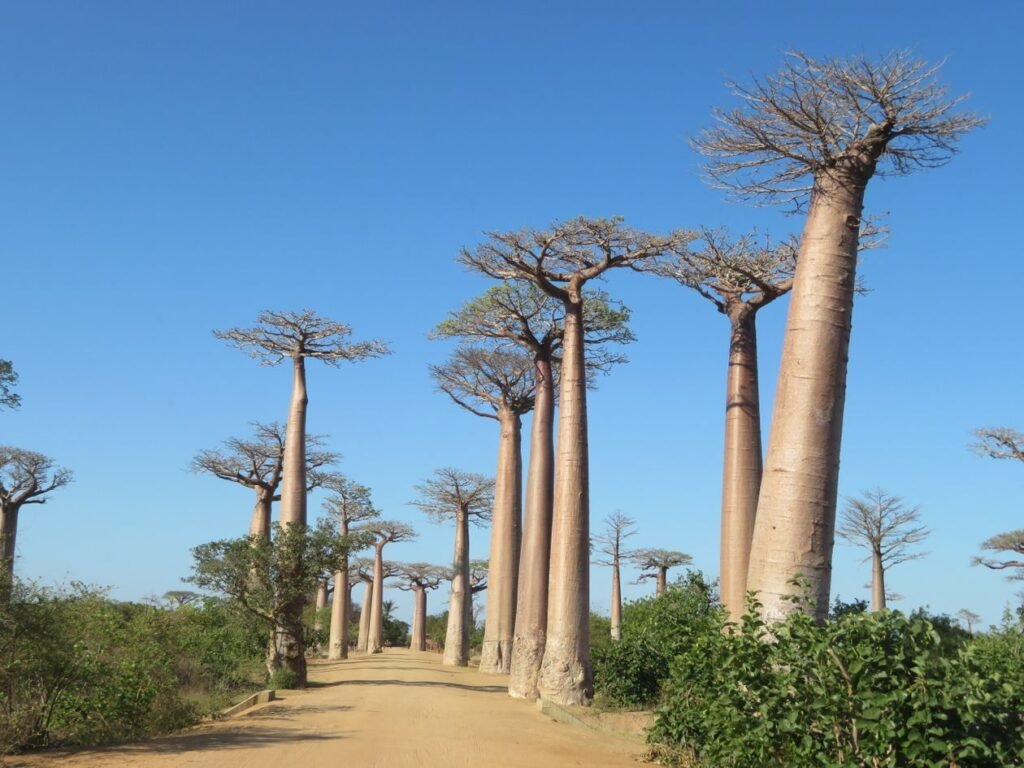
Few trees on Earth look as strange, or tell as deep a story, as the baobab. With a trunk like a swollen bottle and branches that reach upward like roots grasping at the sky, it is easy to see why African folklore calls it the upside-down tree. Legends say the gods planted it upside down as punishment. Science tells a stranger truth: this is one of the longest-living flowering plants on the planet, a giant that can outlast entire civilizations while standing quietly in some of the driest landscapes on Earth.
Baobab tree facts fascinate because they sit at the meeting point of myth and measurable science. These trees store rivers of water in their wood, flower for only a few hours under cover of night, feed elephants and bats and whole villages, and recently surprised botanists by revealing a brand-new species. Here is what we actually know about them, verified against the research, not just the legends.
What Is a Baobab Tree?
The baobab is a genus of deciduous trees called Adansonia, in the mallow family (Malvaceae), the same plant family as hibiscus and cotton. The genus name honors Michel Adanson, the French naturalist who gave the first detailed botanical description of the African baobab after encountering it in Senegal in the 18th century. Carl Linnaeus later formalized the name in 1753.
Everything about the baobab's design is shaped by drought. It grows in seasonally arid savannas, shedding its leaves for much of the year and keeping its life in reserve. The trunk is soft, fibrous, and swollen, sometimes more bottle than tree. The canopy is sparse and stubby by comparison, which is exactly why the tree looks like it has been planted upside down, with its roots waving in the air. When the first rains of the wet season arrive, the tree draws on the water banked in its trunk to flush out a new set of palmate leaves, each one spreading like the fingers of a hand.
Common names pile up around this tree wherever it grows: upside-down tree, tree of life, monkey bread tree (for its dry, edible fruit), boab (in Australia), tabaldi, bottle tree, and even the dead-rat tree, a less flattering nod to the look of the hanging fruit pods. Each name captures something real about how people have used and understood the tree.
How Many Baobab Species Are There?
For most of modern botanical history, the answer was eight. Six of those species are native to Madagascar, one to mainland Africa (Adansonia digitata), and one to northern Australia (Adansonia gregorii, the boab). Genomic and ecological analysis suggests the genus itself originated in Madagascar and later dispersed to Africa and Australia, a remarkable ocean-crossing journey in the deep past.
Then, in 2026, the count changed. Researchers from the Missouri Botanical Garden and the University of Wisconsin-Madison used genetic data combined with traditional taxonomy to formally describe a ninth species, Adansonia bozy, from Madagascar. Scientists have preliminarily classified it as critically endangered, given its small population and the pressures of deforestation. It is a reminder that even one of the most famous trees on Earth still holds secrets, and that Madagascar's baobabs are in more danger than the postcards suggest.
| Species | Where it grows | Notable for |
|---|---|---|
| Adansonia digitata | Mainland sub-Saharan Africa | The largest and most widespread; up to 25 m tall |
| Adansonia gregorii | Northern Australia | The boab; smaller, up to about 15 m tall |
| Adansonia grandidieri | Western Madagascar | The giant baobab of the Avenue of the Baobabs |
| Adansonia bozy | Madagascar | Ninth species, described in 2026, critically endangered |
| Five other Adansonia species | Madagascar | All endemic; several are threatened by habitat loss |
All nine species share the same survival strategy, but their shapes, flowers, and pollinators differ, which is part of why Madagascar, with its seven species, is the true center of baobab diversity.
Where Baobab Trees Grow Around the World
The African baobab (A. digitata) is the most widespread, found across dry, semi-arid sub-Saharan Africa, from Senegal in the west to the savanna woodlands of Tanzania, Kenya, Mozambique, Zimbabwe, and South Africa. Some of the most spectacular concentrations stand in Tanzania's Tarangire National Park, often called the baobab capital of the world, where ancient trees frame vast elephant herds along the Tarangire River.
Madagascar is the baobab's stronghold, home to seven of the nine species. The most photographed is the Avenue of the Baobabs near Morondava, a stretch of Adansonia grandidieri that National Geographic has called all that remains of a once-thick forest cleared for farmland. In Australia, the boab grows in the Kimberley region of Western Australia, where its swollen trunk (called a caudex) stores water that Indigenous peoples historically tapped.
Beyond these native ranges, baobabs have been carried by people to many other warm regions, including parts of India and even Barbados, where some specimens are thought to have been brought from Africa centuries ago. The tree needs tropical or subtropical conditions with little or no frost. It is frost sensitive and strongly drought resistant, a combination that defines exactly where it can survive.
The Trunk That Drinks: How Baobabs Store Water
The baobab's superpower is its trunk. Inside that massive cylinder is soft, fibrous wood that acts like a living reservoir. A large baobab can store up to 120,000 litres of water in its trunk, roughly 32,000 US gallons, enough to endure months of punishing drought. Some estimates for the very largest trees push the figure even higher, though 120,000 litres is the widely cited measurement.
This is not just passive storage. The tree's water content fluctuates with the seasons; girth measurements of the same trunk can rise and fall with rainfall. In the wet season, the tree drinks deeply and swells. In the dry season, it draws down the reserve, shedding its leaves to cut water loss and entering a near-dormant state. Its bark is thick and fire-resistant, protecting the living tissue from the savanna fires that sweep through its habitat. If the trunk is damaged, baobabs can even sprout new shoots from their roots, and new roots from their trunks.
The scale of the trunk is hard to picture. The largest circumference ever recorded on a baobab was 47 metres, measured on the Glencoe Baobab in South Africa's Limpopo Province (the tree has since split into parts, and the widest single trunk today may belong to South Africa's Sunland Baobab, with a ground-level diameter of 9.3 metres and a breast-height circumference of 34 metres). The Sagole baobab in South Africa stands about 22 metres tall with a circumference near 47 metres. Several of these giants have trunks wide enough to hold rooms: hollow interiors have served as shelters, storage, shops, bars, and, in the famous case of the Boab Prison Tree near Derby in Western Australia, a holding cell for prisoners in colonial times.
Animals know about the water too. During the dry season, elephants, eland, and other herbivores chew the bark to reach the moisture within, sometimes stripping great patches. The tree usually survives the assault and grows the bark back, an ongoing negotiation between the largest land animals and the largest trees of the savanna.
How Long Can a Baobab Live?
Baobabs are among the longest-lived of all vascular plants, but pinning down their age took scientists some cleverness. Unlike most trees, baobabs do not produce reliable annual growth rings, so there is no trunk cross-section to count. Instead, researchers use radiocarbon dating of wood samples to estimate age, a method that reads the decay of carbon isotopes rather than counting rings.
The results are staggering. The Panke baobab in Zimbabwe was about 2,450 years old when it died in 2011, making it the oldest flowering plant ever documented by radiocarbon dating. Two other giants, the Dorslandboom in Namibia and the Glencoe baobab in South Africa, were each estimated at around 2,000 years old. A specimen known as Grootboom was dated to at least 1,275 years. Madagascar's giants have their own records: in Tsimanampetsotse National Park, a tree called Grandmother is made of three fused trunks, the oldest part estimated at 1,600 years, while a neighboring "polygamous baobab" with six fused stems is around 1,000 years old.
These ages mean some living baobabs were already centuries old when the Roman Empire fell, and were seedlings before many of the world's great religions existed. It also explains why the death of ancient baobabs hits so hard: each fallen giant takes two millennia of stored history with it.
Night Blooms: Flowers, Fruit Bats, and Baobab Fruit
For a tree famous for its trunk, the baobab's flowers are a marvel in their own right. They are large, white, and open around dusk with movement rapid enough to watch with the naked eye. Each flower stays reproductive for a maximum of about 15 hours, a single night of opportunity. The blooms carry a strong musky scent and produce copious nectar, and they are pollinated at night, primarily by fruit bats in Africa. In Madagascar, the night shift is worked by lemurs, bushbabies, and hawkmoths, depending on the baobab species. Flower color even varies across species, from white to yellow, orange, or red.
The fruit that follows is a large, oval pod with a hard, velvety shell. Inside, the pulp dries naturally into a powdery, tangy substance packed with vitamin C, calcium, and fiber. This is the famous "monkey bread," eaten by people across Africa as food and drink, and historically it was the original source of cream of tartar, the acidic cooking ingredient, before winemaking by-products took over. The seeds inside are hard and kidney-shaped; baboons and warthogs crack the pods and eat them, helping to disperse the tree's seeds across the savanna.
Baobabs begin flowering at around 20 years of age, modest by their standards. Their leaves, palmately compound with leaflets that spread like fingers, are cooked and eaten as greens in many African cuisines, and pressed seeds yield an oil now prized in cosmetics.
The Tree of Life: Wildlife That Depends on Baobabs
The nickname "tree of life" is earned. A single mature baobab is practically an apartment block for savanna wildlife. The creased bark and hollow interiors shelter reptiles, insects, bats, and small mammals. Weavers build their woven nests in the huge branches, and the hollows host barn owls, mottled spinetails, and ground-hornbills. In South Africa, red-billed buffalo weavers and red-headed weavers use baobabs as nesting sites.
The relationships run deeper than shelter. Elephants eat the leaves and strip the bark in the dry season. Fruit bats, the tree's main pollinators on the mainland, depend on the nectar-rich night blooms. Baboons, warthogs, and other animals eat the seed pods and carry seeds to new ground in their droppings. In Madagascar, where the baobab genus began, the pollinator partnerships are even more specialized, with lemurs visiting the flowers at night. Remove the baobab, and a whole web of feeding, nesting, and pollination unravels with it.
Baobabs and People: Food, Fibre, and Folklore
Humans have relied on baobabs for about as long as they have lived beside them, with nearly 300 documented uses. The fruit pulp becomes drinks, porridges, and a vitamin-rich powder. The leaves are a cooked vegetable. The bark yields strong fibres woven into rope, baskets, mats, and even cloth. Hollow trunks have served as water reservoirs, granaries, stables, and meeting places. In Senegal, people use the trunks as reservoirs to save water, calling the tree by local names like gongolaze.
The folklore is just as rich. The upside-down tree story, that the tree was flung from heaven and landed roots-up, is told in several African traditions. Some communities hold ceremonies beneath old baobabs. The 19th-century explorer David Livingstone recorded a baobab whose hollow trunk sheltered 20 to 30 men. Today, baobab fruit powder is sold globally as a nutritious food ingredient, and demand for baobab products is rising, which brings both income for rural communities and new questions about sustainable harvesting.
Why the Oldest Baobabs Are Dying
Here is the sobering chapter. In the early 21st century, some of the oldest and largest baobabs in southern Africa began to die suddenly and mysteriously. The Panke, Glencoe, and other giants collapsed within a few years of each other. Researchers ruled out blight and pests, which could not explain such rapid, widespread death. The leading hypothesis is mass dehydration: prolonged drought combined with rising temperatures, the trees essentially drying out until their massive trunks could no longer support themselves.
Climate models make the trend worrying. Baobabs are drought specialists, but even specialists have limits, and the oldest trees, with their enormous water demands, may be the most exposed. In Madagascar, the threat is different but equally severe: as agricultural land expands, giant baobabs like Adansonia grandidieri are losing their habitat, and Kew lists the species as threatened with extinction. The newly described Adansonia bozy starts its known existence already critically endangered. The tree of life, it turns out, is not immortal.
Baobab Tree Facts at a Glance
| Fact | Detail |
|---|---|
| Scientific name | Genus Adansonia, family Malvaceae |
| Number of species | Nine (eight long known; Adansonia bozy described in 2026) |
| Native range | Sub-Saharan Africa, Madagascar, northern Australia |
| Maximum water storage | Up to 120,000 litres in a single trunk |
| Maximum recorded girth | 47 m circumference (Glencoe Baobab, South Africa) |
| Oldest documented individual | Panke baobab, Zimbabwe, about 2,450 years old |
| How age is measured | Radiocarbon dating (no reliable growth rings) |
| Pollination | At night, mainly by fruit bats; also lemurs, bushbabies, hawkmoths |
| Main threats | Drought and rising temperatures; deforestation in Madagascar |
Baobab Tree Facts: FAQ
How long do baobab trees live?
Individual baobabs can live for 2,000 years or more. The oldest ever dated, the Panke baobab in Zimbabwe, was about 2,450 years old when it died in 2011. Because baobabs do not form reliable annual growth rings, scientists determine their age with radiocarbon dating rather than ring counting.
How do baobab trees store so much water?
The trunk contains soft, fibrous wood that works like a giant sponge, holding up to 120,000 litres of water. The tree fills this reservoir during the rainy season and draws on it through the dry months, when it sheds its leaves to reduce water loss. Its girth visibly swells and shrinks with rainfall.
Where do baobab trees grow?
Naturally, baobabs grow in sub-Saharan Africa, Madagascar, and northern Australia, all in warm regions with a long dry season. They have also been planted by people in other tropical and subtropical areas, including parts of India and the Caribbean. They cannot tolerate hard frost.
Are baobab trees endangered?
The picture is mixed. The African baobab remains widespread, but many of the oldest individuals have died in recent decades, likely from drought and heat. In Madagascar, the giant baobab is threatened by expanding farmland, and the newly described ninth species, Adansonia bozy, is already classified as critically endangered.
What is baobab fruit good for?
Baobab fruit pulp dries naturally into a tangy powder rich in vitamin C, calcium, and fiber. People across Africa use it in drinks, porridges, and traditional medicine. The pulp was also the original source of cream of tartar. Rising global demand has made baobab powder a popular food ingredient, raising the importance of sustainable harvesting.
Why is the baobab called the upside-down tree?
When leafless in the dry season, the baobab's thick, stubby branches look like roots sticking up into the air. African folklore explains this with a story that the tree was planted upside down by the gods. The real reason is adaptation: a massive water-storing trunk with a small canopy loses less moisture.
In the end, the baobab is a tree that mastered the art of waiting. It waits out the dry season leafless, waits out centuries while empires rise and fall, and waits a single night each year to open its flowers for the bats. The question now is whether it can wait out the changes humans are bringing to its climate. The recent deaths of ancient giants suggest the answer is not guaranteed, which makes understanding these trees, and protecting the forests around them, more urgent than ever.