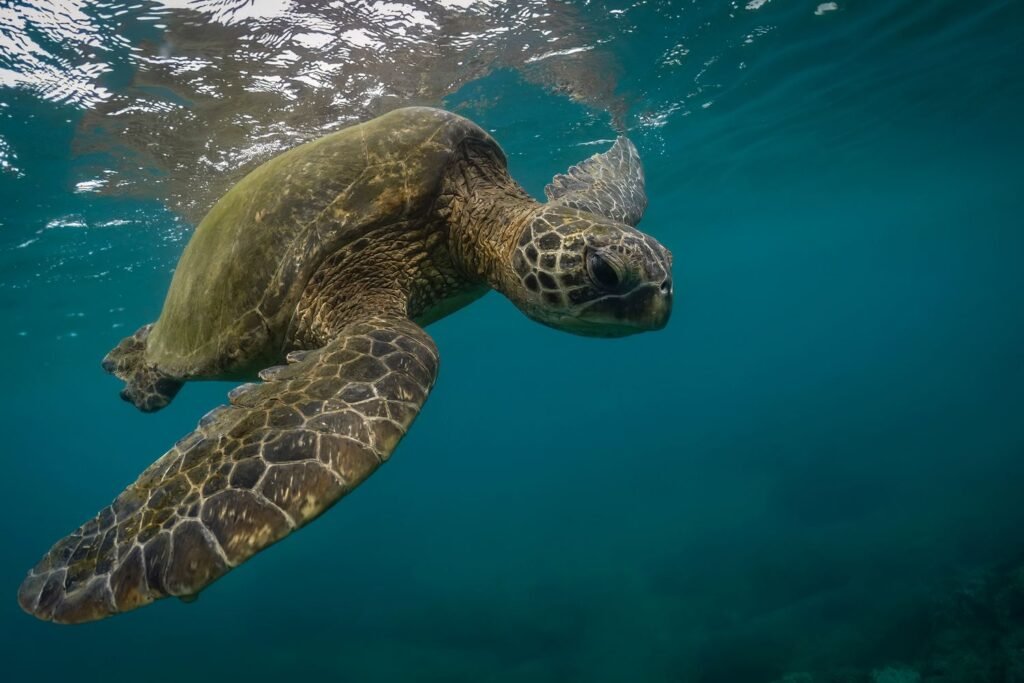
7 Sea Turtle Species: Meet the Ocean’s Ancient Mariners
Sea turtles were already ancient when the first dinosaurs walked the Earth. For more than 100 million years, these marine reptiles have patrolled the oceans, outliving mass extinctions and ice ages. Today, just seven sea turtle species remain, and each one has its own story of survival.
This guide introduces every living sea turtle species: how to tell them apart, where they live, what they eat, and which ones are in danger of disappearing. Whether you are a student, a beachgoer in Karachi, or simply someone who loves the ocean, here is everything you need to know about the world's sea turtles.
How Many Sea Turtle Species Are There?
There are exactly seven living sea turtle species. They all belong to the superfamily Chelonioidea, and they split into two families. Six species belong to the family Cheloniidae, the hard-shelled sea turtles, whose shells are covered in horny plates called scutes. The seventh species, the leatherback, stands alone in the family Dermochelyidae. It has no hard shell at all, just a leathery, ridged hide stretched over a network of bone.
The seven sea turtle species are the green turtle, loggerhead, hawksbill, leatherback, Kemp's ridley, olive ridley, and flatback. Six of the seven occur in the waters of the United States. The flatback is the exception, found only around Australia, Papua New Guinea, and Indonesia.
Sea turtles are air-breathing reptiles that spend nearly their entire lives at sea. Adult females return to beaches to nest, and many species migrate thousands of miles between feeding grounds and nesting beaches. They take a remarkably long time to grow up: 20 to 30 years to reach maturity, and some females keep nesting into their eighties. Their long lives and slow reproduction make population recovery very difficult when numbers fall.
Meet All 7 Sea Turtle Species
Each species has a different body shape, range, diet, and conservation story. Here they are, one by one.
Green Sea Turtle (Chelonia mydas)
The green turtle is the largest hard-shelled sea turtle. Adults typically reach 3 to 4 feet in length and weigh 300 to 500 pounds. They are named not for the color of their shell but for the greenish tint of their body fat.
Green turtles are the only sea turtles that are herbivores as adults, grazing on seagrass and algae, although juveniles eat a more mixed diet. By cropping seagrass beds, they keep these underwater meadows healthy, much like lawnmowers maintaining a garden. They frequent tropical and subtropical coastal waters, lagoons, and reefs. The global IUCN assessment now lists the green turtle as Least Concern, but several regional subpopulations remain threatened, and the species is still legally protected in many countries.
Loggerhead Sea Turtle (Caretta caretta)
Loggerheads are named for their disproportionately large heads and powerful jaws, which can crush hard-shelled prey such as conchs, whelks, crabs, and clams. Adults are usually about 3 feet long and weigh 200 to 375 pounds.
These turtles use a wide range of habitats at different life stages: coastal waters, continental shelves, estuaries, and the open ocean. Loggerheads nest from April to September, and a female generally builds 3 to 5 nests per season. Florida hosts the largest nesting population of loggerheads in the world, with important nesting beaches also found in Greece and Turkey. The species is listed as Vulnerable globally, though some regional populations face greater danger.
Hawksbill Sea Turtle (Eretmochelys imbricata)
The hawksbill is the reef specialist of the group. It is recognized by its narrow, pointed, bird-like beak and its beautifully patterned shell with overlapping scutes. Adults are about 2 to 3 feet long and weigh 100 to 150 pounds.
Hawksbills live on tropical coral reefs, where their beaks probe into crevices for sponges, their primary food. That stunning shell made them a target of the tortoiseshell trade for centuries, and illegal trade continues in some regions. They are globally Critically Endangered. Hawksbills also hold a small speed record: they build their nests faster than any other sea turtle species, typically finishing in under 45 minutes.
Leatherback Sea Turtle (Dermochelys coriacea)
The leatherback is the giant of the family and the most distinctive. Instead of a hard shell, it has a leathery, ridged carapace, which allows it to dive to extraordinary depths. Leatherbacks are the largest sea turtle species, commonly reaching 5 to 6 feet and weighing 750 to 1,000 pounds, with some individuals much larger. NOAA reports that they can weigh up to 2,000 pounds and measure 6 to 9 feet long.
Leatherbacks are open-ocean wanderers with the widest range of any sea turtle, tolerating cold waters that other species cannot. They feed almost exclusively on jellyfish, salps, and other gelatinous prey, consuming enormous quantities. They are the deepest-diving sea turtles, plunging more than 4,000 feet below the surface. The species is listed as Vulnerable globally, but several regional subpopulations are Critically Endangered or Endangered.
Kemp's Ridley Sea Turtle (Lepidochelys kempii)
The Kemp's ridley is the smallest and rarest sea turtle. Adults are only about 2 feet long and weigh 70 to 100 pounds. It is also the most endangered: listed as Critically Endangered by the IUCN, it came perilously close to extinction in the 1980s, when nesting numbers collapsed. Conservation efforts, including nest protection and turtle excluder devices in shrimp nets, have helped numbers recover to an estimated 7,000 to 9,000 individuals in the wild.
Kemp's ridleys live mainly in the Gulf of Mexico and the western Atlantic, nesting principally along the coast of Tamaulipas, Mexico, and in Texas. They are carnivores, with crabs as a favorite food. Uniquely, the Kemp's ridley is the only sea turtle that nests predominantly during daylight hours, and it gathers in mass nesting events called arribadas.
Olive Ridley Sea Turtle (Lepidochelys olivacea)
The olive ridley is a small, ocean-going turtle with an olive-gray shell, reaching 2 to 2.5 feet and up to about 100 pounds. It is famous for its arribadas, spectacular events in which thousands of females come ashore together over a few days to nest in the same area. The beaches of Odisha, India, host some of the largest arribadas on Earth.
Olive ridleys are opportunistic omnivores, eating crabs, shrimp, jellyfish, fish, and algae. They inhabit tropical ocean waters worldwide. Despite the drama of their mass nestings, the species is listed as Vulnerable, still facing bycatch, egg harvest, habitat loss, and coastal development.
Flatback Sea Turtle (Natator depressus)
The flatback is the least known of the seven. It has a low, flatter shell profile and by far the most restricted range: it nests only along northern Australia and uses nearby continental shelf waters around northern Australia, southern Indonesia, and Papua New Guinea.
Flatbacks feed mostly on bottom-dwelling invertebrates such as crustaceans and mollusks. Their global IUCN status is Data Deficient, which means scientists do not yet have enough information for a full global risk assessment. The flatback is the only sea turtle species never found in the Atlantic.
Sea Turtle Species Compared: Size, Diet, and Range
This table puts all seven species side by side for quick comparison. Sizes and weights vary by sex, population, and measurement method, so treat these as practical adult ranges.
| Species | Scientific name | Adult size and weight | Natural diet | Range |
|---|---|---|---|---|
| Leatherback | Dermochelys coriacea | 5-6 ft, 750-2,000 lbs | Jellyfish, salps | Worldwide, open ocean |
| Green | Chelonia mydas | 3-4 ft, 300-500 lbs | Seagrass, algae | Tropical and subtropical coasts |
| Loggerhead | Caretta caretta | ~3 ft, 200-375 lbs | Crabs, mollusks, shellfish | Coasts, shelves, open ocean |
| Hawksbill | Eretmochelys imbricata | 2-3 ft, 100-150 lbs | Sponges, reef invertebrates | Tropical reefs |
| Olive ridley | Lepidochelys olivacea | 2-2.5 ft, up to ~100 lbs | Omnivore: crabs, fish, algae | Tropical oceans |
| Kemp's ridley | Lepidochelys kempii | ~2 ft, 70-100 lbs | Crabs, shrimp, mollusks | Gulf of Mexico, W. Atlantic |
| Flatback | Natator depressus | ~3 ft, up to ~220 lbs | Benthic invertebrates | N. Australia and nearby waters |
The leatherback stands out immediately as the heavyweight, sometimes weighing more than all six other species' averages combined. The two ridleys sit at the other end of the scale, compact turtles built for nearshore life.
How to Tell Sea Turtle Species Apart
Identifying sea turtles in the wild usually starts with the shell, head, beak, size, and habitat. Here is a field-style guide to the key clues.
- Shell texture: If the shell is leathery with raised ridges instead of hard plates, it is a leatherback. No other living sea turtle looks like this.
- Shell shape: A low, distinctly flat shell profile in Australian waters points to the flatback.
- Head size: A very large head with massive jaws means a loggerhead.
- Beak shape: A narrow, pointed beak like a hawk's bill, combined with a patterned, mottled shell, identifies the hawksbill.
- Body size: Very small adult turtles are usually one of the ridleys. Location helps: in the Gulf of Mexico it is likely a Kemp's ridley; in the tropical Indo-Pacific, an olive ridley.
- Shell and feeding clues: A smooth, rounded shell on a large turtle grazing seagrass is a green turtle.
- Nesting behavior: Mass daytime nesting events, arribadas, are characteristic of olive ridleys and Kemp's ridleys.
Good photographs from a safe distance can help researchers confirm an identification, but never approach, touch, or disturb a turtle just to identify it. Sea turtles are protected wildlife in most of the world.
Sea Turtles in Pakistan and South Asia
For readers in Pakistan, sea turtles are not distant creatures. They nest on Pakistani beaches. Two sea turtle species, the green turtle and the olive ridley, are known to nest at Hawke's Bay and Sandspit, a 20-kilometer stretch of beach on the Karachi coast in Sindh. Research published by WWF Pakistan documented the area as a nesting ground where, historically, thousands of green turtles and a smaller number of olive ridleys came ashore each season.
Today the picture is more fragile. The olive ridley has nearly vanished from Karachi's beaches, and the green turtle faces mounting pressure. Sandspit is a beloved recreation spot for Karachi's millions of residents, and concrete beach houses have steadily eaten into the strip of sand where turtles nest. Artificial lights and late-night beach activity drive nesting females back into the sea. Plastic bags and debris make it hard for females to dig their nest chambers. Stray dogs, crows, and other predators take eggs and hatchlings.
The Sindh Wildlife Department has run marine turtle conservation work for decades, led by its marine wildlife staff. Guards patrol nesting beaches, relocate vulnerable nests to protected hatcheries, and release hatchlings into the Arabian Sea. According to department reports, around 900,000 turtle hatchlings have been released since the program began in the 1970s, and the annual breeding season, which runs from around mid-August to mid-February, now includes schoolchildren who help release hatchlings.
The threats are not unique to Pakistan. Across South Asia, sea turtles face similar pressures. India's Odisha coast hosts mass olive ridley arribadas that draw global attention, while Sri Lanka's southern beaches are important nesting grounds for green turtles, olive ridleys, and leatherbacks. Protecting sea turtles in this region means protecting beaches from light pollution, plastic, and unplanned construction, and giving nesting females the quiet darkness they need.
Which Sea Turtle Species Are Endangered?
Conservation status depends on the source and the population. The IUCN Red List gives the global picture, but national laws can be stricter, and regional subpopulations may be in worse shape than the global listing suggests.
| Species | Global IUCN status | Key context |
|---|---|---|
| Hawksbill | Critically Endangered | Tortoiseshell trade, reef decline, bycatch |
| Kemp's ridley | Critically Endangered | Smallest range, smallest population, recovering slowly |
| Leatherback | Vulnerable | Some subpopulations Critically Endangered |
| Loggerhead | Vulnerable | Some subpopulations more threatened than the global listing |
| Olive ridley | Vulnerable | Bycatch, egg harvest, coastal development |
| Green | Least Concern (global) | Several subpopulations still threatened; protected by law in many regions |
| Flatback | Data Deficient | Limited range, not enough data for full assessment |
Two important notes sit behind this table. First, the green turtle was reassessed to Least Concern globally in 2025 after decades of conservation gains, but that does not mean it is safe everywhere. Several regional subpopulations remain threatened, and green turtles in U.S. waters are still protected under the Endangered Species Act. Second, every species of sea turtle is listed in CITES Appendix I, which bans international commercial trade in the animals and their products.
The Kemp's ridley and hawksbill remain the most urgent cases. The ridley nests almost entirely on a handful of beaches, so a single disaster on those shores could devastate the species. The hawksbill's beauty was its curse: centuries of hunting for tortoiseshell pushed it to the edge, and illegal trade still threatens it in some regions.
The Biggest Threats to Sea Turtle Species
Sea turtles survived the asteroid that killed the dinosaurs, but the modern ocean tests them in new ways. The IUCN identifies five major human-driven hazards: fisheries, direct take, coastal development, pollution, and climate change.
| Threat | How it affects sea turtles | Species most affected |
|---|---|---|
| Bycatch | Turtles drown in shrimp trawls, longlines, and gillnets | All species |
| Entanglement | Discarded nets and ropes trap turtles or prevent surfacing | All species |
| Plastic and marine debris | Turtles mistake plastic bags for jellyfish and swallow them | All species, especially leatherbacks |
| Boat strikes | Vessels injure or kill turtles near the surface | Coastal species |
| Light pollution | Artificial light deters nesting females and disorients hatchlings | Nesting females and hatchlings |
| Coastal development | Construction shrinks nesting beaches and alters sand | All nesting species |
| Egg, meat, and shell trade | Harvest and illegal trade reduce populations | Hawksbills, nesting populations |
| Climate change | Warmer sand skews hatchling sex ratios; rising seas flood nests | All nesting species |
| Disease | Fibropapillomatosis causes tumors, mainly in green turtles | Green turtles |
Hatchlings face brutal odds even without human interference. Estimates range from one in 1,000 to one in 10,000 hatchlings surviving to adulthood. On the beach they must dodge birds, crabs, raccoons, and foxes; in the water, seabirds and fish wait. Against those odds, every additional human-caused death matters enormously.
Climate Change and the Future of Sea Turtles
One of the strangest and most worrying facts about sea turtles is that their sex is decided by temperature. Sea turtles have temperature-dependent sex determination: the warmth of the sand around the nest decides whether hatchlings develop as male or female. Warmer sand produces more females, cooler sand more males.
As nesting beaches warm, researchers are recording heavily female-skewed hatchling ratios on some beaches. A shortage of males could eventually threaten reproduction itself. Rising sea levels add another danger, flooding low-lying nests and eroding the beaches turtles have used for millennia. Stronger storms can wash away entire nesting seasons in a single night.
There are glimmers of hope. The green turtle's global reassessment to Least Concern shows that decades of nest protection, fishing gear reforms like turtle excluder devices, and international trade bans can work. The Kemp's ridley's slow climb back from the brink proves that even the most endangered species can recover when given protection. But recovery is slow by nature: with 20 to 30 years to maturity, a turtle protected as a hatchling today will not lay her first eggs until the 2050s.
Frequently Asked Questions
How many sea turtle species are there?
There are seven living sea turtle species: green, loggerhead, hawksbill, leatherback, Kemp's ridley, olive ridley, and flatback. Six belong to the hard-shelled family Cheloniidae, and the leatherback alone makes up the leathery-shelled family Dermochelyidae.
What is the largest sea turtle species?
The leatherback is the largest, commonly reaching 5 to 6 feet long and weighing 750 to 1,000 pounds, with exceptional individuals reaching up to 2,000 pounds and 9 feet. It is also the deepest diver and has the widest geographic range of any sea turtle.
What is the rarest sea turtle?
The Kemp's ridley is generally considered the rarest and most endangered, listed as Critically Endangered with a small population concentrated in the Gulf of Mexico. The hawksbill is also Critically Endangered globally, and the flatback is rarely encountered because its range is limited to northern Australia.
Are all sea turtle species endangered?
Not all, but most are in trouble. Two species are Critically Endangered, three are Vulnerable, the green turtle is Least Concern globally with threatened subpopulations, and the flatback is Data Deficient. All seven are protected from international trade under CITES Appendix I.
Do sea turtles live in Pakistan?
Yes. Green turtles nest at Hawke's Bay and Sandspit beaches in Karachi, and olive ridleys nested there historically. The Sindh Wildlife Department runs a long-standing marine turtle conservation program that protects nests and releases hatchlings into the Arabian Sea.
How long do sea turtles live?
Most sea turtle species live 50 to 80 years in the wild, with some reaching 100. They take 20 to 30 years to reach sexual maturity. Their long lives and slow reproduction make population recovery very difficult when numbers decline.
Conclusion: Ancient Mariners in Modern Peril
Seven species, each shaped by more than 100 million years of evolution, now share one crowded, warming, plastic-strewn ocean. The leatherback crosses entire ocean basins on a diet of jellyfish. The hawksbill keeps coral reefs healthy by eating sponges. The green turtle mows seagrass meadows. The ridleys stage some of the most spectacular mass nestings in nature. And the flatback quietly patrols the Australian shelf, still half a mystery to science.
Their future depends on decisions made on beaches and in fishing fleets, in Karachi and Odisha, in Florida and Greece. Protected nesting beaches, turtle-friendly fishing gear, darker coastlines, and cleaner seas have already brought some species back from the edge. The ancient mariners have survived everything the planet has thrown at them so far. Whether they survive us is the question this century will answer.