Great White Shark Facts: Size, Teeth, Diet, Lifespan Guide
The great white shark is the most famous fish on the planet, and also one of the most misunderstood. Ask anyone for great white shark facts and you will probably hear about the 1975 film Jaws before anything real. The truth is more interesting than the movie. These sharks are not mindless killers. They are slow-growing, long-lived, highly sensitive predators whose lives scientists are only now beginning to understand.
What follows is a careful look at the real animal: how big great white sharks actually get, how their teeth and senses work, what they eat, how long they live, and why they need our protection. Every key fact here is grounded in published research and assessments from authorities such as NOAA Fisheries and the IUCN.
What Is a Great White Shark?
The great white shark, Carcharodon carcharias, is a member of the mackerel shark family, Lamnidae. Its closest living relatives are mako sharks, porbeagle sharks, and salmon sharks. Among them, the great white is the heavyweight, and National Geographic calls it the world's largest predatory fish.
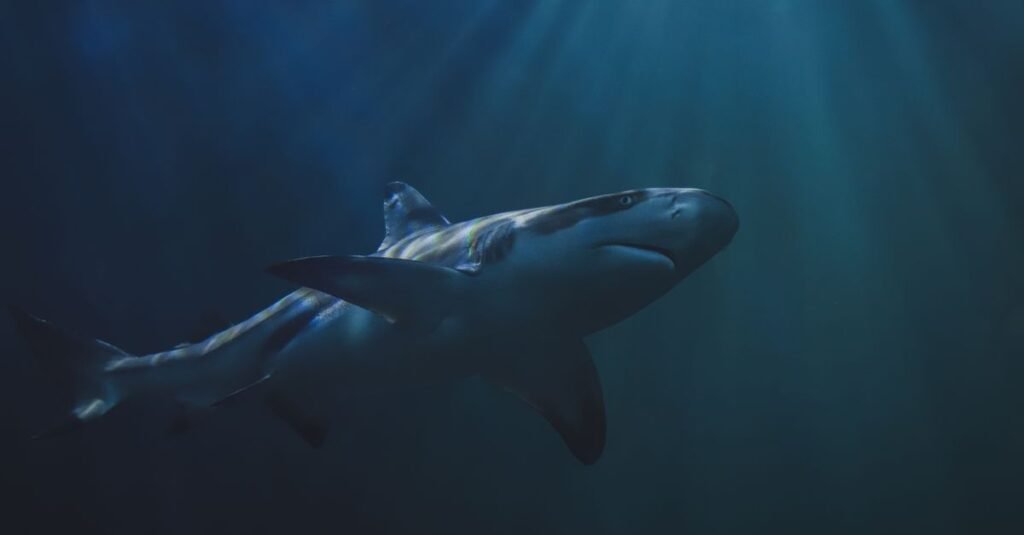
The name is slightly misleading. A great white is not white all over. Its back is slate grey, greyish brown, or nearly black, while its belly is pale white. The two tones meet in a sharp line along the flank. This pattern is called countershading, and it is one of nature's oldest camouflage tricks. Seen from above, the dark back melts into the deep water. Seen from below, the white belly disappears against the bright surface. Prey looking up or down simply cannot pick the shark out of the background until it is too late.
In different parts of the world the shark goes by other names: white shark, white pointer, and in Australia, blue pointer. South Africans have called it the tommy shark. Whatever the local name, the animal is the same: a large, warm-blooded, wide-ranging predator found in oceans around the globe.
How Big Do Great White Sharks Get?
Great white sharks are big, though usually not as enormous as legend suggests. According to NOAA Fisheries, adults commonly reach about 6.4 meters (21 feet) in length and weigh up to about 2,000 kilograms (4,500 pounds). That is roughly three and a half times the height of an adult human, and about the weight of a small car.
Females grow larger than males, a pattern seen in many shark species. The average adult is often cited at around 3.6 to 4.5 meters. Very large individuals are rare and difficult to verify. The Monterey Bay Aquarium notes that the biggest ever reported measured about 7.2 meters (23.5 feet), but sizes at that extreme are hard to confirm with confidence.
For perspective, the great white is only the largest predatory fish. The true heavyweight of the fish world is the whale shark, a filter feeder that can exceed 12 meters. The great white earns its reputation not through sheer size, but through what it does with the size it has.
Great White Shark Teeth: Built to Cut
A great white carries around 300 teeth at any given moment, arranged in several rows, with up to seven rows reported in large individuals. The teeth are large, triangular, and edged with fine serrations, shaped like steak knives. The lower jaw teeth are more slender than the upper ones, and the two sets work as a team: the lower teeth grip and hold prey in place while the upper teeth saw through flesh.
Only the front one or two rows do the actual cutting. The rows behind them are spares on a conveyor belt. When a tooth breaks, wears down, or falls out, the tooth behind it rotates forward to take its place. Because sharks lose teeth constantly, a single shark can shed and replace thousands of teeth over its lifetime. This is why fossil shark teeth are among the most common fossils found on beaches.
The bite itself is enormously powerful. National Geographic reports a bite force of up to 1.8 metric tons, enough to inflict massive trauma in a single strike. Yet the shark rarely needs full force. Its hunting strategy relies on speed and surprise, so the bite is usually delivered in a fast, slashing pass that disables prey and keeps the shark safe from a counterattack.
Speed, Senses, and the Art of the Ambush
A great white is built like a torpedo, with a crescent-shaped tail that drives it through the water in a stiff-bodied, tuna-like swimming stroke. Its average cruising speed is around 25 kilometers per hour, but in bursts it can reach 50 to 56 kilometers per hour (about 35 miles per hour). That explosive acceleration lets it launch its entire body clear of the surface when striking seals, a behavior called breaching that has been filmed spectacularly off South Africa.
What makes the shark truly formidable, though, is its sensory toolkit. Like other sharks, great whites carry clusters of electroreceptors called the ampullae of Lorenzini around the snout. These jelly-filled pores detect the faint electrical fields produced by the muscle contractions of living animals, letting the shark sense prey hidden in sand or murky water. Peer-reviewed research has measured this sensitivity down to a few nanovolts per centimeter, among the most acute senses in the animal kingdom.
Add to that an extraordinary sense of smell, excellent vision (those famously pitch-black eyes), and a lateral line that picks up vibrations in the water, and you have a hunter that perceives the ocean in ways we can barely imagine. Recently, National Geographic reported another surprise: special pigment cells in the shark's skin appear to let it lighten or darken its coloration, giving it even finer control over its camouflage as it stalks prey from below.
Perhaps most remarkable is that great whites are partially warm-blooded. A heat-exchange system in their blood vessels keeps their swimming muscles, eyes, and brain warmer than the surrounding water. This regional endothermy lets them stay fast and alert in cold seas where most fish would slow down, and it explains how they can hunt from chilly California waters to the icy edges of the Southern Ocean.
What Do Great White Sharks Eat?
Great white sharks are generalist carnivores, and their menu changes as they grow. Young sharks feed mainly on fish such as tuna, along with rays and smaller sharks. Once they reach around 450 kilograms, marine mammals enter the diet, and adults become specialists in hunting calorie-rich prey: seals, sea lions, and dolphins. They also eat squid, sea turtles, seabirds, and other sharks, and they readily scavenge whale carcasses when the opportunity arises.
Their signature hunting move is the vertical ambush. Patrolling below a seal colony, the shark singles out a target at the surface, then rockets upward in a surprise attack from the blind spot below. Researchers have documented that hunting success is highest near dawn, when low light favors the shark's countershaded approach. A single large meal, such as an elephant seal, can sustain a shark for a couple of months, which is why great whites can afford to be patient.
Scavenging matters more than most people realize. A dead whale drifting on the currents is a windfall, and white sharks will feed on carcasses for days. This habit also makes them important recyclers of the ocean, returning the nutrients locked in a whale's enormous body back into the food web.
Slow Growth and a Surprisingly Long Life
For decades, scientists underestimated the great white's lifespan. Early estimates put it at around 30 years. That changed in 2014, when NOAA researchers used bomb radiocarbon dating, reading the chemical signature of mid-20th-century nuclear tests preserved in the sharks' vertebrae, to age 81 white sharks from the western North Atlantic. The results were startling: white sharks grow far more slowly than believed, and they live far longer.
Females do not reach sexual maturity until about 33 years of age, and males until about 26. The oldest male in the study was 73 years old. Scientists now believe great whites can live 70 years or more, placing them among the longest-lived fish in the sea. This slow life history is the crux of their vulnerability: a shark that takes three decades to start reproducing cannot bounce back quickly from heavy fishing pressure.
Reproduction itself is a slow, costly affair. Great whites are ovoviviparous, meaning the pups hatch from eggs inside the mother and are born live. A female produces just 2 to 17 pups every other year, after a gestation of around 11 months. Newborns are already formidable at 1.2 to 1.5 meters long, and they receive no parental care. Inside the womb, the developing pups even feed on unfertilized eggs produced by the mother, a strategy called oophagy that gives them a head start before birth.
Where Do Great White Sharks Live?
Great white sharks inhabit tropical and temperate waters around the world, in both coastal zones and the open ocean. They are most concentrated in a few famous regions: the Pacific and Atlantic coasts of North America, the waters of southern Africa, and the seas around Australia and New Zealand. They are fairly uncommon through much of their range, which is why a sighting is always an event.
They are also extraordinary travelers. Satellite tagging has shown that white sharks migrate between coastal feeding grounds and the open ocean, and even between continents, crossing entire ocean basins. They can dive to depths of around 1,200 meters (3,900 feet), far below the sunlit zone, and mature females have been tracked spending months offshore in the deep Pacific.
Shallow coastal waters serve as nurseries. Juvenile white sharks favor inshore areas where small fish are plentiful and large predators are fewer, moving into deeper water and bigger prey as they grow. Protecting these nursery grounds, researchers argue, is one of the most effective things we can do for the species.
Behavior: Solitary Hunters, Occasional Gatherings
Great whites are generally solitary, each shark patrolling its own vast territory. But they are not loners by strict rule. They gather in numbers at rich feeding sites, such as seal colonies, where researchers have observed them communicating and sorting out dominance with body language rather than violence: jaw gaping, posturing, and deliberate, stiff swimming that signals rank without a fight.
They are also famously curious. Many of the so-called attacks on unfamiliar objects, from surfboards to research equipment, appear to be investigative bites, the shark's way of examining something new with the only tool it has. Marine biologists at MarineBio note that most attacks on humans appear motivated by curiosity rather than feeding, and the majority are not fatal. Divers who have free-dived with white sharks describe them as cautious and calculating, not the frenzied killers of cinema.
Are Great White Sharks Dangerous to Humans?
Honesty requires acknowledging the risk. Of all shark species, the great white is behind the largest number of recorded fatal unprovoked attacks on humans. That statistic, however, needs context. Such attacks are exceedingly rare, and the typical incident is a single bite, most often on a surfer, after which the shark releases the person and leaves. Researchers believe most bites are cases of mistaken identity: from below, a paddling surfer can resemble a seal.
You are far more likely to be struck by lightning than to be bitten by a white shark. And the ledger runs overwhelmingly the other way: humans kill vastly more white sharks, through fishing and bycatch, than white sharks kill humans. As one assessment puts it, the great white is far more threatened by us than we are by it.
Conservation: A Vulnerable Apex Predator
The IUCN Red List classifies the great white shark as Vulnerable globally, meaning it faces a high risk of extinction in the wild. International trade is restricted under CITES Appendix II, and the species is listed on Appendices I and II of the Convention on Migratory Species.
The threats are well documented. White sharks are caught as bycatch in commercial fisheries, targeted by sport fishers for jaws and fins, killed in beach protection nets, and persecuted after biting incidents amplified by media coverage. Inshore nursery habitats face degradation from coastal development. Combined with a reproductive rate that is among the slowest of any shark, these pressures add up.
There is encouraging news. White sharks are now protected, or their retention is prohibited, in multiple jurisdictions, and some populations show signs of recovery where protections are strong. The science is also improving: satellite tags, genetic studies, and drone surveys are revealing migration routes and nursery areas that were unknown a decade ago. For an animal that takes 30 years to mature, recovery will be measured in decades, not years. The work has to start, and continue, now.
Great White Shark Quick Facts
| Fact | Detail |
|---|---|
| Scientific name | Carcharodon carcharias |
| Family | Lamnidae (mackerel sharks) |
| Maximum size | About 6.4 m (21 ft); largest reported ~7.2 m |
| Maximum weight | About 2,000 kg (4,500 lb) |
| Teeth | ~300, triangular and serrated, continuously replaced |
| Top speed | Up to ~56 km/h (35 mph) in bursts |
| Diet | Seals, sea lions, fish, squid, whale carcasses |
| Pups per litter | 2 to 17, born live every other year |
| Maturity | Males ~26 years, females ~33 years |
| Lifespan | 70 years or more |
| Depth range | Surface to ~1,200 m (3,900 ft) |
| IUCN status | Vulnerable |
Frequently Asked Questions
How big is the biggest great white shark ever recorded? The largest reliably discussed measurement is about 7.2 meters (23.5 feet), cited by the Monterey Bay Aquarium, though such extremes are hard to verify. Adults verified by NOAA Fisheries reach about 6.4 meters and 2,000 kilograms. Most adults are smaller, in the 3.6 to 4.5 meter range, and females grow larger than males.
How many teeth does a great white shark have? Around 300 teeth at any one time, set in multiple rows. The front rows do the cutting while the back rows serve as replacements that rotate forward as teeth are lost. A single shark can lose and regrow thousands of teeth in its lifetime.
How long do great white sharks live? Much longer than once thought. A 2014 NOAA study using radiocarbon dating of vertebrae found that white sharks can live 70 years or more, with the oldest male aged at 73. They mature very slowly: males at about 26 years and females at about 33.
Do great white sharks eat people? Humans are not their natural prey. Most bites on people are single, investigative bites, often on surfers mistaken for seals, and the shark usually releases the person. Fatal attacks are extremely rare, though the great white does account for more recorded fatal unprovoked bites than any other shark species.
Are great white sharks endangered? They are listed as Vulnerable on the IUCN Red List, one step below Endangered. Their main threats are bycatch, targeted fishing, beach nets, and habitat degradation, compounded by an extremely slow reproductive rate. They are protected in many countries and international trade is regulated.
Conclusion
The real great white shark is more remarkable than its reputation. It is a partially warm-blooded fish that navigates by electricity, ambushes seals with military precision, crosses whole oceans, and can live longer than most humans' careers. It is also a slow-breeding, Vulnerable species that cannot afford the losses we inflict on it. Understanding these facts is the first step toward giving the ocean's most famous predator the future it deserves.