Flagship Species Examples: 10 Animals Saving Nature
Every major conservation campaign has a face. It might be a wide-eyed panda cub, a polar bear on shrinking ice, or a tiger staring into the camera. In conservation biology, these animals have a formal job title: flagship species. They are chosen to carry the weight of an entire cause, turning abstract threats like habitat loss into something people feel.
This article explains what flagship species are, walks through flagship species examples from around the world and from Pakistan's own mountains, and looks honestly at where this beloved strategy works and where it falls short.
What Is a Flagship Species?
In conservation biology, a flagship species is a species chosen to raise support for biodiversity conservation in a given place or social context. The species needs to be popular, work as a symbol or icon, and stimulate people to provide money or support.
That definition has sharpened over time. WWF defines a flagship species as "a species selected to act as an ambassador, icon or symbol for a defined habitat, issue, campaign or environmental cause," adding that conserving the flagship may also improve the status of other species sharing its habitat or facing the same threats.
Academic definitions lean on the same idea of deliberate marketing. One widely cited version describes a flagship as "a species used as the focus of a broader conservation marketing campaign based on its possession of one or more traits that appeal to the target audience" (Verissimo, MacMillan and Smith, 2011). Another calls flagship species "popular, charismatic species that serve as symbols and rallying points to stimulate conservation awareness and action" (Heywood, 1995).
The concept is relatively young. It became popular around the mid-1980s, during debates about how to prioritize species for conservation, with early applications focusing on neotropical primates, African elephants, and rhinos. From the start, the approach was mammal-heavy, and large-bodied mammals still dominate the flagship world today.
What Makes a Good Flagship Species?
Flagship species are rarely chosen for their ecological job description. They are chosen for how people respond to them. Research on conservation magazine covers has found that the most common flagship traits are large bodies, forward-facing eyes, and an overall impressive appearance. Big, cute, or furry animals trigger an emotional response, and that response turns into donations, signatures, and political pressure.
But charisma alone is not the whole formula. The best flagship also fits the audience and the place:
- Recognition. People must know what they are looking at. A panda or a tiger works on a poster in almost any country.
- Cultural resonance. The Pemba flying fox works as a flagship in Tanzania, and the Chesapeake blue crab serves as one in the United States, because local people connect with them.
- The cause it carries. The polar bear has become the face of climate change. The monarch butterfly carries the cause of pollinator conservation in North America.
- Range size. Organizations sometimes pick species with large home ranges, because protecting the flagship's habitat then automatically protects other species in the same area.
Flagship species do not have to be animals at all. Several US national parks are named for the flagship plants they protect: Redwood National and State Parks, Joshua Tree National Park, and Saguaro National Park.
10 Flagship Species Examples From Around the World
The table below gathers ten of the most influential flagship species examples, each carrying a different conservation story.
| Species | Where it flies the flag | IUCN Red List status | What it represents |
|---|---|---|---|
| Giant panda | Bamboo forests of China | Vulnerable | Habitat protection; the emblem in WWF's logo |
| Bengal tiger | Forests of India and Asia | Endangered | Forest and grassland protection, anti-poaching |
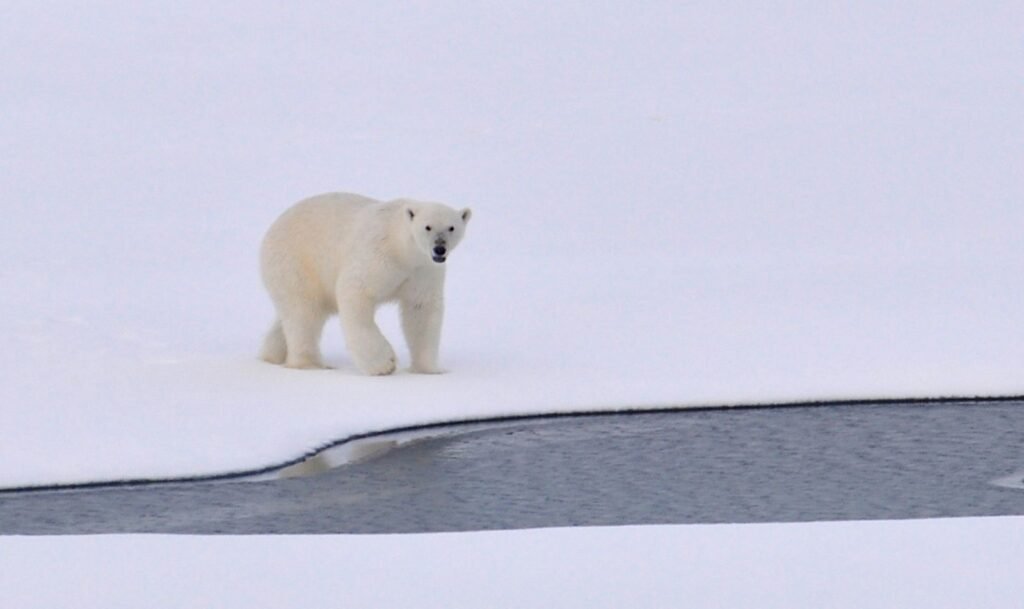
| Polar bear | Arctic region | Vulnerable | Climate change and melting sea ice |
| Snow leopard | Mountains of Central and South Asia | Vulnerable | High-altitude ecosystem conservation |
| Markhor | Mountains of Pakistan and the Himalaya region | Near Threatened | Community-led conservation, Pakistan's national pride |
| Bald eagle | North America | Least Concern | Recovery from pesticide damage; a comeback story |
| African elephant | Savannas and forests of Africa | Endangered | Anti-poaching and the ivory trade |
| Amur leopard | Russian Far East and northeast China | Critically Endangered | Forest corridors and the fight against poaching |
| Mountain gorilla | Forests of Central Africa | Endangered | Ecotourism-funded conservation |
| Monarch butterfly | North America (Canada, US, Mexico) | Population declining | Pollinator conservation and migration corridors |
Giant panda. The most famous flagship on Earth, sitting in WWF's logo and headlining campaigns for China's bamboo forests. Listed as Vulnerable, it is one of the few flagships whose population has shown real growth.
Bengal tiger. The flagship of forest conservation across India and Asia, with campaigns targeting deforestation, the illegal wildlife trade, and habitat fragmentation.
Polar bear. Few animals are as tightly linked to a single cause. As Arctic ice melts, polar bears lose their hunting grounds, making the species arguably the most iconic symbol of climate mitigation efforts.
Snow leopard. The "ghost of the mountains" is the flagship of high-altitude Asia, highlighting the protection of remote mountain ecosystems and the water sources and pastures shared with local communities.
Markhor. Pakistan's national animal, famous for its spiral horns, has become a regional flagship showing how community conservation can reverse a decline.
Bald eagle. Both the national symbol of the United States and a flagship for its forests and waterways. Once endangered by habitat loss and the pesticide DDT, it became a symbol of what determined conservation can undo.
African elephant. Across Africa, the elephant symbolizes wildlife conservation itself. Campaigns built around it spotlight the ivory trade, while elephant protection helps defend savannas and forests.
Amur leopard. One of the most critically endangered big cats, it is the flagship for the forests of the Russian Far East and a symbol of the fight to protect wildlife corridors.
Mountain gorilla. The flagship of Central Africa's forests, showing how ecotourism funds protection through revenue for rangers, anti-poaching patrols, and community development.
Monarch butterfly. Proof that a flagship can be tiny. Its migration from Canada and the United States to Mexico makes it an ambassador for pollinators, driving milkweed planting and habitat preservation.
Beyond the Obvious: Unlikely and Unusual Flagships
Not every flagship is a poster-ready mammal. Some of the most interesting examples come from places the spotlight rarely reaches.
In Tanzania, the Pemba flying fox was chosen as a flagship because it mattered to the local culture. In the United States, the Chesapeake blue crab has served as a flagship for the health of the Chesapeake Bay. Researchers emphasize that because flagships are selected for the audience they hope to influence, even uncharismatic groups can work when the cultural fit is right.
Plants can lead campaigns too, and marine conservation has its own flagships, from sea turtles to entire coral reef ecosystems. These unusual choices carry a lesson: the most effective flagship is not always the most famous animal. It is the one that resonates with a specific audience, in a specific place, for a specific cause.
Pakistan's Own Flagship Species: the Snow Leopard and the Markhor
Flagship species work best when they are local, and Pakistan has two of the most powerful ones in the world.
The snow leopard (Panthera uncia) is an iconic flagship of the mountains of Central Asia, and Pakistan holds a special share of it. An estimated 200 to 420 snow leopards live in Pakistan's northern mountains, across Khyber Pakhtunkhwa, Gilgit-Baltistan, and Azad Jammu and Kashmir, making Pakistan's population one of the three largest in the world. More than 60 percent live in Gilgit-Baltistan, concentrated in and around Khunjerab National Park and Central Karakoram National Park. Listed as Vulnerable on the IUCN Red List after a 2017 reassessment, the species ranges across twelve countries, and Pakistan's Karakoram forms an important corridor connecting snow leopards in Pakistan, China, and India.
The markhor (Capra falconeri) is Pakistan's national animal, and one of conservation's best comeback stories. Decades of hunting pushed these spiral-horned mountain goats down, but community-based conservation changed the trajectory. The Wildlife Conservation Society helped seed more than 50 community conservation committees in Gilgit-Baltistan, training local rangers to monitor wildlife and enforce hunting and resource rules. The result: markhor numbers rose by as much as 60 percent in the region. The species is currently listed as Near Threatened, and because it is a key prey species for the snow leopard, Pakistan's two great mountain flagships are tied together in one food web.
For readers in Pakistan and South Asia, these two species show that flagship conservation is not something that happens only in documentaries about distant continents. It happens in the Karakoram, the Hindu Kush, and the valleys of Chitral.
Why the Flagship Approach Works
The flagship strategy survives because it delivers results few other approaches can match.
It raises money. Flagship species make it easier for conservation organizations to raise funds because the animal's appearance makes people care about it and its habitat.
It builds awareness. A single familiar species can carry an entire issue into the public conversation. The polar bear made climate change visible. The bald eagle made pesticide damage visible. The panda made forest loss in China visible.
It drives ecotourism. Tourism built around flagship species generates revenue that can be reinvested in protection, increasing funding, volunteering, and participation in conservation initiatives.
It moves policy. Flagship campaigns have helped create parks and protected areas, from Sangay National Park in Ecuador (mountain tapir) to awareness of the threats facing Brazil's Atlantic rainforest (golden lion tamarins).
It protects more than the flagship. When conservation of the flagship succeeds, other species sharing its habitat or facing the same threats can benefit too.
Where Flagship Species Fall Short
For all their success, flagship species have drawn serious criticism from conservation scientists. Any honest account of flagship species examples has to include the downsides.
They skew priorities. Conservationist Daniel Simberloff warned that flagship species can pull management and funding toward themselves, at the expense of more threatened but less charismatic species, and management aimed at one flagship can conflict with another's needs.
Charisma does not prevent extinction. A 2018 study in PLOS Biology found that all ten of the most charismatic animal groups (tiger, lion, elephant, giraffe, leopard, panda, cheetah, polar bear, wolf, and gorilla) are currently endangered, and only the giant panda shows demographic growth. The researchers suggested that constant flagship imagery may give the public the false impression that these animals are abundant.
The flagship can turn against its supporters. When a flagship animal comes into conflict with local communities, the goodwill it was meant to create can collapse. Researchers call this "flagship mutiny," and the Asian elephant in countries with serious human-elephant conflict is the classic example. A symbol that works for international donors can mean something very different for a farmer whose crops it tramples.
Most of the money stays with one species. Most funds raised in a single-flagship campaign will be spent protecting that one species, leaving many others unprotected. Flagship selection also limits which problems an organization can address, since the campaign is framed around one animal's story. And popularity is not permanent: research suggests that as a flagship becomes overexposed, some supporters tire of it, and attention declines.
Flagship vs Keystone vs Umbrella vs Indicator Species
One of the most common questions about flagship species examples is how they differ from other conservation labels. Each describes a different job:
| Concept | What it means | Examples |
|---|---|---|
| Flagship species | A species selected to act as an ambassador, icon, or symbol for a habitat, issue, campaign, or cause. Chosen for public appeal, not ecological function. | Giant panda, Bengal tiger, polar bear |
| Keystone species | A species that plays an essential role in the structure, functioning, or productivity of an ecosystem. Its disappearance can cause ecosystem change or collapse. | Sea otter, wolves, elephants in habitat shaping |
| Umbrella species | A species with large habitat needs, so protecting it indirectly protects many other species that share the same habitat. | Grizzly bear, giant panda, northern spotted owl |
| Indicator species | A species used as a proxy for the state of an ecosystem or a process within it. Its presence or health reveals environmental conditions. | Crayfish for freshwater quality, corals for sea temperature and siltation, peregrine falcon for pesticide loads |
The key distinction is why the species was chosen. A flagship earns its title through social and economic power: popularity, symbolism, fundraising appeal. A keystone earns it through ecology: remove it and the system unravels. An umbrella earns it through geography: protecting its large range shelters others. An indicator earns it through sensitivity: it reveals the health of its environment.
The categories can overlap. WWF notes that flagship species may or may not be keystone species or good indicators. The giant panda works as both a flagship and an umbrella species, and the African lion has served as both a flagship and a keystone species. But the labels are not interchangeable, and treating them as the same thing is one of the most common mistakes in conservation writing.
Rethinking the Flagship: Fleets, Ecosystems, and Cinderella Species
Scientists are not abandoning the flagship idea. They are rebuilding it to reach more species and more people.
Cinderella species. Researchers have proposed looking beyond the usual celebrities to "Cinderella species": animals that are critically endangered and unfamiliar, but still visually appealing enough to headline a campaign. The idea, developed by Smith and colleagues in 2012, is to find species with flagship appeal that are currently invisible to conservation marketing.
Flagship fleets. Instead of betting everything on one animal, organizations can run a campaign with a fleet of several flagship species across different groups. A fleet raises the odds that every supporter finds at least one species they connect with.
Broader flagships. In 2025, researchers proposed an even wider idea: the "flagship entity." A flagship can be an individual (like Lonesome George, the last Pinta Island tortoise), a species (like the polar bear), a fleet (like the six Danube sturgeon species), an ecosystem (like the Amazon rainforest), or an event (like the great migration of monarch butterflies). The researchers' advice was blunt: think like marketers, and select flagships based on public preferences and cultural values.
Smarter use of the money. Another reform is capping how much a single flagship can absorb, so extra donations flow to other species, plants, and habitats instead.
How Conservationists Choose a Flagship Species Today
The best modern practice treats flagship selection as a deliberate, research-driven process rather than a popularity contest. Published frameworks recommend starting with the conservation problem and the target audience, then choosing the species that fits both.
Selection can draw on social marketing, environmental economics, and conservation biology, depending on the project and who it wants to reach. The species that works for international donors may be completely different from the one that works for a local village, as shown by the participatory selection of the ruddy shelduck in Iran. Researchers also recommend evaluating whether a chosen flagship actually produces real-world impact, and watching for pitfalls like promoting unsustainable tourism or wildlife trade around the celebrated animal.
Frequently Asked Questions
1. What is a flagship species, in simple terms?
A flagship species is an animal or plant chosen as the public face of a conservation cause. Organizations use it as an ambassador to raise awareness and money, hoping that protecting it also protects its habitat and the species around it.
2. Is the giant panda a flagship species?
Yes. The panda is the most famous flagship in the world. It appears in WWF's logo and has headlined campaigns for bamboo forests and biodiversity in China. It is listed as Vulnerable on the IUCN Red List.
3. What is the difference between a flagship species and a keystone species?
A flagship is chosen for public appeal and fundraising power. A keystone species is chosen for its ecological role: it has a disproportionately large effect on its ecosystem, and removing it can cause collapse. Some species, like the African lion, can be both.
4. Can a plant be a flagship species?
Yes. The redwoods, Joshua trees, and saguaros behind three US national parks are flagship plants. Even whole ecosystems, like coral reefs or the Amazon rainforest, have been used as flagships.
5. Are flagship species always endangered?
Not always, though many are. The bald eagle is now Least Concern and remains a powerful flagship. The markhor is Near Threatened. The label is about symbolic value, not a particular Red List category.
6. Does the flagship species approach actually work?
It works at what it was designed to do: raising money, awareness, and political support, and creating protected areas. But critics note it can skew priorities toward charismatic animals, and all ten of the most charismatic animal groups are currently endangered.
7. What are Pakistan's flagship species?
The snow leopard and the markhor. The snow leopard, the national heritage animal, symbolizes high-mountain conservation. The markhor, the national animal, symbolizes community-led conservation after its recovery in Gilgit-Baltistan.
Conclusion
Flagship species examples show both the genius and the limits of conservation marketing. A single panda, tiger, or polar bear can move millions of people and millions of dollars in ways that no report on biodiversity loss ever could.
But the bridge needs maintenance. The same strategy that saves tigers can starve less photogenic species of attention. That is why researchers are pushing toward flagship fleets, Cinderella species, and audience-driven selection, and why Pakistan's snow leopard and markhor matter: they prove that the most powerful flagship is often the one closest to home.