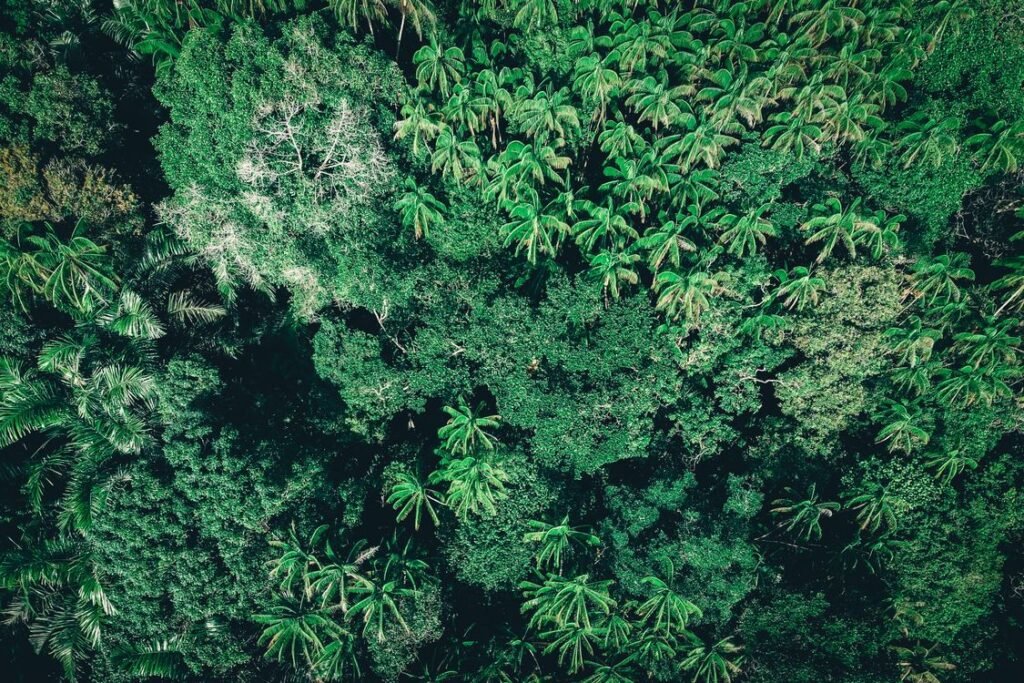
Amazon Rainforest Facts: The Lungs of Our Living Planet
The Amazon is not just a forest; it is a world. Covering an area twice the size of India, holding a tenth of all known species, and moving more water through the sky than some of the planet's great rivers carry on the ground, the Amazon rainforest shapes the climate of a continent and the imagination of the world. Yet it is being cleared at a rate of several football pitches every minute. These Amazon rainforest facts lay out the scale, the life, the people, and the peril of Earth's greatest rainforest.
How big is the Amazon rainforest?
The numbers are hard to grasp. The Amazon rainforest covers roughly 6.7 million square kilometers, according to WWF, an area about twice the size of India and nearly 28 times the size of the United Kingdom. The wider Amazon basin, the vast drainage system the forest sits within, spans some 7 million square kilometers, of which about 6 million are forested. Either way you measure it, the Amazon is the world's largest tropical rainforest, bigger than the next two largest rainforests, in the Congo Basin and Indonesia, combined.
It also covers an enormous share of a continent: the basin takes up around 40 percent of South America. To stand at its edge is to face a green ocean that runs unbroken to the horizon in every direction, a forest so vast that weather systems form inside it.
Nine countries, one forest
The Amazon does not belong to one nation. It sprawls across eight countries and one overseas territory, a political patchwork that makes conservation a permanent diplomatic project.
| Country | Share of the forest (approx.) |
|---|---|
| Brazil | 60% |
| Peru | 13% |
| Colombia | 10% |
| Bolivia, Ecuador, Venezuela, Guyana, Suriname, French Guiana | Remaining share |
Brazil holds the lion's share, nearly two-thirds of the forest, followed by Peru and Colombia. Four of the nine nations have an "Amazonas" as a first-level administrative region, and France administers its slice as the Guiana Amazonian Park. The forest's fate is therefore decided in nine capitals, in Indigenous territories, and in the global markets that buy what the cleared land produces.
The Amazon River: a river like no other
No account of Amazon rainforest facts is complete without the river. The Amazon is by far the largest river in the world by volume of water discharged, carrying more than five times the flow of the Congo and roughly twelve times that of the Mississippi. It drains an area nearly the size of the contiguous United States and gathers water from more than 1,100 tributaries, 17 of which are themselves longer than 1,000 miles.
The river has not always run the way it does today. Geological evidence shows that the Amazon once flowed westward, into the Pacific. Then the Andes mountains rose along the continent's western edge, damming and reversing the drainage, and the river turned east toward the Atlantic. That ancient reversal built the modern Amazon: a low, flat basin where water spreads into vast seasonal floodplains, the varzea, which drown and drain with the rains and host forests specially adapted to months underwater.
A tenth of all known life
The Amazon's biodiversity statistics read like misprints. The forest is thought to hold about 10 percent of all known species on Earth. A new species of animal or plant is discovered there every other day on average. Researchers estimate some 390 billion individual trees belonging to around 16,000 tree species, a standing forest so diverse that a single hectare can contain more tree species than all of Europe.
The animal counts are equally staggering: estimates include more than 40,000 plant species, around 3,000 fish species (more than in the entire Atlantic Ocean), some 1,300 bird species, over 400 mammals, and roughly a thousand amphibians. More than half of these species are thought to live in the canopy, the sunlit world above the forest floor that remains the least explored part of the rainforest. And these are only the described species; the true total, especially of insects, is certainly far higher.
The four layers of the rainforest
A tropical rainforest is not one habitat but a stack of them. The Amazon's vertical structure creates distinct worlds, each with its own residents.
| Layer | Height | Character |
|---|---|---|
| Emergent | 45-70 m | Giant trees rising above the canopy; harpy eagles, macaws |
| Canopy | 30-45 m | Continuous leafy roof; most of the forest's life |
| Understory | 5-30 m | Dim, humid; jaguars' hunting grounds, smaller trees |
| Forest floor | 0-5 m | Darkest level; decomposers, leaf-cutter ant highways, seedlings waiting for light |
Only a tiny fraction of sunlight reaches the forest floor, so the ground layer is surprisingly open, while the canopy blazes with life. Competition for light drives everything: trees race upward, lianas climb toward the sun, and epiphytes, plants that grow on other plants, turn branches into hanging gardens.
The flood pulse: a forest that drowns every year
One of the Amazon's defining rhythms is the annual flood. Each year, rains swelling the Andes and the forest itself send the great rivers rising many meters, spilling over their banks and drowning vast areas of forest for months. This is the flood pulse, and entire ecosystems are tuned to it.
Two kinds of flooded forest dominate. Varzea forests grow along whitewater rivers heavy with Andean sediment, and their fertile soils support rich, fast-growing vegetation. Igapo forests line blackwater rivers, tea-colored with tannins and poor in nutrients, where trees grow slowly and the water is acidic. Fish time their spawning to the floods, swimming into the submerged forest to feed on fallen fruits and seeds, and in doing so they become seed dispersers, planting the next generation of trees in their droppings. Turtles, caimans, and giant otters follow the water's edge, and when the waters fall, they leave behind lagoons teeming with trapped fish.
Life here runs on a schedule written by water. Trees flower and fruit to meet the floods, fish migrate laterally into the forest, and human river communities move their homes, crops, and livestock with the rising and falling river. Few places on Earth are so completely ruled by a single annual event.
Iconic Amazon wildlife
The Amazon's cast of characters is the stuff of nature documentaries. The jaguar, the Americas' largest big cat, patrols riverbanks and flooded forests, strong enough to drag prey up trees and fond of swimming. High above, the harpy eagle, one of the world's most powerful raptors, snatches sloths and monkeys from the canopy with talons the size of a grizzly bear's claws.
In the water, the green anaconda, among the heaviest snakes on Earth, hunts in the flooded margins, while schools of piranhas, far less dangerous than legend claims, mostly scavenge and nip fins. The giant river otter, a social predator nearly two meters long, hunts fish cooperatively in family groups, and the capybara, the world's largest rodent, grazes the riverbanks in herds. Toco toucans flash their oversized orange bills through the canopy, and hoatzins, ungainly birds whose chicks sport tiny wing claws, clamber through riverside trees like living fossils. Even the insects astonish: bullet ants with famously painful stings, iridescent morpho butterflies drifting through sunbeams, and army ant swarms that flush entire food webs ahead of them. The Amazon river dolphin, or boto, navigates the murky rivers with a long beak and a flexible neck, and it famously blushes pink. Poison dart frogs advertise their toxicity in neon colors on the forest floor, and leaf-cutter ants march in columns carrying leaf fragments many times their body weight back to underground fungus gardens. Every layer has its specialists, and most of them exist nowhere else.
People of the Amazon
The Amazon is not a wilderness empty of people; it is a homeland. Around 47 million people live in the Amazon region, including more than 2 million Indigenous people belonging to over 400 distinct groups, speaking some 300 languages. That is more Indigenous diversity than anywhere else on Earth.
These communities have shaped and stewarded the forest for millennia. Beneath the canopy, archaeologists have found the traces of sophisticated pre-Columbian societies: raised agricultural beds, causeways, and terra preta, the famously fertile "dark earth" enriched with charcoal and organic matter. Today, Indigenous territories are among the best-conserved parts of the forest, and around 60 groups remain largely isolated from the outside world by choice. Their land rights are now recognized as one of the most effective conservation tools in the Amazon: where Indigenous peoples hold secure title, deforestation rates are dramatically lower.
Flying rivers: the forest that makes its own rain
Here is one of the most extraordinary Amazon rainforest facts: the forest manufactures its own weather. Amazon trees release an estimated 20 billion tonnes of water vapor into the atmosphere every single day through transpiration. A single large tree can pump more than 1,000 liters of water into the air in 24 hours, enough to fill ten bathtubs.
This moisture does not just vanish. It forms vast airborne "flying rivers" that carry water vapor south and west across the continent, watering the agricultural heartlands of Brazil, Paraguay, Uruguay, and Argentina. Researchers estimate that 70 percent of South America's GDP is produced in areas that receive rainfall or water originating from the Amazon, and the forest's influence on rainfall patterns reaches as far as the United States. Cut the forest, and you do not just lose trees; you switch off a continental irrigation system.
The Amazon's role in the climate
The Amazon is one of the planet's great carbon vaults. An estimated 150 to 200 billion tonnes of carbon are locked in its forests and soils, accumulated over centuries of growth. Keeping that carbon out of the atmosphere is one of the forest's most valuable services to humanity, and releasing it through deforestation and fire is one of the fastest ways to accelerate climate change.
Scientists worry about a tipping point: the threshold of deforestation and warming beyond which large parts of the Amazon could flip from rainforest toward drier savanna-like vegetation, releasing vast carbon stores and disrupting the flying rivers. The forest has survived ice ages, but it has never faced the current combination of chainsaws, fire, and a rapidly heating climate all at once.
Deforestation: what is eating the forest
The destruction is industrial in scale. Every minute, an area of Amazon rainforest roughly equivalent to five football pitches is cut down. The first nine months of 2022 saw the highest recorded deforestation rates in the Brazilian Amazon since 2016, a grim benchmark.
The drivers are well documented. Cattle ranching accounts for the majority of clearing, by some estimates around 70 percent or more, followed by soy and other agriculture, road building and infrastructure, illegal logging, mining, and land grabbing for speculation. It is an economic machine: forests are felled because cleared land, however briefly productive, pays better in the short term than standing forest does under current rules. A World Bank report published in 2023 argued that the economics are upside down, finding that the long-term economic losses from deforestation in Brazil dwarf the value of the commodities the clearing produces, and proposed a development model built on keeping the forest standing.
Reasons for hope
The story is not only one of loss. Nearly half of the Brazilian Amazon is now safeguarded within Indigenous territories and protected areas, a conservation estate of continental scale. Deforestation rates have fallen sharply before when governments enforced the law, most notably in the 2000s and early 2010s, proving that policy works when it is applied.
Consumers and companies have leverage too: certification schemes, zero-deforestation supply chain pledges, and pressure on banks financing destructive projects all move the needle. And restoration science is advancing, with degraded lands being replanted and Indigenous-led stewardship expanding. The Amazon has shown it can recover when given the chance; secondary forests spring up fast in the tropics. What the forest needs most is time, protection, and the political will to value it standing.
Amazon rainforest facts at a glance
| Fact | Detail |
|---|---|
| Area | About 6.7 million km2 (twice the size of India) |
| Countries | 8 plus French Guiana; 60% in Brazil |
| Trees | About 390 billion, in 16,000 species |
| Species share | About 10% of all known species on Earth |
| Discovery rate | A new species every other day on average |
| People | About 47 million; 400+ Indigenous groups |
| River discharge | Largest in the world; 5x the Congo, 12x the Mississippi |
| Tributaries | More than 1,100; 17 longer than 1,000 miles |
| Carbon stored | 150-200 billion tonnes |
| Daily water vapor | About 20 billion tonnes |
| Deforestation rate | About five football pitches per minute |
| Top deforestation driver | Cattle ranching |
Amazon rainforest facts: frequently asked questions
How big is the Amazon rainforest? About 6.7 million square kilometers, roughly twice the size of India, spanning eight countries and one territory. It is the world's largest tropical rainforest, larger than the Congo and Indonesian rainforests combined.
Why is the Amazon called the lungs of the Earth? The nickname refers to its vast photosynthesis and oxygen production, though scientists note the forest consumes most of that oxygen itself through respiration and decay. Its more critical global roles are carbon storage and rainfall generation.
What animals live in the Amazon rainforest? Jaguars, harpy eagles, green anacondas, Amazon river dolphins, piranhas, sloths, macaws, poison dart frogs, and countless insects. The forest holds about 10 percent of all known species, with new ones found every other day on average.
How fast is the Amazon being deforested? Roughly five football pitches every minute. Cattle ranching is the leading cause, followed by agriculture, infrastructure, logging, mining, and land speculation.
Can the Amazon be saved? Yes, with enforced protection, secure Indigenous land rights, deforestation-free supply chains, and restoration. Past crackdowns have cut deforestation dramatically, showing that the trend is reversible when the will exists. Readers can help by supporting verified conservation organizations, choosing certified deforestation-free products, and keeping attention on the forest: public scrutiny has repeatedly proven to be one of the most powerful protections the Amazon has.
A forest like no other
The Amazon is the planet's greatest experiment in abundance: more species, more water, more green than anywhere else, all of it connected, from a single transpiring leaf to the rains that water a continent's farms. The facts are astonishing on their own, but together they tell a single story. This forest is not a backdrop to human affairs; it is a participant in them, and its future and ours are being written together. To know the Amazon's facts is to understand the stakes, and the stakes could hardly be higher.